

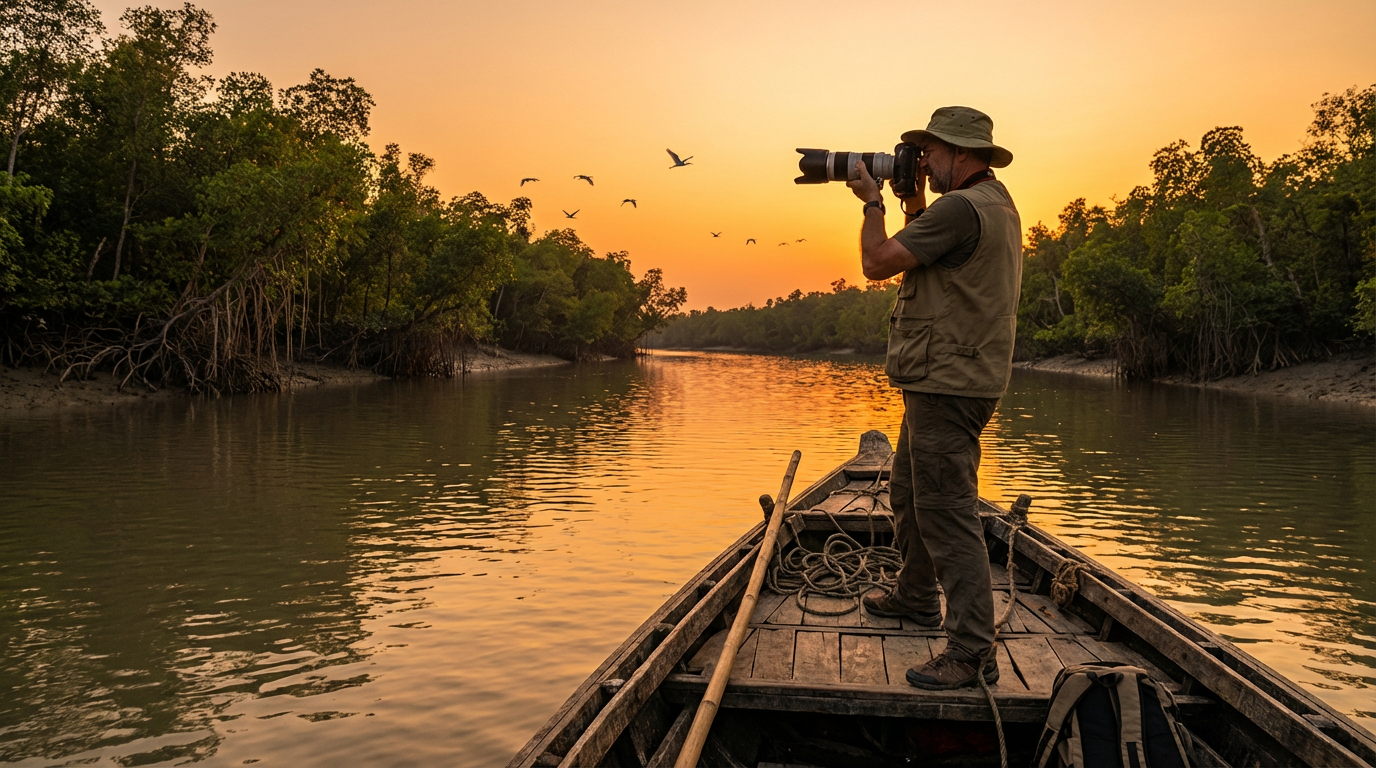
The Sundarbans is a photographer’s paradise—tidal rivers, ancient mangrove forests, and rare wildlife waiting to be framed through your lens. A Sundarban photography tour lets you document the Royal Bengal Tiger, photograph hundreds of bird species at dawn, and capture dramatic sunsets across the delta. Whether you’re a seasoned photographer or a passionate hobbyist, this guide covers everything for the perfect photo expedition into the world’s largest mangrove ecosystem.
Why Choose a Sundarban Photography Tour?
Unlike conventional wildlife reserves with dusty jeep trails, the Sundarbans delivers a water-based safari that is visually unique. You glide silently through narrow creeks on country boats, capturing low-angle shots across glassy water—a perspective impossible in landlocked parks. Light filtering through mangrove canopies creates natural diffused lighting that flatters every subject.
The biodiversity is staggering. Beyond the Bengal Tiger, you’ll encounter saltwater crocodiles on mudflats, spotted deer at the water’s edge, and Gangetic dolphins breaking the surface. For bird photography, the Sundarbans hosts over 300 species including kingfishers, white-bellied sea eagles, and the rare masked finfoot. Every bend of the river reveals a new composition.
Best Locations for Sundarban Wildlife Photography
Choosing the right spots inside the reserve dramatically improves your chances of capturing award-worthy shots. Here are the top zones every photography tour should cover:
- Sajnekhali Watch Tower: Elevated vantage point for wide-angle mangrove panoramas and bird colony shots.
- Sudhanyakhali Watch Tower: Highest probability tiger zone—keep your telephoto ready between 6 AM and 9 AM.
- Dobanki Canopy Walk: Boardwalk through dense mangroves, perfect for macro shots of aerial roots and canopy textures.
- Netidhopani Ruins: A 400-year-old temple engulfed by roots—ideal for heritage-meets-nature storytelling.
- Open River Confluences: Where rivers meet, golden-hour reflections create dramatic silhouette and landscape frames.
Your guide on a Sundarban boat safari will know the tidal schedules that determine when animals appear at the banks, giving photographers optimal windows for action shots.
Camera Settings & Gear Recommendations
The Sundarban delta presents specific challenges—movement on water, rapidly changing light, and subjects that appear without warning. Here’s a tested gear and settings checklist:
- Telephoto Lens (200–600 mm): Essential for tiger and bird shots across wide creek distances.
- Wide-Angle Lens (16–35 mm): For river panoramas, sunsets, and canopy interiors.
- Shutter Speed: 1/1000s+ for birds in flight; 1/250s for static wildlife on banks.
- ISO: ISO 400–800 during golden hours; push to 1600–3200 under thick canopy.
- Aperture: f/5.6–f/8 for sharp wildlife portraits with adequate depth of field.
- Waterproof Bags: Humidity and splashes are constant—protect gear between shoots.
- Monopod or Bean Bag: Tripods are impractical on boats; drape a bean bag over the rail for stability.
Shoot in RAW format to retain maximum detail for post-processing, especially when recovering shadow detail in high-contrast mangrove scenes.
Best Time to Visit for Photography
The ideal photography season runs from October to March, when skies clear, humidity drops, and migratory birds arrive in massive flocks. December and January offer the best conditions with morning mist that adds cinematic mood to your frames. Avoid monsoon months (June–September) when rain limits visibility and boat access.
Sunrise at approximately 5:30 AM and sunset around 5:00 PM provide extended golden-hour windows. Plan your itinerary so the boat faces west during evenings for unobstructed sunset compositions over open water.
Guided Photo Safari Packages
Booking a dedicated Sundarban photography tour package ensures guides who understand photographer needs—slower boat speeds near subjects, flexible timing at watch towers, and positioning for the best light. Our Sundarban tour packages include photographer-focused options with extended morning safaris, private boats, and small groups to minimise wildlife disturbance.
Most photography tours span 2 nights and 3 days, giving you four golden-hour sessions and two full days inside the reserve. Accommodation is on houseboats or eco-lodges at the forest fringe, placing you at the water’s edge each morning.
Frequently Asked Questions
Book Your Sundarban Photography Tour Today
Ready to capture the wild beauty of the Sundarbans? Our guided photography tours put you in the right place at the right time—from tigers in morning mist to kingfishers diving at dawn. Get in touch now to reserve your spot.