

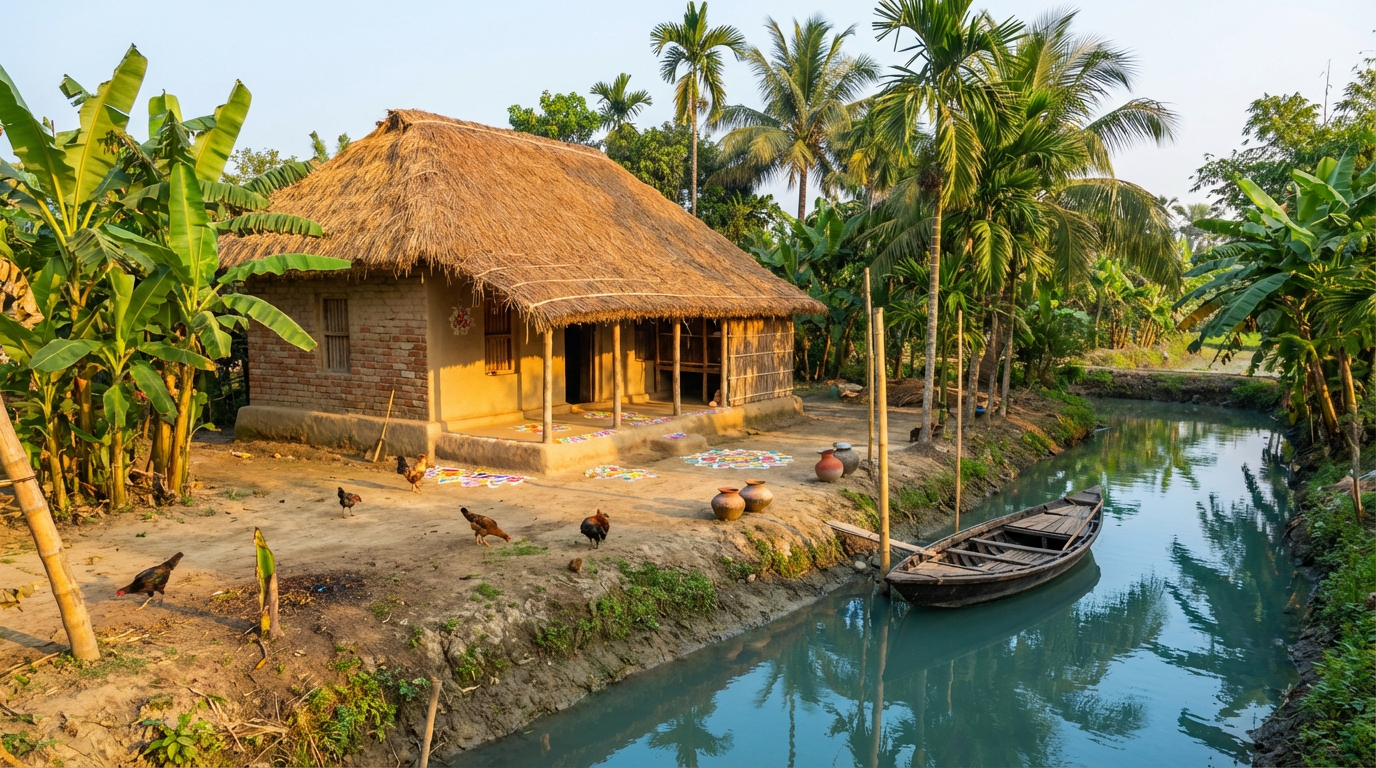
Hotels and resorts have their place, but they cannot hand you the Sundarbans the way a village family can. A Sundarban homestay drops you into daily island life — sleeping in a mud-walled room under a thatched roof, eating rice-and-fish meals cooked on a clay stove, and watching sunsets from a bamboo veranda metres from the river. For travellers who crave connection over comfort ratings, a homestay is the most honest way to experience the delta in 2026.
Why a Sundarban Homestay Beats a Standard Resort
Resorts insulate you from the landscape; a Sundarban homestay immerses you in it. Your host family lives off the river — fishing at dawn, tending betel-leaf gardens by mid-morning, and repairing nets in the afternoon shade. As a guest, you are welcomed into that rhythm rather than shielded from it. Meals arrive on steel plates heaped with fresh river prawns, dal, seasonal vegetables, and rice harvested from the family’s own paddy. No buffet line, no printed menu — just whatever the river and garden offered that day.
The accommodation is modest but clean: a private room with a firm bed, mosquito net, fan, and an attached or nearby bathroom. Some upgraded homestays now offer solar-powered lighting and Western-style toilets. What you trade in luxury, you gain tenfold in authenticity — evening conversations around a kerosene lamp, children teaching you to weave fishing traps, and the soundtrack of crickets and distant boat motors replacing television. If you would prefer more polished accommodation while staying close to nature, compare your options in our Sundarban eco resort guide.
What Daily Life Looks Like at a Sundarban Homestay
A typical day at a Sundarban homestay starts early. By 5:30 AM the host brings sweet milky tea to your veranda, and the river is already alive with rowing boats heading toward fishing grounds. After a breakfast of luchi (fried bread), potato curry, and fresh date-palm jaggery, your host or a local guide takes you out on a country boat to explore nearby creeks, spot kingfishers and monitor lizards, and visit a watchtower inside the reserve forest.
Afternoons are deliberately slow. You might join a Sundarban local village tour on foot — walking through paddy fields, stopping at a pond where women harvest fish, visiting a Bonbibi shrine, and watching honey collectors prepare their gear. By evening, the kitchen fills with the aroma of mustard-oil fried hilsa or chingri malaikari (prawn coconut curry). Dinner is served by 8 PM, and the sky, free from city light pollution, offers a canopy of stars that rivals any five-star rooftop.
Cost, Booking, and What to Pack
A Sundarban homestay is one of the most affordable ways to experience the delta. Rates typically start at ₹800 per night per person, including three home-cooked meals and drinking water. Guided boat excursions cost ₹500–₹1,200 per trip depending on distance. Because most homestays are family-run with only two to four guest rooms, advance booking is essential — especially during the peak October-to-March season.
Pack light but smart: cotton clothing, a rain jacket (monsoon months), insect repellent, a head-torch, and a reusable water bottle. Cash is king — most islands lack ATMs and UPI signal can be unreliable. Carry enough rupees for your stay plus any honey, handicrafts, or extra boat trips. For a fully arranged trip that bundles homestay accommodation with transport from Kolkata, forest permits, and guided safaris, explore our Sundarban tour packages page.
Best Villages for a Sundarban Homestay
The most popular homestay clusters sit on Gosaba, Satjelia, and Bali Island — all within the buffer zone of the Sundarban Biosphere Reserve. Gosaba offers the easiest access from Godkhali Jetty with well-reviewed family homestays near the Sajnekhali ferry point. The Dayapur–Pakhiralay stretch on Satjelia is quieter, with homestays that open directly onto narrow creeks — ideal for birdwatchers and photographers.
Whichever island you choose, the essence stays the same: warm hospitality, honest food, and a window into a way of life shaped by tides, rivers, and the mangrove forest. A Sundarban homestay does not promise luxury — it promises truth.
Frequently Asked Questions
How much does a Sundarban homestay cost per night?
Most Sundarban homestays charge ₹800 to ₹1,500 per person per night, which includes three home-cooked meals and drinking water. Guided boat excursions are available as add-ons starting from ₹500 per trip.
Are Sundarban homestays safe for solo travellers and women?
Yes. Homestay families are vetted by local tourism cooperatives and tour operators. Solo travellers and women guests are welcomed warmly, and hosts ensure security with locked rooms and well-lit pathways.
Do Sundarban homestays have attached bathrooms and electricity?
Many upgraded homestays now offer attached bathrooms with Western-style toilets and solar-powered lighting. Basic homestays may have shared bathrooms and limited electricity hours, so confirm facilities when booking.
What food is served at a Sundarban homestay?
Expect authentic Bengali home-cooked meals — fresh river fish curry, prawn malaikari, dal, seasonal vegetables, rice, and sweets like payesh. Meals are prepared with local ingredients and served family-style.
How do I book a Sundarban homestay from Kolkata?
Contact a licensed Sundarban tour operator like Sundarban Ecofriends, share your travel dates and group size, and receive a confirmed homestay booking along with transport, permits, and guided safari arrangements.