

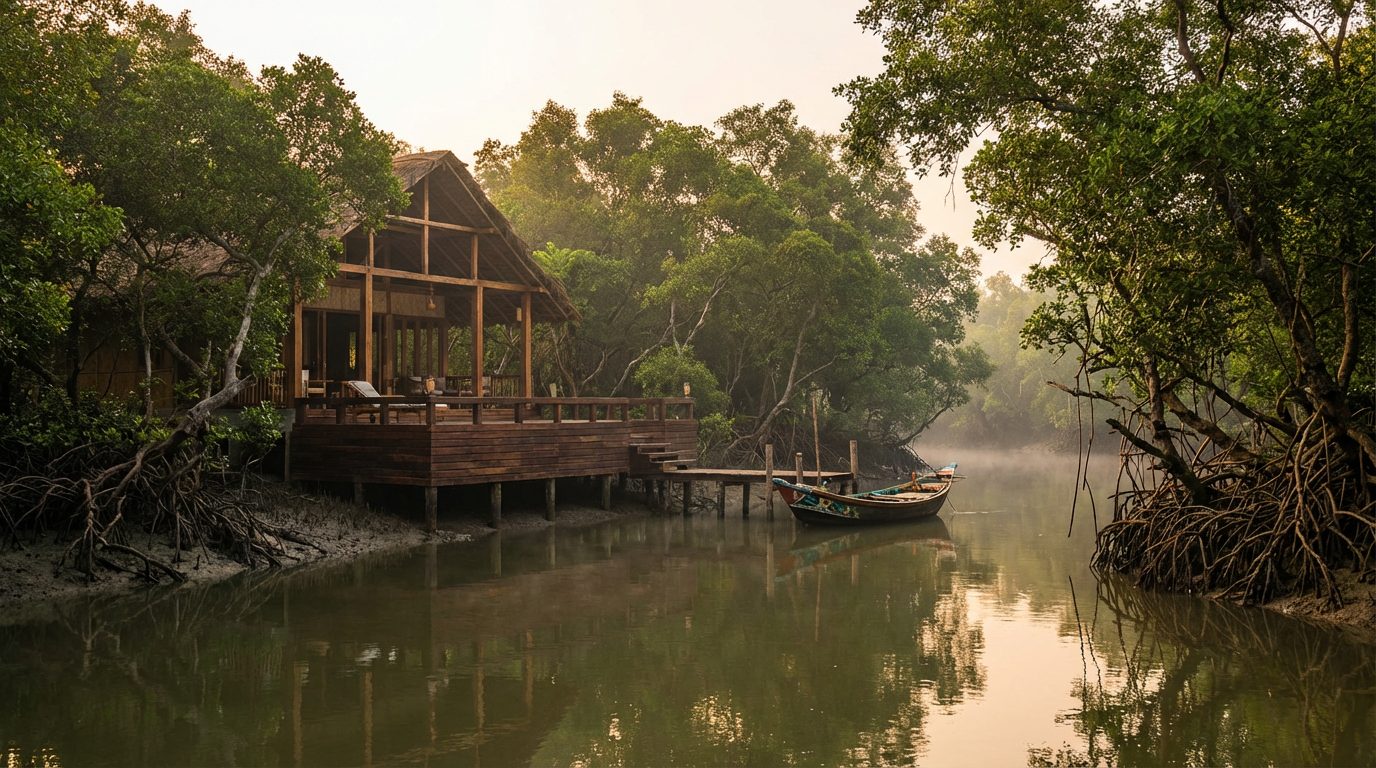
Imagine waking up to the sound of kingfishers diving into a tidal creek while sunlight filters through a canopy of ancient mangroves. A Sundarban jungle resort turns that vision into reality — placing you at the heart of the world’s largest mangrove ecosystem with every comfort you need for an unforgettable wilderness escape. Whether you crave boat safaris at dawn, night-time wildlife encounters, or simply a hammock overlooking a river, these jungle lodges deliver an experience no city hotel ever could.
Why Choose a Sundarban Jungle Resort Over a Standard Hotel?
Standard hotels keep you on the fringe, but a true Sundarban jungle resort is built inside the forest zone itself — often accessible only by boat. That remoteness is the whole point. You’re surrounded by Sundari, Gewa, and Keora trees, and your nearest neighbours are spotted deer, water monitors, and the elusive Royal Bengal Tiger. Resorts in this category focus on eco-friendly construction, solar power, rainwater harvesting, and locally sourced cuisine to minimise their footprint on the fragile delta.
Staying deep inside the reserve also means shorter travel times to prime safari zones. Instead of spending two hours on a motorboat each way, you’re already there — ready to explore narrow creeks and watchtowers minutes after breakfast. If you’re comparing options, our Sundarban eco resort guide breaks down the green certifications and sustainability practices that separate the best lodges from the rest.
What to Expect at a Jungle Lodge in Sundarban
Most jungle resorts offer thatched-roof cottages or stilted wooden chalets raised above the tidal mudflats. Rooms are designed with large windows and open-air verandas so the forest feels like an extension of your living space. Expect mosquito nets, ceiling fans, attached bathrooms, and 24-hour generator or solar-backed electricity. Many properties now include air-conditioned premium rooms for travellers who prefer extra comfort during the humid summer months.
Dining at a Sundarban jungle resort is an experience in itself. Kitchens prepare traditional Bengali dishes — think fresh river prawns, chingri malaikari, steamed bhetki, and seasonal vegetable curries — served on a riverside deck. Some resorts host bonfire evenings with folk music and storytelling by local guides, giving guests a cultural immersion that goes well beyond sightseeing.
Top Activities Available From Your Jungle Resort
Boat safaris remain the headline activity. Early-morning and late-afternoon cruises through narrow creeks maximise your chances of spotting tigers, fishing cats, crocodiles, and hundreds of bird species. Most resorts include at least two guided safaris per stay, with experienced forest guides who know exactly where wildlife gathers at different tides.
- Mangrove nature walks — guided treks along boardwalk trails through pneumatophore-studded mudflats.
- Watchtower visits — Sajnekhali, Sudhanyakhali, and Dobanki towers offer elevated vantage points for tiger and deer sightings.
- Village and culture tours — visit honey-collector communities and learn traditional fishing techniques.
- Night safaris & spotlight cruises — available at select resorts for nocturnal wildlife viewing.
- Kayaking & canoeing — paddle silently through narrow channels for a closer look at birdlife and mangrove roots.
Looking for a resort that bundles these activities into a single package? Check our curated Sundarban tour packages that include transfers, accommodation, meals, and all safaris.
How to Pick the Best Sundarban Jungle Resort for Your Trip
Start by deciding your budget tier. Economy jungle camps cost ₹1,500–₹3,000 per night, mid-range resorts run ₹3,000–₹6,000, and premium eco-lodges with AC rooms and private balconies can reach ₹8,000–₹12,000. Next, check how deep inside the forest the resort actually sits — properties closer to Gosaba or Pakhiralay are easier to reach but less immersive than those near Bali Island or deep inside the buffer zone.
Reviews from recent guests matter more than star ratings in Sundarban, so read feedback on food quality, guide expertise, and boat condition. Our best resort in Sundarban comparison ranks lodges on exactly these criteria, saving you hours of research.
Best Time to Visit a Sundarban Jungle Resort
The ideal window runs from October to March, when humidity drops, skies clear, and migratory birds arrive by the thousands. Winter months (December–February) offer the most comfortable weather, with daytime temperatures around 20–25 °C. The monsoon season (June–September) brings heavy rain and restricted forest entry, while the pre-monsoon heat of April–May can be intense but rewarding for serious wildlife photographers who prefer fewer crowds.
Whichever season you choose, book your Sundarban jungle resort at least two to three weeks in advance — especially for weekends and national holidays when popular lodges fill up fast.
Frequently Asked Questions
Ready to Experience the Sundarban Wilderness?
A stay at a Sundarban jungle resort is more than a holiday — it’s a chance to reconnect with raw, untouched nature in one of the planet’s most biodiverse regions. From boat safaris past sleeping crocodiles to dining under a sky full of stars, every moment feels extraordinary. Don’t just visit Sundarban — live inside it.