

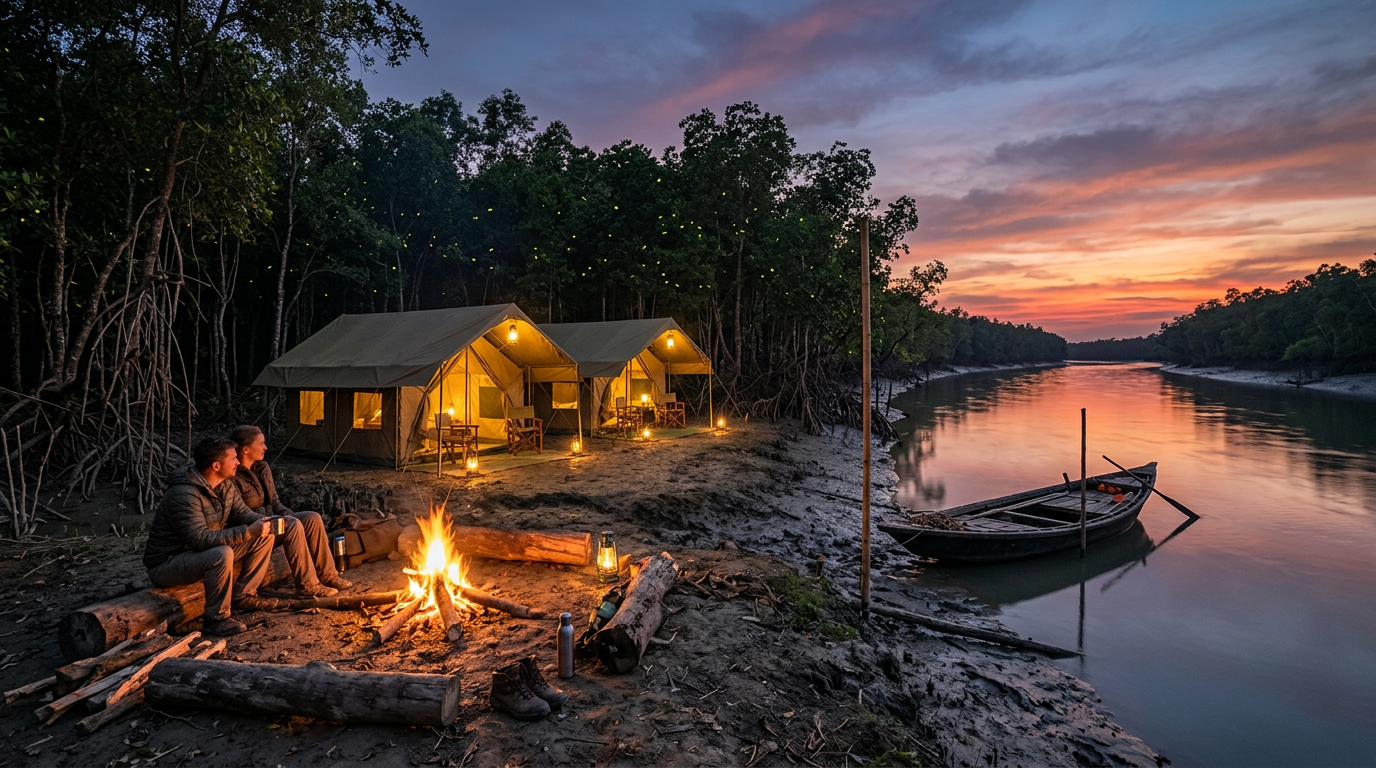
A Sundarban tent camping safari strips away every layer between you and one of the planet’s last great wildernesses. Instead of returning to a resort after the evening boat ride, you stay — right on the riverbank, surrounded by mangrove walls, tidal creeks, and the sounds of a forest that truly wakes up after dark. For travellers who have already ticked off the standard boat safari, tent camping is the logical next step: deeper immersion, rarer wildlife encounters, and the kind of stories that no hotel balcony can give you.
What a Sundarban Tent Camping Safari Actually Looks Like
The experience typically begins from Godkhali Ghat, where a motorised country boat carries your group through narrow tidal channels into the buffer zone of the Sundarban Tiger Reserve. By mid-afternoon you arrive at a designated camping stretch — a raised earthen bank clear of mangrove roots, already prepared with canvas dome tents, ground sheets, and solar-powered LED lanterns. Each tent comfortably fits two adults with sleeping bags and mosquito nets provided.
A temporary kitchen operates behind the tent line, run by local cooks who prepare freshly caught river fish, seasonal vegetables, and rice over wood-fired stoves. As daylight fades, the campfire becomes the social centre. Guides share tiger-tracking stories, point out fishing owls gliding over the creek, and explain the tidal rhythm that governs every creature in the delta. If you enjoy after-dark wildlife encounters, pair this trip with a Sundarban night safari experience that some operators run from the same camp.
Why Overnight Camping Beats a Day Trip
The Sundarbans is a crepuscular ecosystem — its most dramatic wildlife moments happen at dawn and dusk, precisely the hours a day-tripper misses. Spotted deer approach the waterline to drink at first light. Kingfishers start hunting when the mist still hangs over the creek. Estuarine crocodiles haul themselves onto mudflats before the sun gets harsh. By camping on-site, you witness two full golden-hour windows instead of zero.
Sound alone justifies the stay. After the generator-free silence of 10 p.m., the forest delivers a layered orchestra: crickets, distant barking deer alarm calls, water lapping against mangrove pneumatophores, and — if the season and luck align — the low, resonant roar of a Royal Bengal Tiger somewhere across the creek. No resort wall, however eco-friendly, lets that soundscape in. For those who prefer a roof but still want proximity to nature, the Sundarban eco resort guide reviews the best options near the reserve boundary.
What to Pack and How to Prepare
Packing light is essential because boat space is shared. Carry a compact daypack with these essentials: a quick-dry towel, insect repellent (DEET-based works best against Sundarban mosquitoes), a torch with a red filter for wildlife-friendly night viewing, a fully charged power bank, and a waterproof bag for electronics. Wear full-length cotton trousers and long-sleeved shirts in earth tones — both for camouflage during morning birdwatching and protection from insects after sunset.
Leave perfumed toiletries, bright clothing, and Bluetooth speakers at home. The forest responds to quiet visitors, and your guides will enforce silence near known wildlife corridors. If you have dietary restrictions, inform the operator at least 48 hours before departure so the kitchen team can plan accordingly.
Camping Safari Packages and Pricing
A standard Sundarban tent camping safari package (1 night / 2 days) with Sundarban Ecofriends starts at ₹4,500 per person for a group of six or more. The package includes return boat transfers from Godkhali, all meals, tent accommodation, forest permits, a professional nature guide, campfire setup, and an early-morning bird walk. Premium upgrades — a larger tent, a private boat, or an extended 2-night itinerary that pushes deeper into Dobanki or Sudhanyakhali territory — are available from ₹6,500 per person.
Group discounts apply for parties of 10 or more. College groups, photography clubs, and corporate off-site teams frequently book customised camping itineraries that add kayaking segments or guided fishing sessions. Compare all available options on the Sundarban tour packages page to find the combination that fits your budget and adventure appetite.
Frequently Asked Questions
Is tent camping in the Sundarbans safe?
Yes. Camps are set up in designated buffer zones, not inside the core tiger area. Armed forest guards patrol the perimeter throughout the night, and experienced guides enforce strict safety protocols around fire, food storage, and noise levels.
What is the best season for a Sundarban tent camping safari?
October to March offers cool, dry weather and peak wildlife activity. September and April are excellent shoulder months with fewer crowds and lower prices. Monsoon camping (June–August) is not recommended due to heavy rain and tidal flooding.
Are bathrooms available at the campsite?
Operators set up temporary portable toilet tents at every campsite. Running water for washing is drawn from the river and filtered. Eco-friendly biodegradable soap is provided to minimise environmental impact.
Can children join the camping safari?
Children aged 8 and above are welcome on most camping itineraries. Younger children may find the boat journey and overnight stay challenging. Operators can arrange a modified family-friendly version with a shorter boat ride and extra comfort provisions.
How do I book a Sundarban tent camping safari?
Contact Sundarban Ecofriends via WhatsApp at +91 77978 60930 or visit the Sundarban tour packages page on our website. A ₹1,000 advance per person confirms your slot, with the balance payable on the day of departure from Godkhali.