

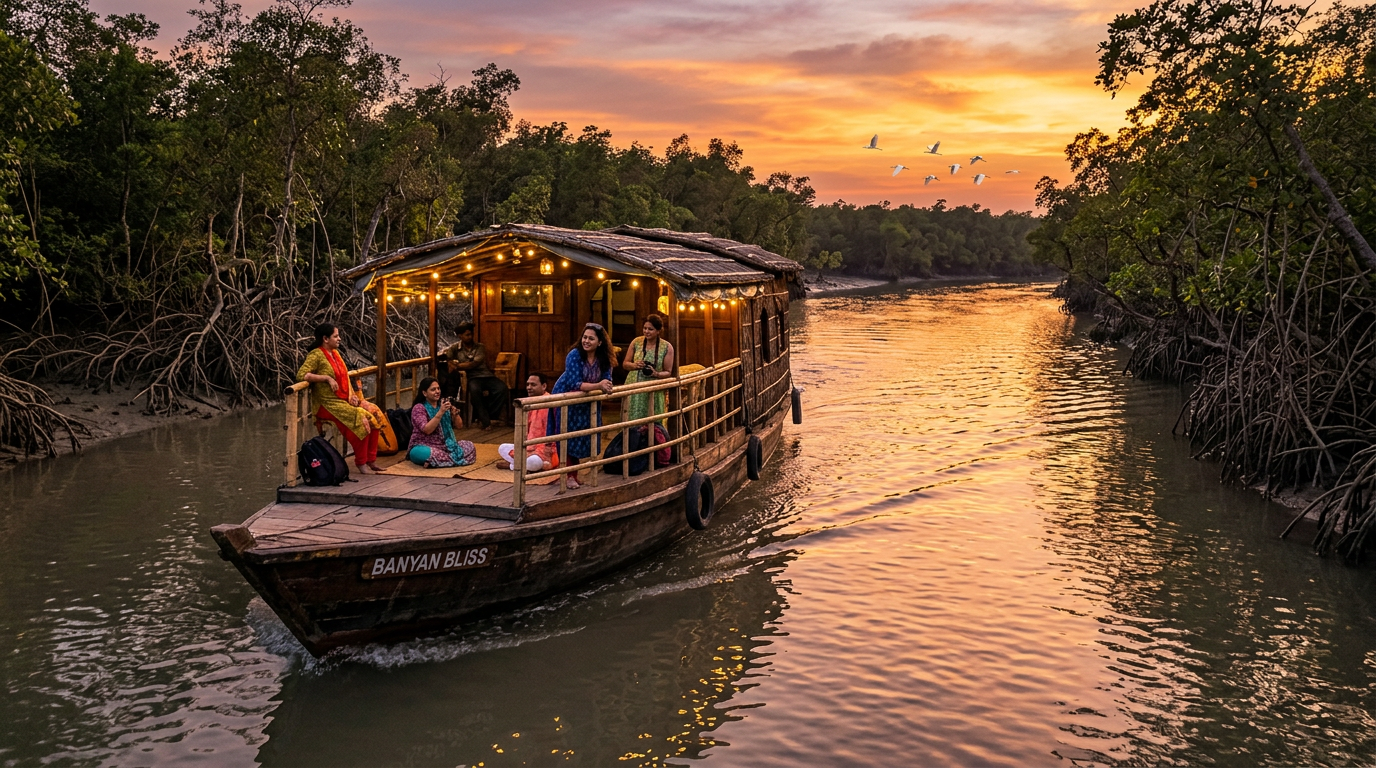
There is something the resorts and lodges cannot replicate — waking up to the sound of water lapping against wood, stepping onto a deck surrounded by nothing but mangroves, and watching a kingfisher dive before your morning tea arrives. A Sundarban houseboat tour package delivers exactly that kind of unfiltered experience, and it is quickly becoming the most sought-after way to explore the world’s largest tidal mangrove forest.
Unlike conventional stays where you return to a fixed lodge each evening, a houseboat keeps you on the river — drifting through creeks, anchoring near wildlife zones, and covering more ground than any road-based itinerary ever could. If you have been considering a Sundarban trip but want something beyond the ordinary, this guide covers everything you need to know.
What a Sundarban Houseboat Tour Package Includes
Most houseboat packages are structured as 2-night or 3-night itineraries departing from Godkhali or Canning. A well-organised sundarban houseboat tour package typically bundles the following:
- Accommodation: Private or shared cabins with attached washrooms, clean bedding, and mosquito nets.
- Meals: Three full meals per day — Bengali-style fish curry, rice, dal, seasonal vegetables, and evening snacks served on deck.
- Safari permits: Entry tickets to Sajnekhali Wildlife Sanctuary, Sudhanyakhali Watchtower, and Dobanki canopy walk.
- Guided boat safaris: Smaller country boats take you into narrow creeks where the larger houseboat cannot enter — this is where tiger sightings happen.
- Cultural programme: Folk performances by local artists on the final evening.
- Transfers: Pick-up and drop from Canning railway station or a designated Kolkata meeting point.
Packages start from approximately Rs 6,000 per person for a shared houseboat and go up to Rs 18,000+ for private luxury vessels with air-conditioned cabins. You can compare options on our Sundarban tour package price list for 2026.
Why Choose a Houseboat Over a Resort Stay?
The Sundarban delta is 70% water. Staying in a resort means you spend hours commuting to safari zones each morning and returning each evening. A houseboat eliminates that entirely — you are already where the wildlife is.
Here is what sets the houseboat experience apart:
- Deeper river access: Houseboats anchor overnight near buffer zones, giving you early-morning and late-evening wildlife windows that day-trippers miss entirely.
- Uninterrupted sunset and sunrise views: No walls, no obstructions — just open water and a 360-degree sky that shifts from gold to crimson.
- Minimal disturbance to wildlife: Floating silently through creeks causes far less disruption than motorised vehicles, increasing your chances of spotting deer, crocodiles, and even the Royal Bengal Tiger.
- Authentic delta living: Eating freshly caught fish, sleeping to the rhythm of tides, and chatting with boatmen who have navigated these waters for generations.
If you are weighing different accommodation styles, our detailed guide on accommodation types in Sundarban breaks down resorts, eco-lodges, and houseboats side by side.
Best Time to Book a Houseboat Safari
The ideal season for a Sundarban houseboat tour runs from September through March. During these months, the monsoon recedes, river currents stabilise, and migratory birds arrive in massive flocks. Winter months — December to February — offer the calmest waters and the highest probability of wildlife sightings near riverbanks, as animals come to drink in the cooler hours.
Avoid the peak monsoon window (June–August) for houseboat trips. Water levels rise unpredictably, and several interior creeks become too rough for safe overnight anchoring. Shoulder months like September and March offer a good balance between fewer crowds and stable weather.
How to Choose the Right Houseboat Operator
Not all houseboats are created equal. Before you book, verify these five things:
- Safety equipment: Life jackets for every guest, fire extinguishers, and a first-aid kit are non-negotiable.
- Forest department permits: The operator must hold valid permits issued by the Sundarban Tiger Reserve authority.
- Boat condition: Ask for recent photos or videos. Older wooden boats have charm but ensure the hull, engine, and electrical systems are well maintained.
- Guide credentials: A trained naturalist or certified forest guide makes a dramatic difference in spotting and understanding wildlife.
- Transparent pricing: Confirm whether the quoted rate includes permits, meals, and transfers — hidden extras can inflate costs by 30–40%.
At Sundarban Eco Friends, every houseboat in our fleet is inspected seasonally, and our guides hold certification from the West Bengal Forest Department. Browse our full range of Sundarban tour packages to find the houseboat itinerary that fits your group size and budget.
Frequently Asked Questions
Yes. Reputable operators equip every houseboat with child-sized life jackets, railed decks, and covered sleeping areas. Children aged 5 and above generally enjoy the experience, and guides tailor the safari commentary for younger audiences.
Shared houseboat packages start from around Rs 6,000 per person for a 2-night trip. Private or luxury houseboats with air-conditioned cabins range between Rs 12,000 and Rs 18,000 per person depending on the season and group size.
Tiger sightings are never guaranteed, but houseboats significantly improve your chances. They anchor near buffer zones overnight, giving you access to early-morning and dusk hours when tigers are most active along riverbanks.
Meals are freshly cooked onboard and follow traditional Bengali cuisine — rice, fish curry, dal, mixed vegetables, and egg dishes. Most operators also serve morning tea, afternoon snacks, and can accommodate vegetarian or Jain dietary requirements on request.
December to February is considered the best window. The weather is cool and dry, river currents are calm, and wildlife is more visible near the banks. September to November is also excellent for birdwatching as migratory species arrive.
Book Your Sundarban Houseboat Tour Today
A houseboat tour is not just a trip — it is the closest you can get to living inside the Sundarban ecosystem. From the floating safari rides to onboard Bengali meals under a sky full of stars, every hour on the water brings a new reason to stay longer. Packages are limited during peak season, so early booking is strongly recommended.