

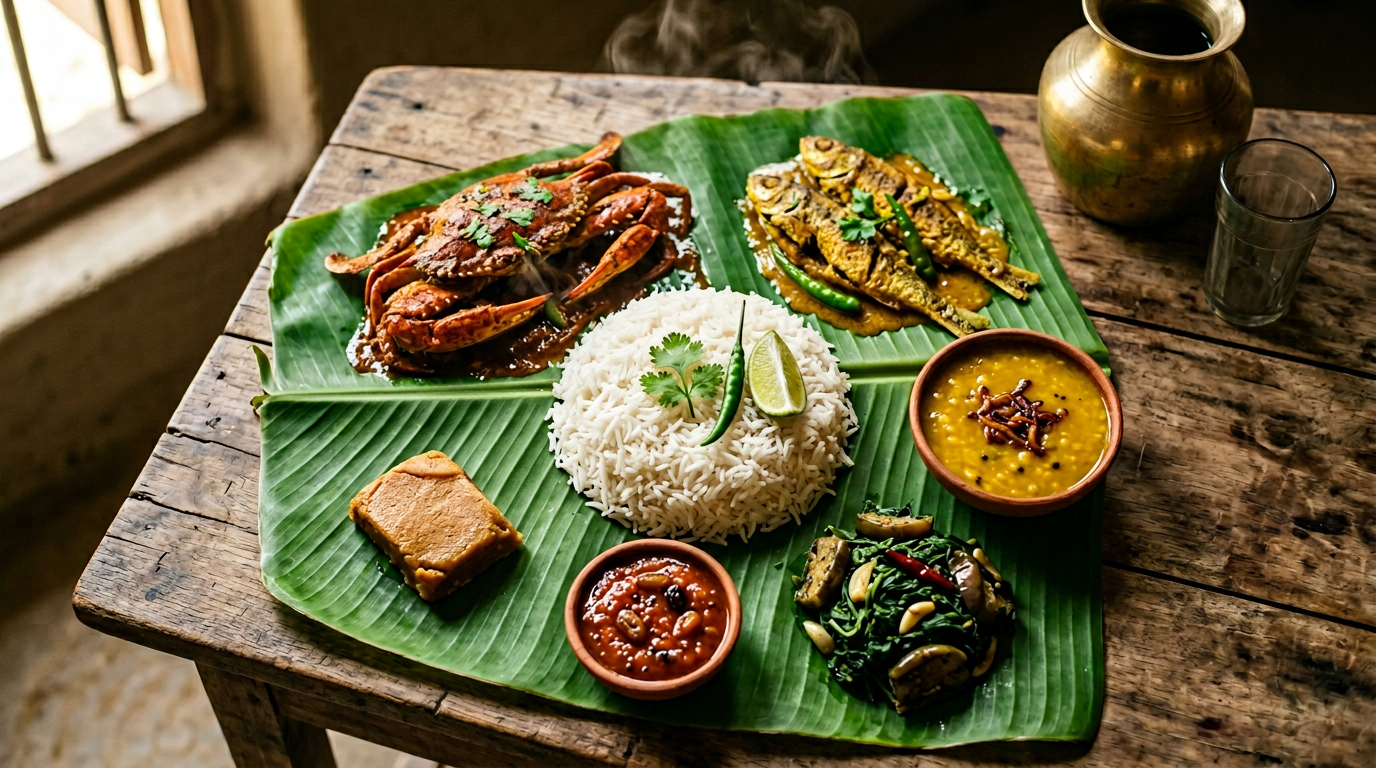
The Sundarbans is not just about mangrove forests and Royal Bengal Tigers — it is a food lover’s paradise hiding in plain sight. Sundarban local food draws its soul from tidal rivers, dense forests, and centuries of Bengali village cooking traditions. Every dish tells a story of the land, and every bite connects you to a culture that lives off the water and the wild.
If you are planning a trip to this UNESCO World Heritage region, your itinerary isn’t complete without tasting its authentic cuisine. From freshly caught river fish to wild honey drizzled on warm flatbread, here is your complete guide to the must-try dishes of the Sundarbans.
Fresh River Fish — The Heart of Sundarban Local Food
Fish is the undisputed king of every Sundarban kitchen. The rivers and creeks teem with species like Parshe (mullet), Bhetki (barramundi), Tangra, and Chingri (prawns) — each prepared in ways you won’t find in Kolkata restaurants. Villagers cook Parshe maach with a light turmeric and mustard paste, slow-simmered until the gravy turns golden. Bhetki fry, seasoned with local green chillies and salt, is served crispy on the outside and flaky inside.
What makes Sundarban fish dishes unique is the freshness — most fish goes from the net to the plate within hours. During a homestay in a Sundarban village, you can watch your meal being caught, cleaned, and cooked right in front of you. That farm-to-table experience is something no city restaurant can replicate.
Crab Curry and Prawn Malaikari — Coastal Bengali Classics
The mud crabs of the Sundarbans are legendary. Plump, meaty, and full of flavour, they are cooked in a rich, slow-simmered gravy with coconut milk, whole spices, and mustard oil. Sundarban crab curry is nothing like its urban cousins — it carries a rustic depth that comes from wood-fire cooking and freshly ground masalas.
Equally famous is Chingri Malaikari — jumbo river prawns cooked in a creamy coconut-based sauce. The sweetness of the prawns blends with the rich coconut gravy to create a dish that locals proudly call their signature. Pair it with steaming white rice, and you have the most satisfying meal of your Sundarban trip.
Wild Honey, Palm Jaggery, and Sweet Treats
The Sundarbans produces some of India’s finest wild honey. Collected by Mouli (honey gatherers) who venture deep into tiger territory, this honey carries the floral notes of mangrove blossoms and is darker and richer than commercially farmed varieties. Locals drizzle it over luchi (fried flatbread) or mix it into warm milk as an evening ritual.
Patali Gur (date palm jaggery) is another prized ingredient. Available mainly during winter, it is used to make payesh (rice pudding), sandesh, and pitha (rice cakes). These sweets taste entirely different from anything made with refined sugar — earthy, smoky, and deeply satisfying. Exploring Sundarban village culture during the winter months gives you the best chance to taste freshly made palm jaggery desserts.
Village Recipes You Won’t Find on Any Menu
Beyond the well-known dishes, Sundarban kitchens hold secrets passed down through generations. Shukto — a bitter-sweet mixed vegetable stew — is served as the first course in traditional meals. Mochar Ghonto, made from banana blossoms, and Thor (banana stem curry) are everyday preparations that city visitors find surprisingly delicious.
During monsoon, villagers prepare Ilish bhapa — hilsa fish steamed in mustard paste wrapped inside banana leaves. The aroma alone is worth the trip. These recipes rely on hyper-local ingredients — freshly plucked greens, hand-ground spices, and mustard oil pressed in village mills. To truly experience this culinary heritage, book a Sundarban tour package that includes village meals and cultural immersion.
Frequently Asked Questions
Ready to Taste the Real Sundarbans?
The flavours of the Sundarbans stay with you long after the trip ends. From the first bite of crab curry to the last spoonful of palm jaggery payesh, every meal is an experience rooted in nature and tradition. Don’t just see the Sundarbans — taste it.