

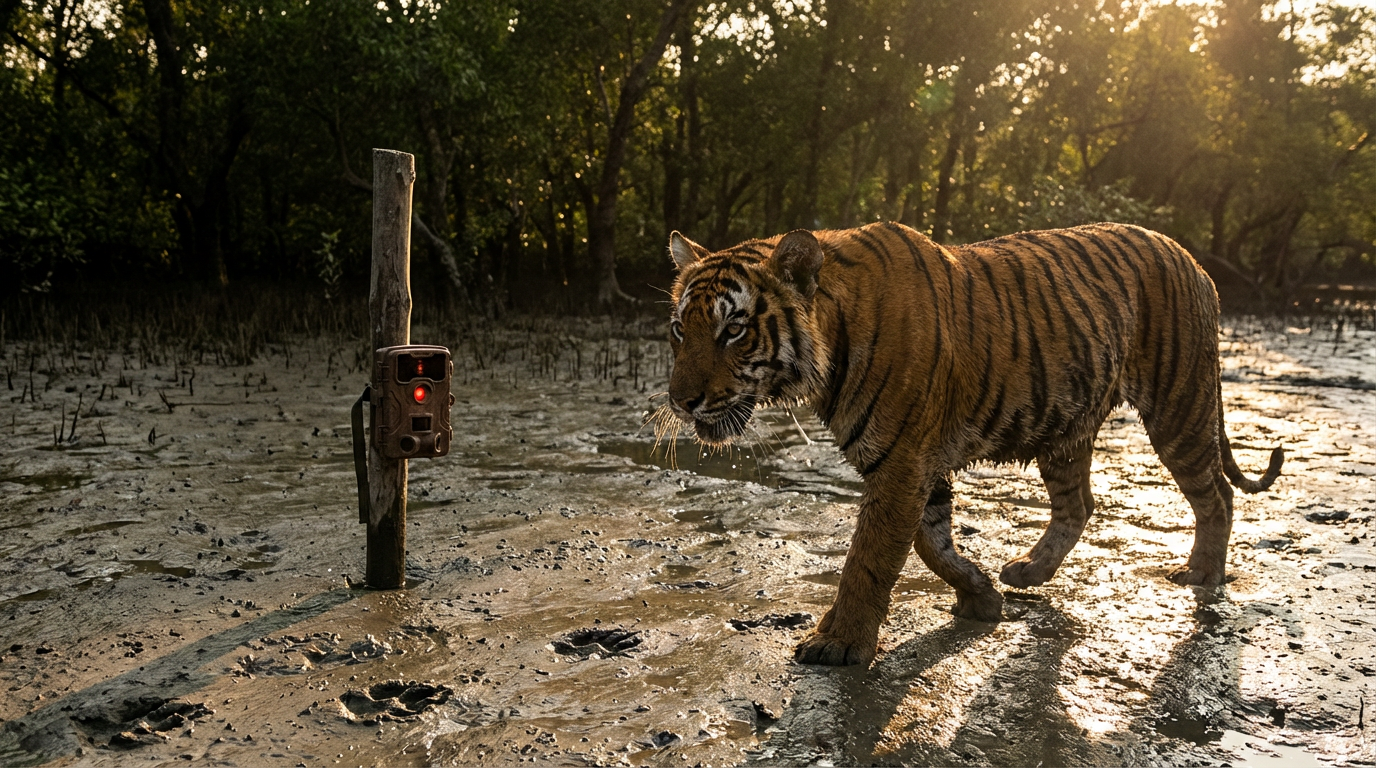
The Sundarban tiger population has long fascinated wildlife researchers and eco-tourists alike. As the only mangrove-dwelling tigers on Earth, the Royal Bengal Tigers of the Sundarbans face challenges no other big-cat population encounters — tidal flooding, cyclone damage, and rapidly shifting habitat. The 2026 census brings cautiously optimistic data, confirming that sustained conservation efforts are keeping this iconic species alive in one of the most hostile landscapes on the planet.
Sundarban Tiger Population 2026 — Latest Census Numbers
India’s National Tiger Conservation Authority (NTCA) and the West Bengal Forest Department released preliminary figures from the 2025–2026 All-India Tiger Estimation. The Sundarban tiger population in the Indian sector is now estimated at 105–112 individual tigers, a modest but meaningful increase from the 96 individuals recorded in 2022. When Bangladesh’s Sundarbans Reserve Forest is included, the combined landscape supports approximately 180–200 Royal Bengal Tigers.
These numbers stem from an exhaustive exercise involving over 350 camera traps deployed across 54 monitoring blocks, supplemented by pugmark analysis, scat DNA profiling, and satellite-collar telemetry data. If you’re curious about what a tiger sighting in the wild actually looks like, read our guide on Sundarban Royal Bengal Tiger spotting.
Tiger Count Trends — A Decade of Data
Tracking the Sundarban tiger population over time reveals how conservation policy translates into real outcomes. The table below summarises official census results from 2014 to 2026.
| Census Year | India (STR) | Bangladesh (SRF) | Combined Estimate | Method |
|---|---|---|---|---|
| 2014 | 76 | 106 | ~182 | Camera trap + pugmark |
| 2018 | 88 | 114 | ~202 | Camera trap + DNA |
| 2022 | 96 | ~90 | ~186 | Camera trap + eDNA |
| 2026 | 105–112 | ~85–90 | ~190–200 | Camera trap + satellite collar + DNA |
India’s numbers show a steady upward trajectory, while Bangladesh’s estimates have fluctuated owing to different monitoring protocols and the impact of Cyclone Amphan in 2020. Overall, the combined Sundarban tiger population has remained broadly stable in the 180–200 range for a decade — a positive sign given the mounting pressures of climate change.
Camera Traps and Modern Monitoring
The backbone of the 2026 census is the expanded camera trap network. The Sundarban Tiger Reserve now operates 350+ infrared camera traps in a systematic grid across tidal waterways, mudflats, and forest interiors. Each unit captures high-resolution images around the clock, allowing researchers to identify individual tigers by their unique stripe patterns.
New additions this cycle include environmental DNA (eDNA) sampling of creek water and satellite-enabled GPS collars fitted on 12 tigers. These collars transmit location data every four hours, providing the first detailed movement maps of mangrove tigers and revealing previously unknown corridors between India and Bangladesh. To understand the broader conservation picture, explore our Sundarban conservation efforts guide.
Key Conservation Measures Protecting the Sundarban Tiger
Several initiatives underpin the encouraging census results:
- Eco-Development Committees (EDCs): 42 village-level EDCs now manage buffer zones, reducing human–tiger conflict by 30 % since 2019.
- Nylon-net fencing and solar lights: Deployed along 85 km of forest-fringe to deter tigers from entering villages.
- Freshwater augmentation: Artificial ponds inside core zones ensure tigers and prey have drinking water during dry months, reducing their need to venture out.
- Anti-poaching patrols: 24/7 boat patrols covering 4,200 km² with real-time drone surveillance support.
- Mangrove restoration: Over 12,000 hectares replanted since 2018, reinforcing habitat resilience against cyclones and sea-level rise.
These measures work in concert to keep the Sundarban tiger population on a stable-to-growing path. Responsible tourism also plays a role — every visitor who books through ethical operators directly funds conservation. Check out our Sundarban tour packages to see how your trip supports the tigers.
Frequently Asked Questions
What is the current Sundarban tiger population in 2026?
The Indian Sundarban Tiger Reserve holds an estimated 105–112 Royal Bengal Tigers as of the 2025–2026 census. Including Bangladesh’s Sundarbans, the total is approximately 190–200 tigers.
How are Sundarban tigers counted?
Tigers are counted using a combination of camera traps, pugmark tracking, scat DNA analysis, environmental DNA (eDNA) sampling of water bodies, and satellite GPS collars fitted on select individuals.
Is the Sundarban tiger population increasing or decreasing?
India’s Sundarban tiger count has shown a steady increase — from 76 in 2014 to 105–112 in 2026. The combined India–Bangladesh population has remained stable in the 180–200 range over the past decade.
Can tourists see tigers during a Sundarban safari?
Yes, though sightings are rare due to the dense mangrove habitat. The best chances are during winter months (November–February) on licensed boat safaris along tiger corridors. Visit our Sundarban Royal Bengal Tiger spotting guide for tips.
What threats do Sundarban tigers face?
Major threats include habitat loss from sea-level rise, cyclone damage, human–tiger conflict in fringe villages, prey depletion from illegal fishing, and occasional poaching. Climate change remains the most significant long-term risk.
Plan Your Sundarban Tiger Safari Today
Seeing a Royal Bengal Tiger in the wild Sundarbans is a once-in-a-lifetime experience. Our eco-friendly tours are led by certified naturalists and directly fund the conservation measures keeping this tiger population thriving. Ready to explore?