

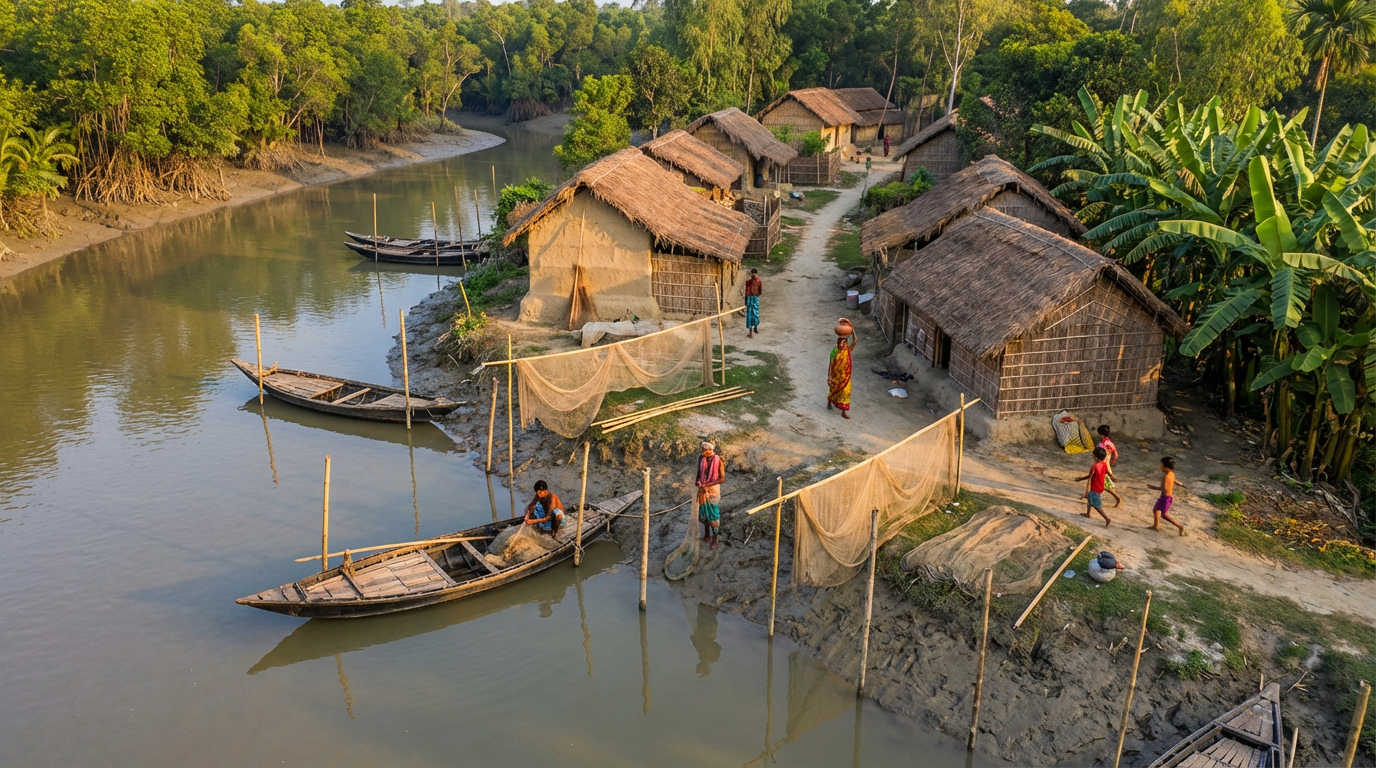
The Sundarban delta is not just about tigers and boat safaris. Beyond the dense mangrove canopy, thousands of families live a life shaped entirely by the tides, rivers, and forests. A Sundarban local village tour takes you into the heart of this world — where honey collectors prepare for dawn expeditions, fishermen haul in the morning catch, and children walk barefoot along muddy embankments to school.
If you want to experience the real Sundarbans — not just the wildlife — a guided village tour is one of the most rewarding things you can do. It reveals a culture of resilience, simplicity, and deep connection with nature that few places on earth can match.
What to Expect on a Sundarban Village Tour
Most village tours begin from Gosaba Island, the largest inhabited island in the Sundarbans. From there, a country boat carries you through narrow creeks to remote settlements on islands like Satjelia, Bali, and Lahiripur. These are places where electricity arrived only recently and motorised transport is still rare.
Your guide — usually a local resident — walks you through the village, introducing you to families, artisans, and workers whose livelihoods depend entirely on the delta. You will see women weaving fishing nets by hand, men repairing wooden boats, and elders sharing stories under banyan trees. The pace is unhurried, and every interaction offers a genuine glimpse into delta life.
Expect narrow mud paths between thatched-roof huts, ponds used for fish cultivation, small temples, and community gathering spots where folk performances sometimes take place in the evenings.
Honey Collectors, Fishermen and Forest Workers
The Sundarbans are famous for wild honey, and the moule (honey collectors) are among the bravest people in the delta. During the honey season (April–June), they enter deep mangrove forests armed with nothing but smoky torches and prayers to Bonbibi, the forest goddess. On a village tour, you may meet retired collectors who share first-hand accounts of encounters with Royal Bengal Tigers and crocodiles.
Fishermen form the backbone of every Sundarban village. They use traditional traps, cast nets, and small wooden boats to catch fish, crabs, and prawns in tidal creeks. Many families also practise bheri aquaculture — raising fish in enclosed ponds along the riverbanks. Watching these daily routines gives you an appreciation for how intricately human life and the mangrove ecosystem are woven together.
Local Food and Folk Culture
No Sundarban local village tour is complete without tasting the food. Village meals typically feature freshly caught fish — often parse or bhetki — cooked in mustard paste and served with steaming rice. Crab curry, prawn malai, and wild honey drizzled over puffed rice are local favourites. Everything is cooked over clay stoves using firewood, giving the food a distinct smoky flavour you will not find in any restaurant.
In the evenings, some tours include folk dance and music performances. Bonbibi Pala, a theatrical retelling of the Bonbibi legend, is performed with drums, masks, and colourful costumes. Jhumur and Bhatiali songs — sung by boatmen for generations — echo across the water and capture the melancholy and beauty of river life.
Tips for a Respectful Village Visit
- Ask before photographing — always seek permission from villagers before taking photos.
- Buy local — purchase honey, dried fish, or handmade crafts directly from families to support the local economy.
- Dress modestly — lightweight cotton clothing that covers shoulders and knees is appropriate.
- Carry cash — there are no ATMs in most Sundarban villages.
- Respect the environment — carry your waste back; do not litter in the delta.
Frequently Asked Questions
How long does a Sundarban local village tour take?
A typical village tour lasts 2–3 hours and is usually included as part of a full-day Sundarban itinerary. Some operators offer extended half-day tours with a village lunch experience.
Is the village tour safe for families with children?
Yes, village tours are completely safe and family-friendly. The walking paths are easy, and children especially enjoy interacting with village kids and watching fishing activities.
Can I buy Sundarban honey during the village tour?
Absolutely. Locals sell fresh wild honey collected from the mangrove forest. Buying directly from honey collectors ensures you get authentic Sundarban honey and supports their livelihood.
Do I need a guide for the village tour?
A local guide is highly recommended. They speak the local dialect, know the families personally, and can translate conversations so you get a much richer experience.
What is the best time to visit Sundarban villages?
October to March offers the best weather for village tours — cool, dry days with comfortable walking conditions. The honey season (April–June) is ideal if you want to meet active honey collectors.