

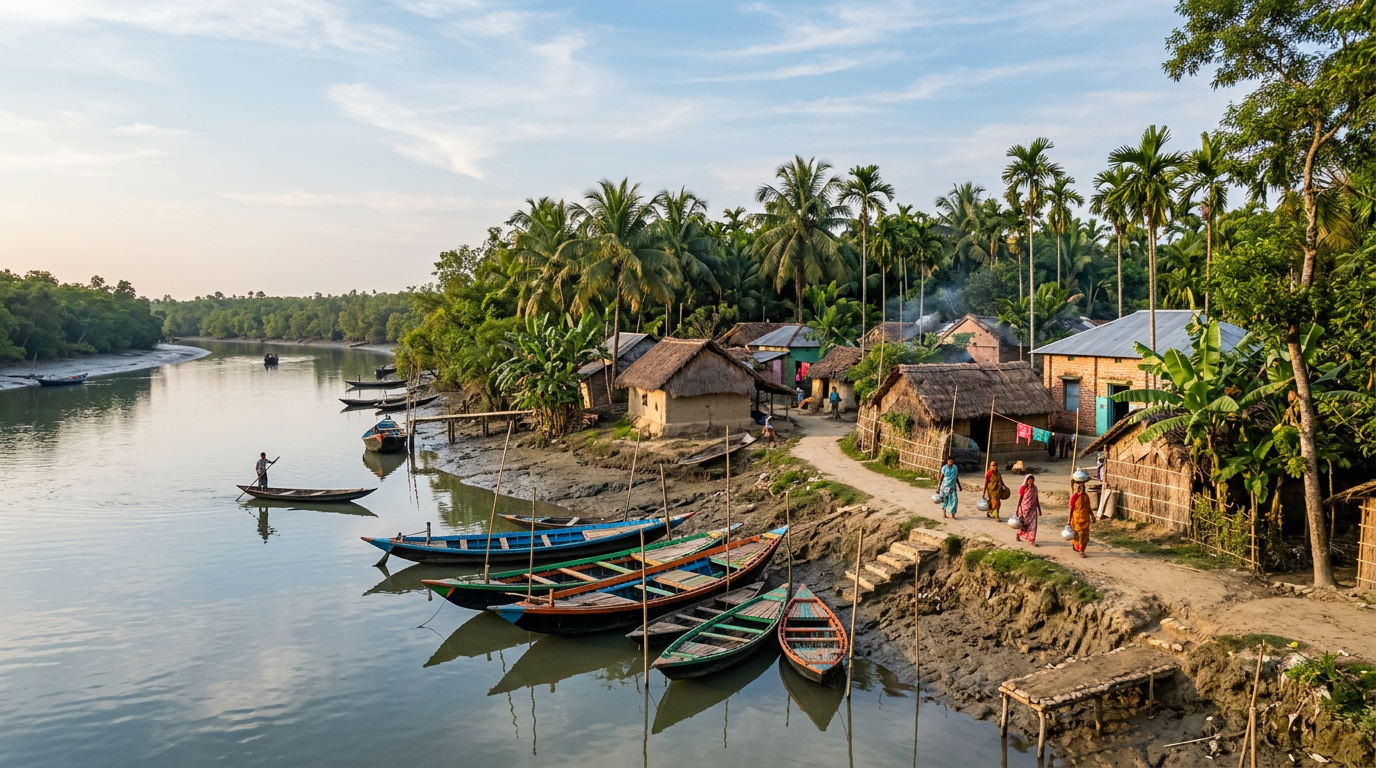
If you trace the map of the Sundarbans from Kolkata southward, the paved road ends, the river widens, and the last island with electricity, schools, and a functioning market is Gosaba. Sitting at the edge of the Sundarban Tiger Reserve in South 24 Parganas district, Gosaba Island Sundarban is where civilisation hands the baton to the wild. Every motorised launch, every permit-stamped tourist boat, and every forest department vessel passes through Gosaba’s waterways before entering the core mangrove jungle. Understanding Gosaba is essential — it is the gateway that shapes your entire Sundarban tour package experience.
Where Exactly Is Gosaba Island?
Gosaba is a deltaic island in the lower Ganges–Brahmaputra basin, roughly 110 km south-east of Kolkata. It is bordered by the Bidya River to the west, the Gomor River to the east, and a network of tidal creeks on all other sides. The island falls under the Gosaba Community Development Block and is home to approximately 2.5 lakh people — the highest population density of any island this close to the reserve boundary. Despite being surrounded by water, Gosaba is well connected by road up to Canning and then by boat from the Godkhali or Sonakhali jetties. Detailed route options are covered in our how to reach Sundarban guide.
How to Reach Gosaba from Kolkata
The most common route starts at Sealdah or Canning railway station. From Canning, shared auto-rickshaws or private cars cover the 29 km road to Godkhali jetty in roughly 45 minutes. At Godkhali, you board a mechanised boat for the 20-minute crossing to Gosaba Island. Tour operators providing Sundarban tour packages usually arrange seamless transfers from Kolkata to Gosaba — including pick-up, road transport, and the boat crossing — so independent logistics are rarely needed. If you are driving, parking is available at the Godkhali jetty area on the mainland side.
What to See and Do on Gosaba Island
Gosaba is not a jungle safari zone — it is a living, breathing island community. Here is what makes it worth your attention:
- Hamilton Bungalow Ruins: Built by Sir Daniel Hamilton in the early 1900s, these colonial-era remains sit on a raised embankment and tell the story of Hamilton’s utopian settlement experiment for landless farmers.
- Gosaba Market: The last proper bazaar before the jungle. Stock up on snacks, water, batteries, and basic medicines here — nothing is available deeper inside the reserve.
- Riverside Walks: The island’s embankment paths offer beautiful views of country boats, fishing nets, and coconut-lined horizons — ideal for photography.
- Local Culture: Gosaba’s population includes fishermen, honey collectors (mouli), and crab catchers who navigate tiger territory daily. Conversations with locals reveal a way of life inseparable from the mangrove ecosystem.
- Pakhiralay Bird Village: A short boat ride from Gosaba, Pakhiralay hosts massive flocks of open-billed storks and other wading birds — particularly stunning during winter.
Why Every Sundarban Tour Stops at Gosaba
Gosaba functions as the logistical hub for nearly all Sundarban jungle safaris. Tour boats refuel here, guides finalise permits, and passengers get their last chance to use mobile networks before signal drops to zero inside the forest. The island’s Gosaba–Sajnekhali waterway is the primary navigation channel into the reserve, leading directly to the Sajnekhali Watch Tower — the first official checkpoint and wildlife viewpoint. Without passing through Gosaba, reaching Sajnekhali, Sudhanyakhali, or Dobanki is simply not possible. This geographic inevitability makes Gosaba the single most important transit point for every Sundarban itinerary.
Best Time to Visit Gosaba Island
Gosaba is accessible year-round, but the ideal window is October to March — the same season recommended for the broader Sundarban safari. During these months, weather is dry, temperatures hover between 15 °C and 28 °C, and migratory birds fill the surrounding wetlands. The monsoon months (June–September) bring heavy rainfall and waterlogging, making boat travel less comfortable and some interior areas difficult to reach. If your priority is birdwatching at Pakhiralay, target December to February when stork colonies are at peak numbers.
Frequently Asked Questions
Is Gosaba Island safe for tourists?
Yes. Gosaba is a densely populated inhabited island with schools, health centres, police outposts, and regular boat services. It is not inside the tiger reserve, so there is no wildlife risk on the island itself. Standard travel precautions are sufficient.
Can I stay overnight on Gosaba Island?
Several small guesthouses and homestays operate on Gosaba Island. However, most Sundarban tour packages include houseboat or resort accommodation deeper inside the delta, so tourists typically pass through Gosaba rather than stay the night.
Is mobile network available on Gosaba Island?
Yes. BSNL and Jio have limited coverage on Gosaba Island. Signal strength is patchy but usable for calls and basic messaging. Once you leave Gosaba and enter the reserve area, all mobile signals disappear completely.
How far is Gosaba from Sajnekhali Watch Tower?
Sajnekhali Watch Tower is approximately 8–10 km by boat from Gosaba Island. The journey takes around 30–40 minutes on a motorised launch, depending on tidal conditions and river traffic.
Do I need a permit to visit Gosaba Island?
No permit is needed to visit Gosaba itself — it is a civilian island. However, you need a Sundarban Tiger Reserve entry permit to proceed beyond Gosaba into the forest areas. Your tour operator handles the permit process as part of the package.