

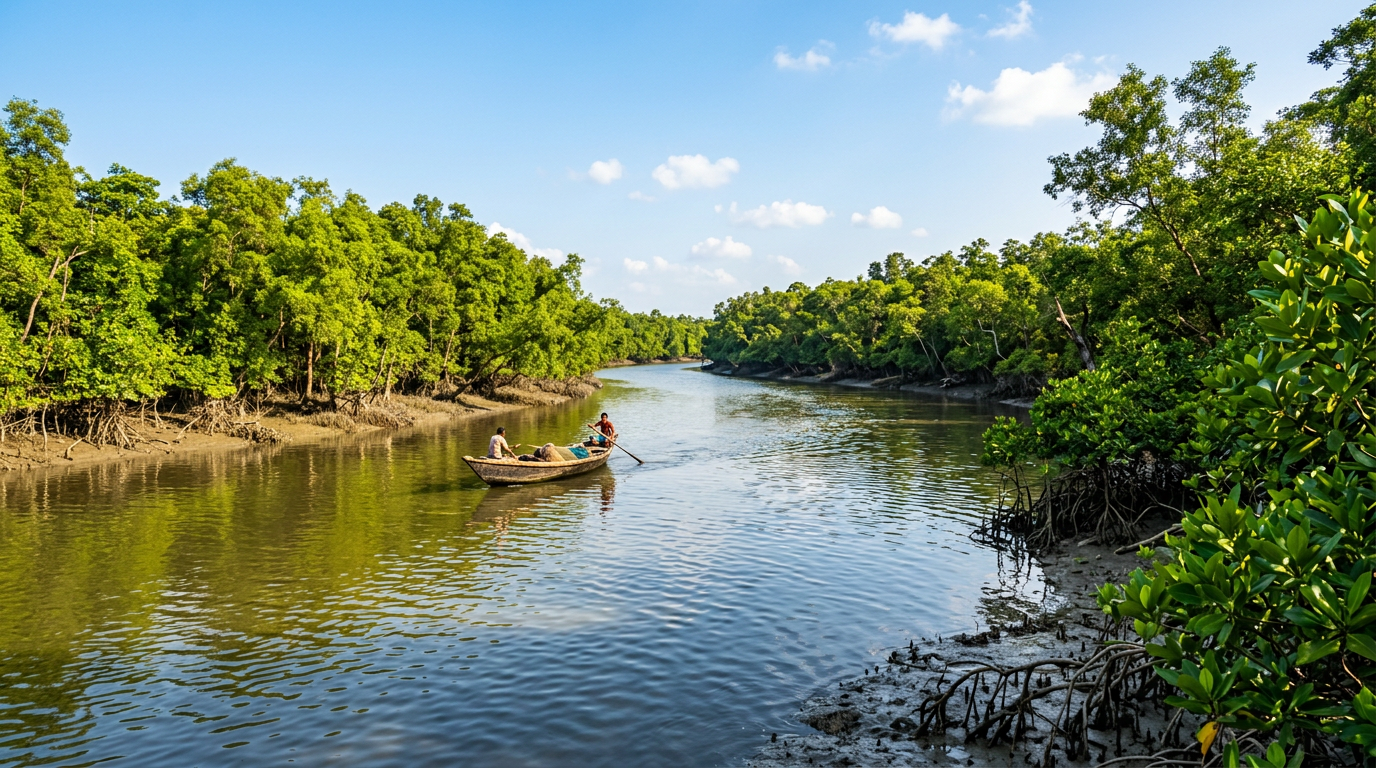
Most travel guides will tell you to avoid the Sundarbans in summer. We disagree — at least partially. A Sundarban summer tour package between March and June is not for everyone, but it rewards the right kind of traveller with significantly lower prices, nearly empty boats, and a version of the mangrove delta that peak-season visitors never see. Temperatures climb to 35–42 °C and humidity can feel oppressive by midday, yet the forest itself is at its most alive — lush canopies at full density, Gangetic Dolphins active in warming waters, and nesting birds everywhere you look. If you plan around the heat instead of fighting it, a summer trip delivers excellent value for money. This guide breaks down the honest pros, cons, and practical tips so you can decide whether a Sundarban summer tour belongs on your calendar.
What to Expect on a Sundarban Summer Tour (March–June)
Summer in the Sundarbans splits into two distinct phases. March and April bring dry heat with clear skies — daytime temperatures hover around 34–38 °C, and the rivers run low enough to expose wide mudflats where Estuarine Crocodiles bask and tiger pugmarks are easily spotted. May and June shift toward pre-monsoon humidity; occasional thundershowers cool the air briefly but push humidity past 85 %. River levels begin to rise, and the forest floor stays damp.
Wildlife behaviour changes noticeably. The Royal Bengal Tiger visits riverbanks more frequently in the scorching weeks of April and May because freshwater sources inside the forest shrink. Spotted Deer herds cluster near creek mouths, and Water Monitors are highly active. Birdwatching shifts from migratory species (gone by March) to resident breeders — Brahminy Kites, Lesser Adjutant Storks, and multiple Kingfisher species nesting along the banks. Our Sundarban weather and climate guide has detailed month-by-month temperature and rainfall charts to help you pick the best week.
Pros of Visiting the Sundarbans in Summer
- Lower prices: A Sundarban summer tour package typically costs 15–25 % less than winter peak-season rates. A 1N/2D trip runs ₹2,800–₹5,000 per person compared with ₹3,500–₹6,500 in December–February.
- Fewer crowds: Boats carry half the usual passenger count. Watch-tower queues vanish, and you share Sajnekhali or Sudhanyakhali with a handful of fellow visitors instead of dozens.
- Lush greenery: The mangrove canopy hits peak density in late April and May. Photographers capture a richer, more vibrant Sundarban than the dry-season palette offers.
- Active wildlife on riverbanks: Heat drives animals to water — your safari boat essentially becomes a mobile hide positioned exactly where wildlife congregates.
- Easy availability: No need to book weeks in advance. Last-minute weekend plans are perfectly viable.
Challenges and How to Beat Them
The biggest obstacle is heat. Midday on an open boat in April can feel relentless. The solution is scheduling — start safaris at 5:30 AM, return to your lodge by 11 AM, rest during the hottest hours, and head out again after 3:30 PM. Every Sundarban Ecofriends summer package follows this split-safari format so you spend peak heat indoors with fans or AC.
Pack light, breathable cotton clothing, a wide-brimmed hat, SPF 50 sunscreen, and at least three litres of water per person per day. Electrolyte sachets prevent dehydration. Insect repellent is more important in summer than winter — mosquito activity rises with humidity, especially near stagnant creek edges at dusk. A lightweight rain jacket handles sudden pre-monsoon showers in May and June. For a complete packing strategy, see our best time to visit Sundarban guide, which compares gear needs across all seasons.
Best Months Within Summer for a Sundarban Visit
If you have flexibility, March and early April hit the sweet spot — warm but not brutal, dry skies, and excellent river visibility. Late April through May suits dedicated wildlife watchers willing to endure peak heat for the best tiger-sighting window of the year. June is riskier; early monsoon showers can disrupt schedules, though operators still run departures until mid-month. Whichever window you choose, booking a Sundarban summer tour package with a split-safari timetable ensures you spend daylight hours productively while dodging the worst of the midday sun.
Summer Tour Packages and Pricing
Sundarban Ecofriends runs dedicated summer departures from March through mid-June. Our 1-night / 2-day Sundarban summer tour package starts at ₹2,800 per person and includes return transport from Kolkata, split-schedule boat safaris, all meals with fresh Bengali fish curry, accommodation with fan or AC options, forest entry permits, and an experienced naturalist guide. The 2-night / 3-day option (from ₹4,500) adds deeper forest zones like Netidhopani and Dobanki plus an evening village walk.
Group bookings of eight or more receive an additional 10 % discount, and couples can upgrade to a private cottage with AC at a modest premium. Compare every itinerary, inclusion, and price on our Sundarban tour packages page — summer slots are open for booking right now.
Frequently Asked Questions
Is it safe to visit the Sundarbans in summer?
Yes. Licensed tour operators run summer safaris with all standard safety measures — life jackets, experienced boatmen, forest department permits, and first-aid kits. The main discomfort is heat, which is manageable with early-morning safaris, sun protection, and adequate hydration.
Can I spot a Royal Bengal Tiger during a summer tour?
Summer actually improves tiger-sighting odds. Extreme heat drives tigers to riverbanks for drinking water, placing them within direct view of safari boats. April and May are considered among the better months for pugmark sightings and occasional live encounters.
How much does a Sundarban summer tour package cost?
A 1-night / 2-day Sundarban summer tour package costs ₹2,800–₹5,000 per person including Kolkata pickup, boat safari, meals, accommodation, and permits. Premium AC cottage upgrades and longer 2N/3D itineraries range from ₹4,500 to ₹8,000.
What should I pack for a Sundarban trip in summer?
Pack light cotton clothing, a wide-brimmed hat, SPF 50 sunscreen, insect repellent, at least three litres of water, electrolyte sachets, polarised sunglasses, and a lightweight rain jacket for pre-monsoon showers in May–June. Comfortable non-slip shoes are essential for boat decks.
Are summer tour packages cheaper than winter ones?
Yes. Summer packages are typically 15–25 % cheaper than peak winter rates due to lower demand. You also benefit from smaller group sizes, easier availability, and occasional last-minute discounts that are rare during the December–February rush.