

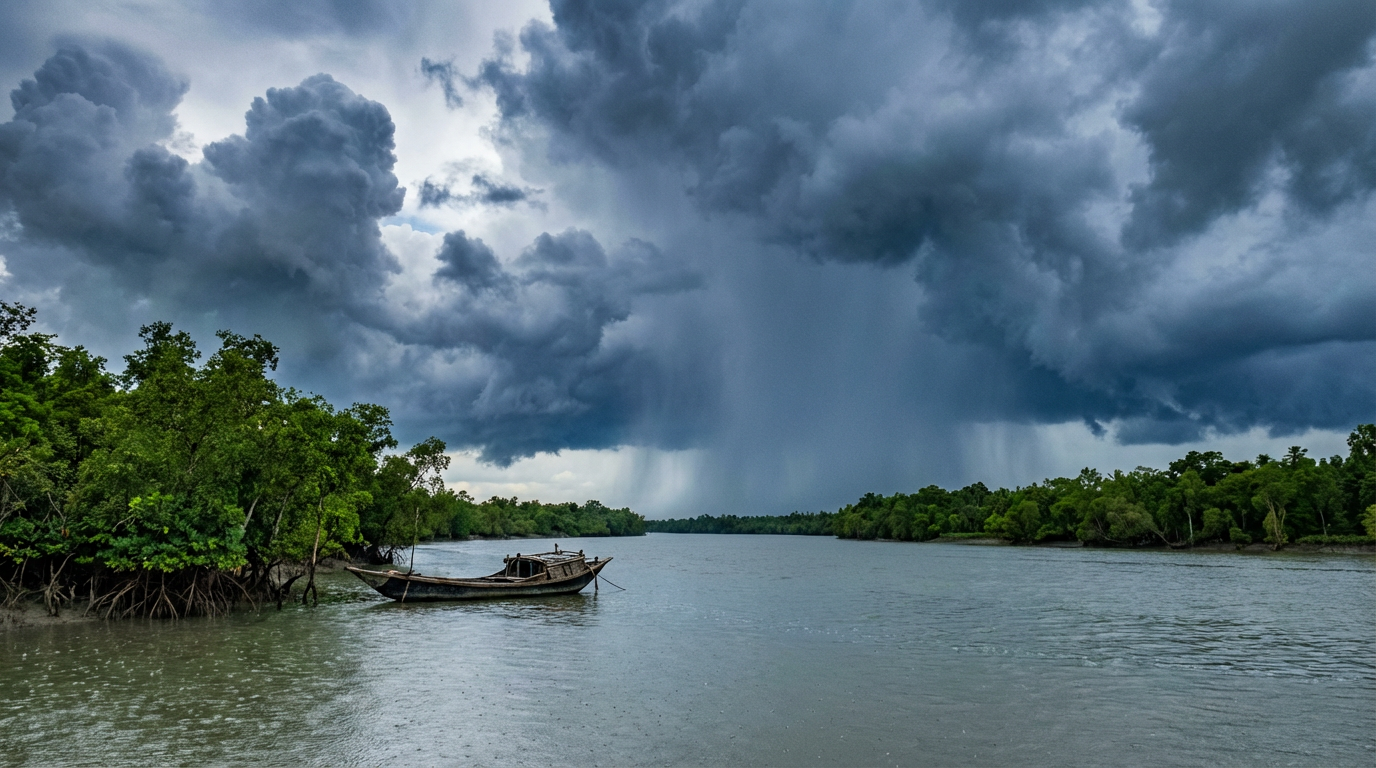
Understanding Sundarban weather before your trip can mean the difference between a magical safari and a rained-out itinerary. The Sundarbans sit on the Bay of Bengal’s edge, where tidal rivers meet the sea, creating a humid tropical climate that shifts dramatically between seasons. Temperature, rainfall, and humidity all change month by month — and each season offers a different kind of experience. This guide breaks down the Sundarban climate season by season so you can choose the right time, pack the right gear, and get the most from your tour.
Month-by-Month Sundarban Weather Table
The table below summarises average temperature, rainfall, humidity, and a tourist-friendliness rating for every month of the year.
| Month | Temp (°C) | Rainfall (mm) | Humidity (%) | Rating |
|---|---|---|---|---|
| January | 12 – 25 | 15 | 75 | ★★★★★ |
| February | 14 – 28 | 20 | 72 | ★★★★★ |
| March | 19 – 33 | 30 | 70 | ★★★★ |
| April | 23 – 36 | 50 | 75 | ★★★ |
| May | 25 – 36 | 120 | 80 | ★★ |
| June | 26 – 34 | 280 | 85 | ★ |
| July | 26 – 33 | 340 | 88 | ★ |
| August | 26 – 33 | 330 | 88 | ★ |
| September | 26 – 33 | 290 | 86 | ★ |
| October | 24 – 32 | 170 | 82 | ★★★ |
| November | 19 – 30 | 40 | 76 | ★★★★★ |
| December | 14 – 26 | 10 | 74 | ★★★★★ |
Winter in the Sundarbans (November – February)
Winter is the best season for Sundarban tourism. Daytime temperatures hover between 20 °C and 28 °C, nights can dip to 12 °C, and rainfall stays under 20 mm per month. Skies are clear, winds are gentle, and boat safaris run on schedule almost every day.
Lower water levels expose mudflats along the creeks, making tiger pugmarks easy to spot. This is also when migratory birds from Siberia and Central Asia arrive — turning Sajnekhali and Dobanki into birding hotspots. Royal Bengal Tiger sightings peak during December and January because animals move toward shrinking waterholes.
If wildlife sightings are your priority, book a winter departure. Our best time to visit Sundarban guide covers exact dates and itinerary options for this season.
Summer in the Sundarbans (March – May)
Temperatures climb quickly in March and hit 36 °C by April–May. Humidity starts rising, and pre-monsoon thunderstorms appear from late April. Open-boat safaris can feel uncomfortably warm during midday, so operators schedule departures early in the morning.
Summer has its advantages, though. Tourist crowds thin out dramatically, meaning quieter creeks and wider availability. Many operators offer discounted Sundarban tour packages during this shoulder season. Reptile activity also increases — saltwater crocodiles, water monitors, and pit vipers are spotted more frequently on warm afternoons.
Carry UV-protective sunglasses, SPF 50+ sunscreen, a wide-brim hat, and extra water. Our Sundarban packing list has the complete summer gear checklist.
Monsoon in the Sundarbans (June – October)
The southwest monsoon hits the delta hard between June and September. Monthly rainfall crosses 280–340 mm, rivers swell above bank level, and several safari routes become inaccessible. The Forest Department restricts boat movement during heavy weather, and watchtowers at Netidhopani and Sudhanyakhali may close temporarily.
Humidity stays above 85 %, and sudden squalls or cyclonic warnings are not uncommon in this Bay of Bengal region. Most tour operators suspend fixed departures from June through September.
October marks the transition — the monsoon retreats, skies begin to clear, and boat safaris gradually resume. Late October can reward visitors with a freshly green canopy, dramatic cloud formations, and far fewer tourists on the water. If you plan a monsoon-edge visit, confirm availability with your operator and pack full waterproof gear.
What to Pack for Sundarban Weather
Your packing list should adapt to the season. Winter visitors need layered clothing for cool mornings on the boat and a light windbreaker for evening cruises. Summer travellers should prioritise breathable cotton, sun hats, and hydration. Monsoon-season adventurers must carry waterproof bags, rain jackets, and quick-dry clothing.
Regardless of the season, always carry insect repellent, a reusable water bottle, and shoes with good grip for slippery jetties. See our detailed Sundarban packing list for season-specific recommendations.
Frequently Asked Questions
What is the best weather for visiting Sundarban?
November to February offers the best weather — cool temperatures between 12 °C and 28 °C, negligible rainfall, and lower humidity. Wildlife sightings and bird watching peak during these months, making winter the ideal season for safari tours.
Does it rain in Sundarban during winter?
Rarely. Winter rainfall averages under 20 mm per month. Dry, clear skies are the norm from November through February, making it the safest season for uninterrupted boat safaris and outdoor exploration.
Is it safe to visit Sundarban during monsoon?
The Forest Department restricts deep-forest routes during heavy monsoon months (June–September). Limited safaris operate in buffer zones, but cyclone warnings and rough water can lead to last-minute cancellations. Always check with your tour operator before booking a monsoon trip.
How hot does Sundarban get in summer?
Daytime temperatures in April and May reach 36 °C with humidity above 75 %. Open-boat safaris can feel quite warm during midday. Early-morning departures and shade-equipped boats make summer trips manageable.
What should I wear in Sundarban based on the weather?
In winter, carry light layers and a windbreaker for early-morning boat rides. In summer, wear breathable cotton clothing, a hat, and sunscreen. During monsoon, pack rain jackets and quick-dry clothing. Refer to our full packing list at /sundarban-tour-packing-list-what-to-carry/ for season-wise gear recommendations.