

Planning a trip to the Sundarbans? Knowing what to pack for Sundarban trip can mean the difference between a comfortable adventure and a frustrating one. The Sundarbans is no ordinary tourist destination — it is a UNESCO World Heritage mangrove delta with limited road access, remote islands, and boat-based travel through tidal waterways. Shops and pharmacies are scarce once you leave Godkhali or Canning, so everything you need must travel with you.
Whether you are booking a weekend getaway package or an extended wildlife expedition, this complete Sundarban tour packing list for 2026 covers clothing, medicines, camera gear, documents, and seasonal essentials for every type of traveller.
Clothing and Footwear
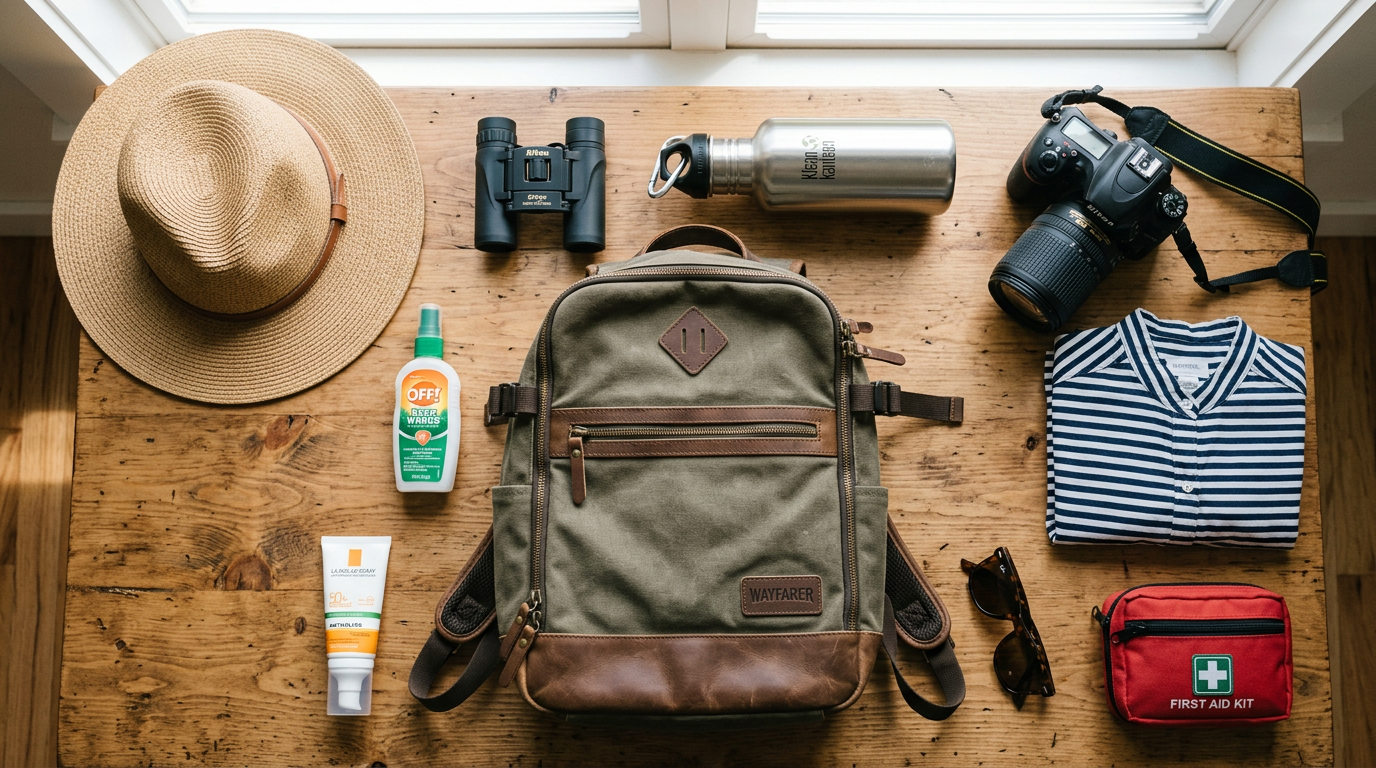
Pack light, breathable fabrics. Cotton or quick-dry shirts in neutral and earthy tones work best — bright colours can startle wildlife during boat safaris. Carry at least two sets of comfortable clothing so you have a dry change after rain or river spray.
- Full-sleeve cotton shirts for protection from the sun and mosquitoes
- Comfortable trousers or cargo pants — avoid shorts inside the forest
- A light windbreaker or rain jacket for sudden showers, especially from June to September
- One warm layer such as a fleece or light sweater for chilly winter mornings on the water (November–February)
- Sturdy sandals with grip for boarding and alighting boats
- One pair of sport shoes for nature walks on muddy island trails
A wide-brim hat or cap is essential for sun protection during daytime boat rides. Pack a bandana or cotton scarf — it doubles as dust protection and a sweat towel. Check the best time to visit the Sundarbans to plan your wardrobe according to the season.
Camera Gear and Gadgets
The Sundarbans is a photographer’s paradise. From Royal Bengal Tigers spotted along muddy riverbanks and saltwater crocodiles basking in the sun to vivid kingfishers, water monitors, and curious mudskippers, every turn of the creek offers a frame-worthy moment. Having the right equipment packed and ready makes all the difference.
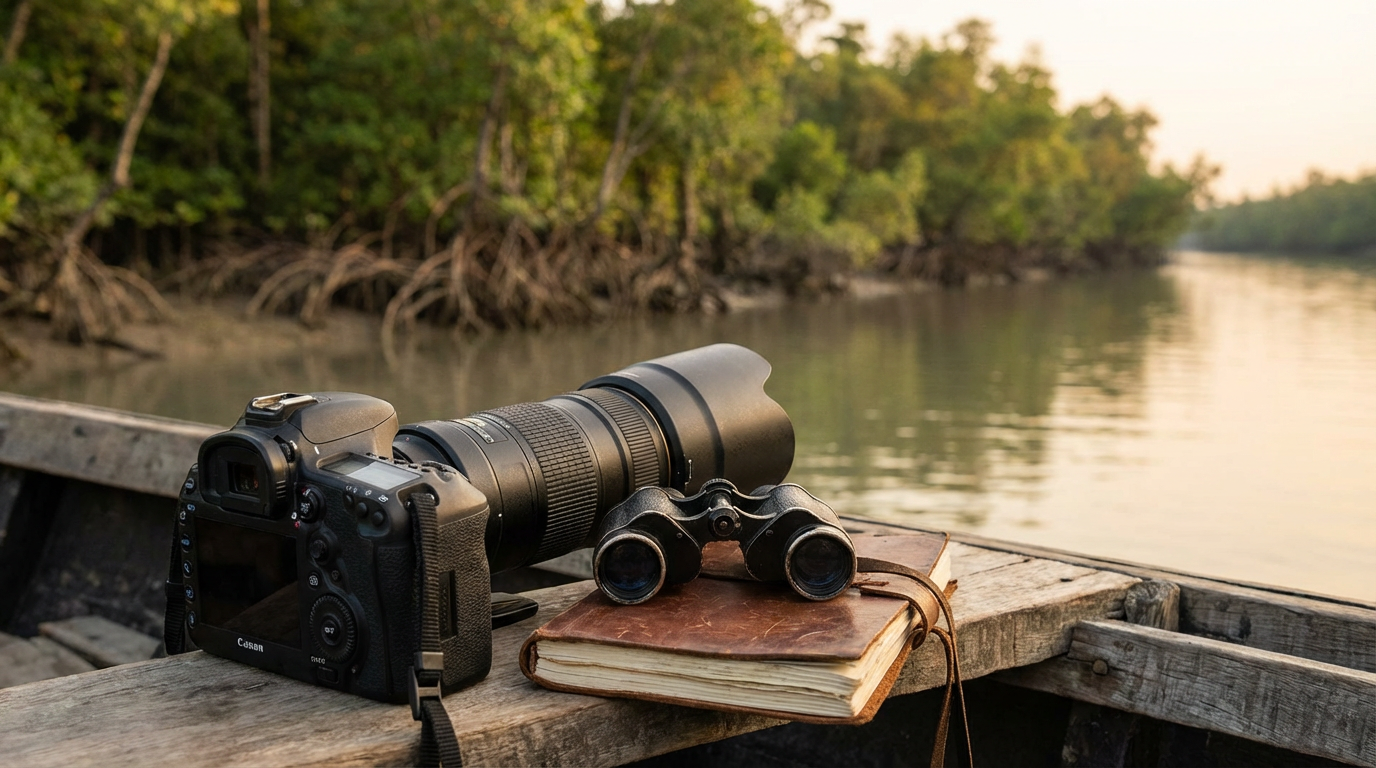
- DSLR or mirrorless camera with a telephoto lens (200 mm or above for wildlife shots)
- Smartphone with good zoom — even phone cameras deliver impressive results today
- Binoculars (8×42 recommended for birdwatching from the boat deck)
- Extra memory cards and fully charged batteries — charging points are limited at remote lodges
- A compact power bank (20,000 mAh or above) to keep devices alive throughout the day
- Waterproof dry bag or ziplock pouches to protect electronics from rain and river splash
A lightweight tripod or monopod helps with steady shots during golden-hour boat rides. If you are serious about wildlife photography, bring a bean bag for lens support on the boat railing. Refer to our Sundarban travel guide for tips on the best photography spots inside the tiger reserve.
Medicines, Toiletries, and Safety Essentials
The Sundarbans is remote, and the nearest hospital is hours away by boat. A well-stocked personal kit is non-negotiable when you plan what to pack for Sundarban trip.
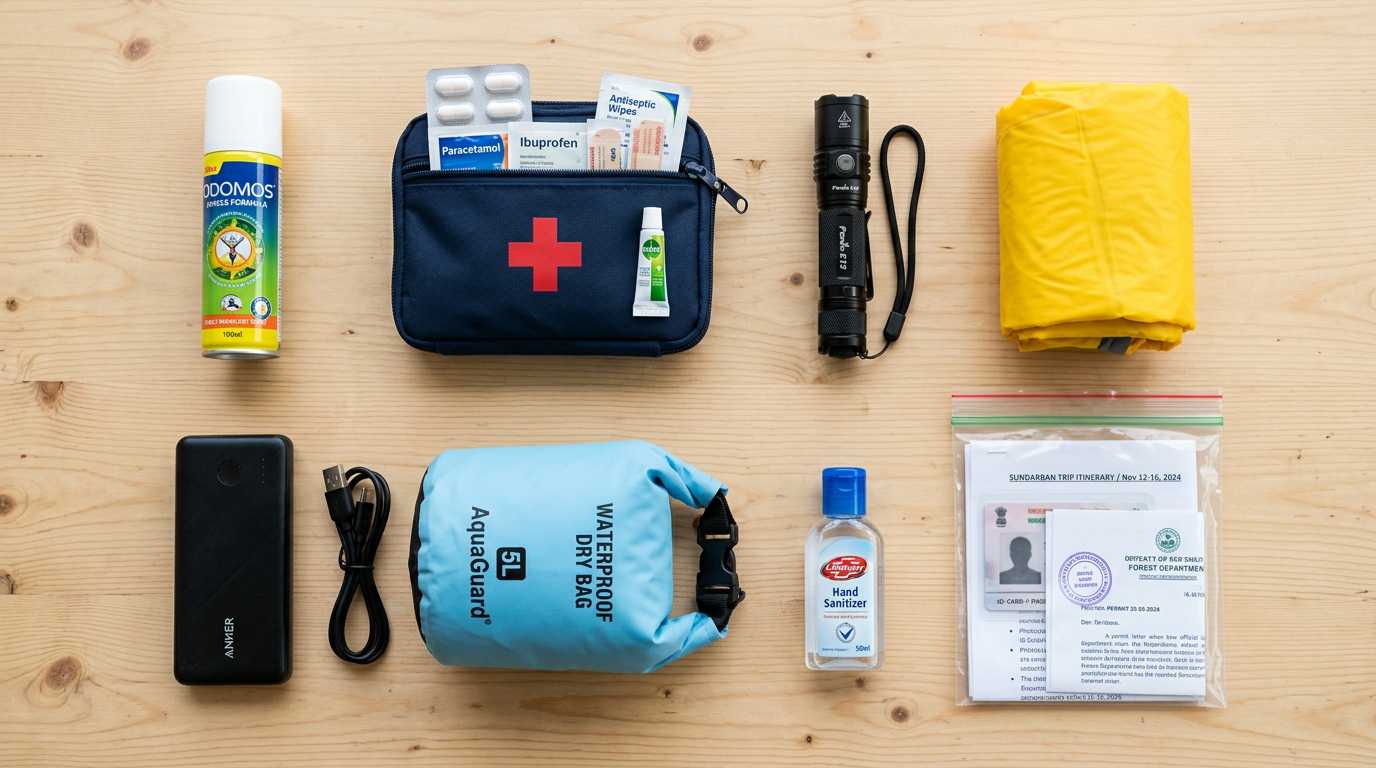
- Mosquito repellent cream and coils — mosquitoes are aggressive after sunset
- Paracetamol, anti-diarrheal tablets, and antihistamines
- Motion sickness medicine — long boat rides on choppy tidal rivers can cause nausea
- Antiseptic cream, adhesive bandages, and ORS sachets
- Personal prescription medicines with a copy of your prescription
- Sunscreen (SPF 50+) and lip balm with SPF protection
- Hand sanitizer, wet wipes, and tissue paper
- Biodegradable soap and shampoo — respect the fragile mangrove ecosystem
For safety, also carry an LED torch or headlamp (power cuts are common at island lodges), a reusable water bottle to stay hydrated, and a whistle for group nature walks.
Documents and Money
Keep all documents inside a waterproof pouch or ziplock bag:
- Government-issued photo ID (Aadhaar, Voter ID, or Passport)
- Printed copy of your tour booking confirmation
- Forest entry permit details — your tour operator usually arranges this
- Cash in small denominations — UPI works at some spots, but mobile network coverage is patchy
Carry ₹2,000–₹3,000 in cash for tips, local snacks, and small purchases at island villages. ATMs are available only at Canning and Gosaba, so withdraw money before you board the boat. Having the right documents and cash sorted out in advance removes unnecessary stress and lets you focus on enjoying the mangrove wilderness with Sundarban Eco Friends.
FAQs
What clothes should I pack for a Sundarban trip?
Pack light cotton full-sleeve shirts, comfortable trousers, a rain jacket, and sturdy sandals. In winter (November–February), carry a light sweater for chilly mornings on the boat. Neutral or earthy colours are recommended to avoid startling wildlife.
Is mosquito repellent necessary for Sundarban?
Yes, mosquito repellent is absolutely essential. The Sundarbans is a tropical mangrove region where mosquitoes are very active, especially after sunset. Carry DEET-based repellent cream and mosquito coils for your room.
Can I charge my phone and camera in the Sundarbans?
Charging facilities are available at most lodges and houseboats, but power supply can be irregular. Carry a 20,000 mAh power bank, extra batteries, and spare memory cards so you never run out of storage or charge during safaris.
Do I need to carry cash to the Sundarbans?
Yes, carry ₹2,000–₹3,000 in small denominations. While UPI payments work at a few spots, mobile network coverage inside the Sundarbans is unreliable. ATMs are only available at Canning and Gosaba before you enter the delta.
What camera lens is best for Sundarban wildlife photography?
A telephoto lens of 200 mm or above is ideal for photographing wildlife from the boat. A 100–400 mm zoom lens is a popular choice. Also carry a wide-angle lens for landscape shots of the mangrove creeks and sunsets.