

The Sundarbans is one of India’s most thrilling wilderness destinations — home to Royal Bengal Tigers, saltwater crocodiles, and tidal waterways cutting through the world’s largest mangrove forest. But venturing into this UNESCO World Heritage Site demands more than excitement. Understanding essential Sundarban tour safety tips can mean the difference between a magical experience and a dangerous one. This guide covers every precaution you must take before stepping onto that boat in 2026.
Boat Safety — Your Lifeline in the Sundarbans
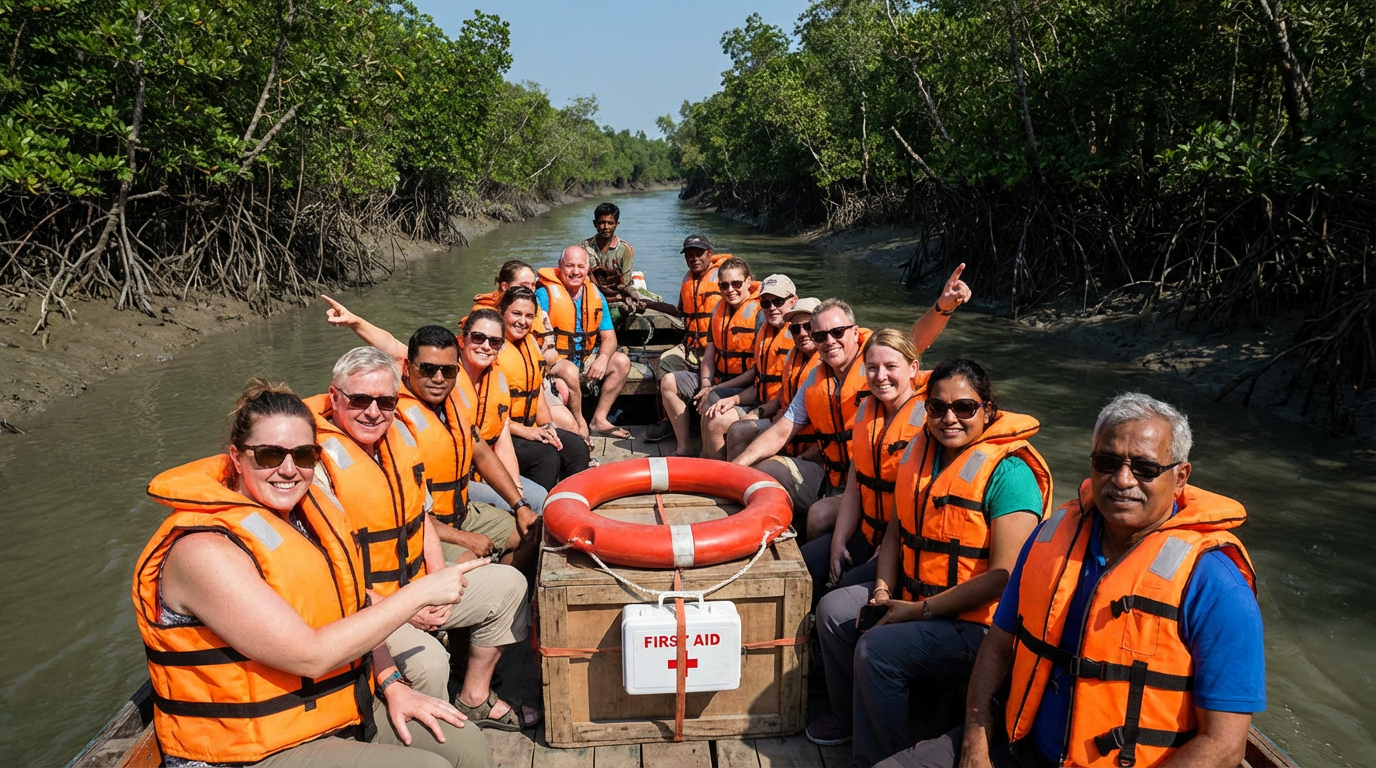
Almost every moment of a Sundarban tour is spent on water, making boat safety the single most critical aspect. Always confirm that your operator provides mechanically-inspected boats with life jackets for every passenger. Reputable operators like Sundarban Eco Friends ensure each vessel carries life rings, fire extinguishers, and a first aid kit. Verify that the boatman holds a valid licence from the Inland Waterways Authority.
Never stand on the boat’s edge or lean over the railing, especially in narrow creeks where low-hanging branches and tidal surges are common. During monsoon season (June–September), currents intensify and visibility drops — only travel with experienced operators. When exploring Sundarban tour packages, choose one that mentions safety certifications and boat inspection records.
Tiger Zone Rules — Respect the Wild
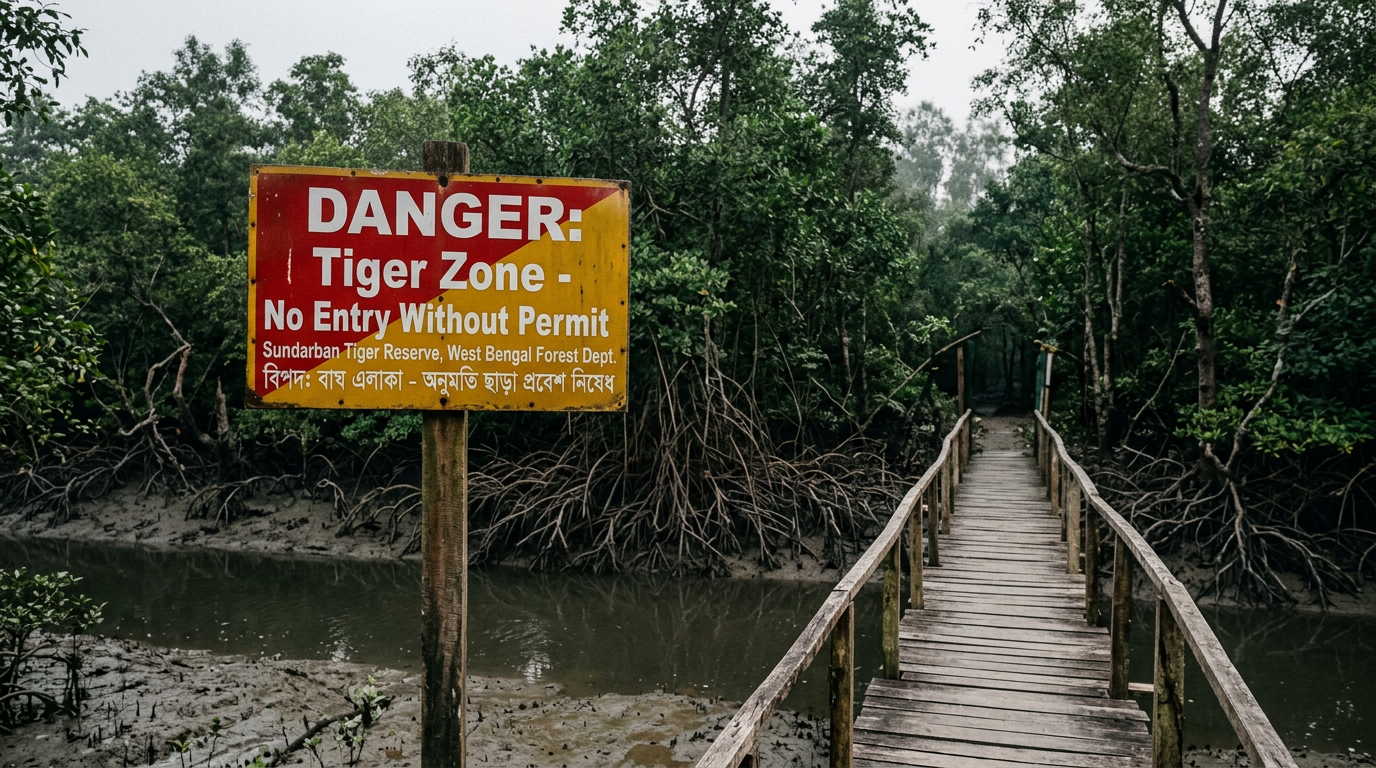
The Sundarban Tiger Reserve is an active habitat where approximately 100 Royal Bengal Tigers roam freely. One of the most important Sundarban tour safety tips is to never step off designated boardwalks or watchtowers without forest guide permission. Tigers here are excellent swimmers, so maintain a safe distance from riverbanks even while on your boat.
Keep noise levels low during safari rides; loud sounds can agitate wildlife and spoil sighting opportunities for everyone. Photography with flash is strictly prohibited inside core tiger zones. Always carry a valid Sundarban entry permit — entering restricted forest areas without one can result in heavy fines and legal action from the Forest Department.
Health Precautions and What to Pack
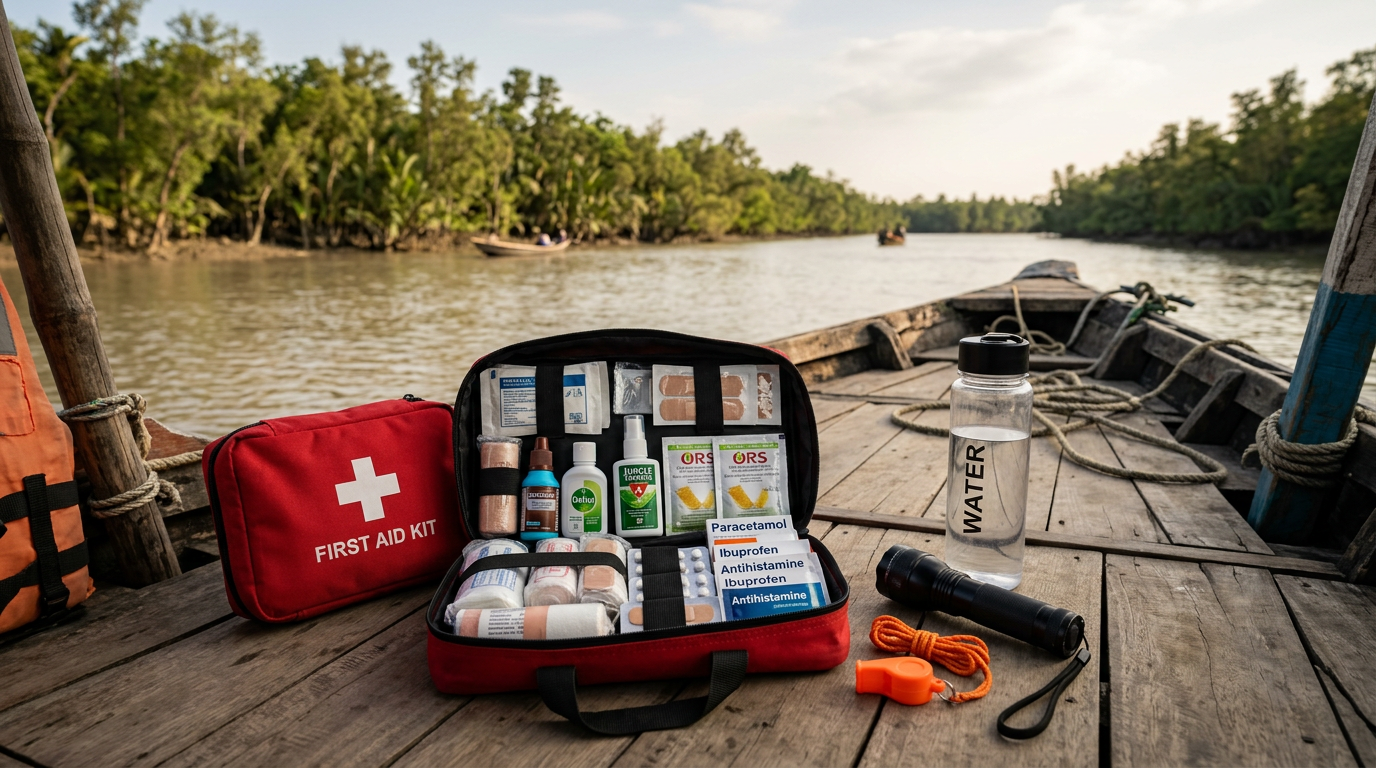
The Sundarbans’ tropical climate brings mosquitoes, humidity, and limited medical infrastructure. Pack a first aid kit with antiseptic cream, bandages, antihistamines, ORS sachets, and prescription medication. Apply DEET-based mosquito repellent generously and wear long-sleeved, light-coloured clothing. A mosquito net is wise for overnight houseboat trips.
Drink only bottled or purified water — never consume river water regardless of how clean it appears. Sunstroke is a genuine risk during summer months (March–May), so bring a wide-brimmed hat, sunscreen with SPF 50+, and stay hydrated throughout the day. For a comprehensive packing and travel checklist, refer to our detailed Sundarban travel guide.
Things to Avoid During Your Sundarban Tour
Certain behaviours that seem harmless elsewhere can be dangerous in the Sundarbans. Never feed wild animals — it disrupts their diet and invites aggressive encounters. Avoid strong perfumes or bright red clothing, as these attract insects and disturb wildlife. Do not litter; the mangrove ecosystem is fragile, and plastic waste threatens aquatic life and bird populations.
Swimming or dipping feet in Sundarban rivers is extremely risky due to saltwater crocodiles and strong undercurrents. Never wander alone into forested areas, even near your accommodation. Alcohol during boat rides is discouraged — impaired judgement near water and wildlife is a recipe for disaster.
Emergency Contacts and On-Ground Support
Save these numbers before departure: Sundarban Tiger Reserve Control Room — 03218-255880; Gosaba Police Station — 03218-262233; Canning Sub-Divisional Hospital — 03218-255030. For tour emergencies, contact Sundarban Eco Friends at +91 7797860930 — available 24/7 during your trip.
Network coverage is limited beyond Gosaba, so download offline maps and inform family members about your itinerary in advance. Trusted operators maintain satellite phones on their boats for critical situations. Following these Sundarban tour safety tips ensures you enjoy the Sundarbans without unnecessary risk.
FAQs
Yes, Sundarban tours are safe for families when booked with licensed operators. Ensure your operator provides child-sized life jackets, and always supervise children near the boat railings. Avoid monsoon months for a calmer and safer family experience.
Stay calm, remain seated on the boat, and do not make sudden movements or loud noises. Never attempt to get closer for photographs. Your forest guide is trained to handle such situations — follow their instructions at all times.
The nearest hospital is Canning Sub-Divisional Hospital, roughly 2–3 hours from the core forest area. Basic medical aid is available at Gosaba and Sajnekhali. Always carry personal medicines and a first aid kit for immediate needs.
Yes, a valid entry permit issued by the Forest Department is mandatory. Your tour operator typically arranges this, but confirm in advance. Entering without a permit can lead to fines and legal consequences.
October to March is the safest and most comfortable period. The weather is cool, water currents are stable, and wildlife sightings peak during winter. Avoid June to September due to heavy monsoon rains and rough tidal conditions.