

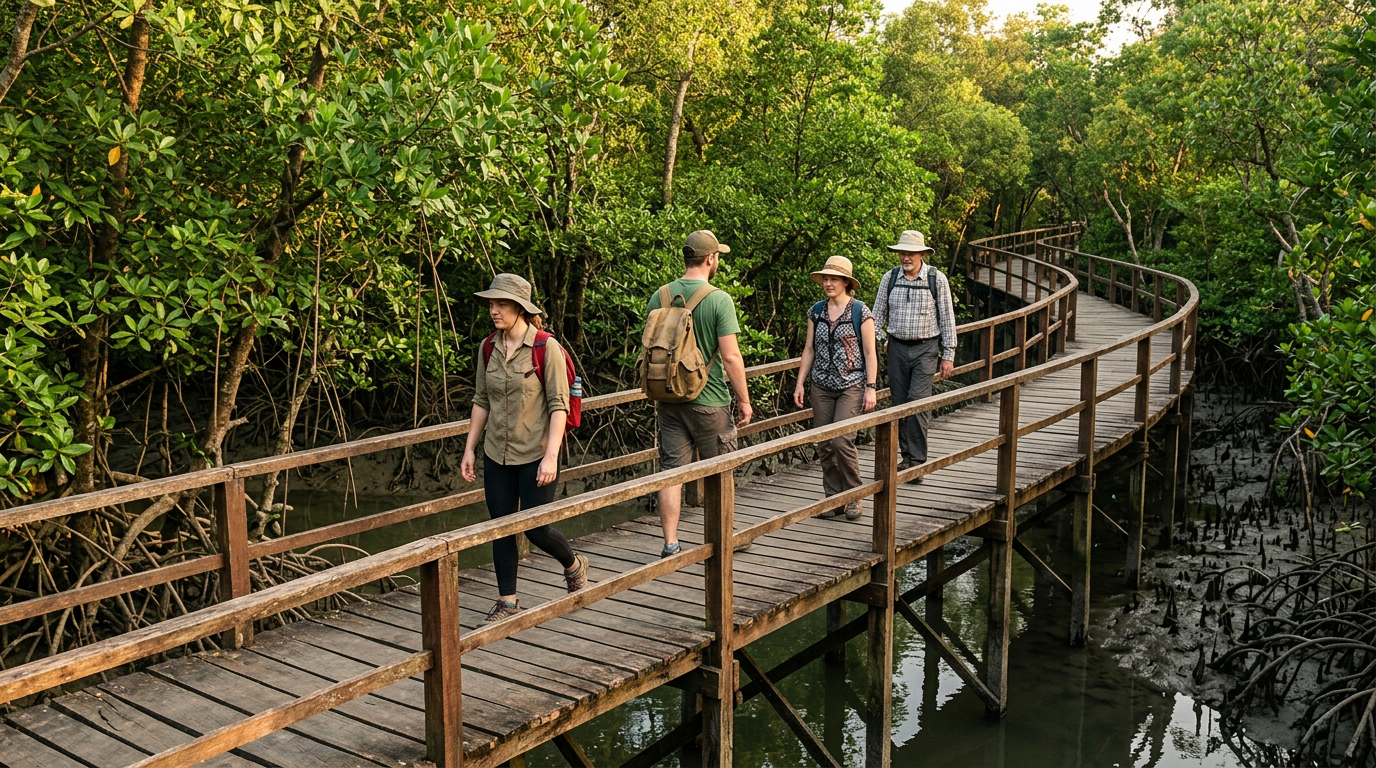
The Sundarbans is not just a destination you observe from a boat — it is a landscape meant to be felt underfoot. Sundarban trekking offers a rare, immersive way to experience the world’s largest mangrove delta, where raised boardwalks, mudflat trails, and village footpaths bring you face to face with a living, breathing ecosystem. Whether you are a first-time visitor or a seasoned nature lover, guided nature walks through the delta reveal layers of beauty that no motorised cruise can match.
Why Sundarban Trekking Deserves a Spot on Your Itinerary
Most Sundarban tours focus on river cruises, but trekking adds an entirely different dimension. Walking at ground level, you hear the snap of fiddler-crab claws, smell the salt-tanged mud, and spot kingfishers darting between pneumatophore roots just metres away. Guided sundarban trekking trails are carefully designed to minimise ecological impact while maximising wildlife encounters.
The Forest Department maintains several elevated boardwalks inside the Sundarban Tiger Reserve. The most famous is the Dobanki canopy walk, a steel-net walkway suspended above the forest floor that puts you at eye level with the mid-canopy — ideal for birding, photography, and spotting monitor lizards below. Similar raised paths exist at Sudhanyakhali, Sajnekhali, and Burirdabri watchtowers, each offering a unique vantage point into the delta’s interior.
Top Sundarban Trekking Trails and Boardwalks
Dobanki Boardwalk & Canopy Walk — A 1-km loop through dense mangrove canopy with an enclosed overhead net walkway. Best for birdwatching and safe wildlife viewing. Mudflat trails here often show fresh pugmarks of Bengal tigers and spotted deer.
Sudhanyakhali Nature Trail — A short but rewarding walk from the jetty to the watchtower. The freshwater pond at the end attracts deer, wild boar, and occasionally tigers during the dry season. Guides time visits around low tide for maximum animal activity.
Sajnekhali Interpretation Trail — Starting from the Sajnekhali Wildlife Sanctuary office, this gentle path winds past a mangrove nursery, a crocodile enclosure, and informative signboards that explain the delta’s hydrology. Ideal for families and first-time visitors.
Village Heritage Walks — Beyond the reserve, guided walks through Gosaba, Bali Island, and Lahiripur villages reveal how local communities coexist with the tides. You will see honey-collection gear, crab traps, and traditional mud houses — a cultural complement to the wilderness trails.
Essential Trekking Tips for the Sundarbans
Trekking in a tidal mangrove ecosystem is unlike any highland trail. Here is what you should keep in mind before lacing up your boots:
- Footwear: Wear ankle-high waterproof shoes or sturdy sandals with grip. Boardwalks can be slippery after rain.
- Clothing: Light, full-sleeve shirts in muted earth tones reduce insect bites and avoid startling wildlife.
- Timing: Early-morning walks (6:00–8:00 AM) and late-afternoon slots (3:30–5:00 PM) offer the best light and animal activity.
- Hydration: Carry at least 1.5 litres of water per person. Humidity in the delta runs above 80 % year-round.
- Guide Requirement: Independent trekking inside the Tiger Reserve is prohibited. All walks require a Forest Department permit and a licensed guide.
The best months for sundarban trekking are October to March, when cooler temperatures, lower humidity, and receding water levels expose more trail surface and drive wildlife toward waterholes. Monsoon months (June–September) see most boardwalks closed due to high tides and flooding.
Trekking as Part of a Complete Sundarban Tour
A well-planned Sundarban tour package blends boat safaris, trekking, and village visits into a cohesive 2-night or 3-night itinerary. At Sundarban Ecofriends, our guided nature walks are included in every package — from budget houseboats to premium eco-lodges. Our naturalist guides carry spotting scopes, tide charts, and first-aid kits, so your only job is to soak in the scenery.
Trekking also pairs naturally with other things to do in Sundarban, including night safaris, fishing expeditions, and cultural evenings in local villages. Adding a boardwalk trek to your trip costs nothing extra but delivers memories that outlast any photograph.