

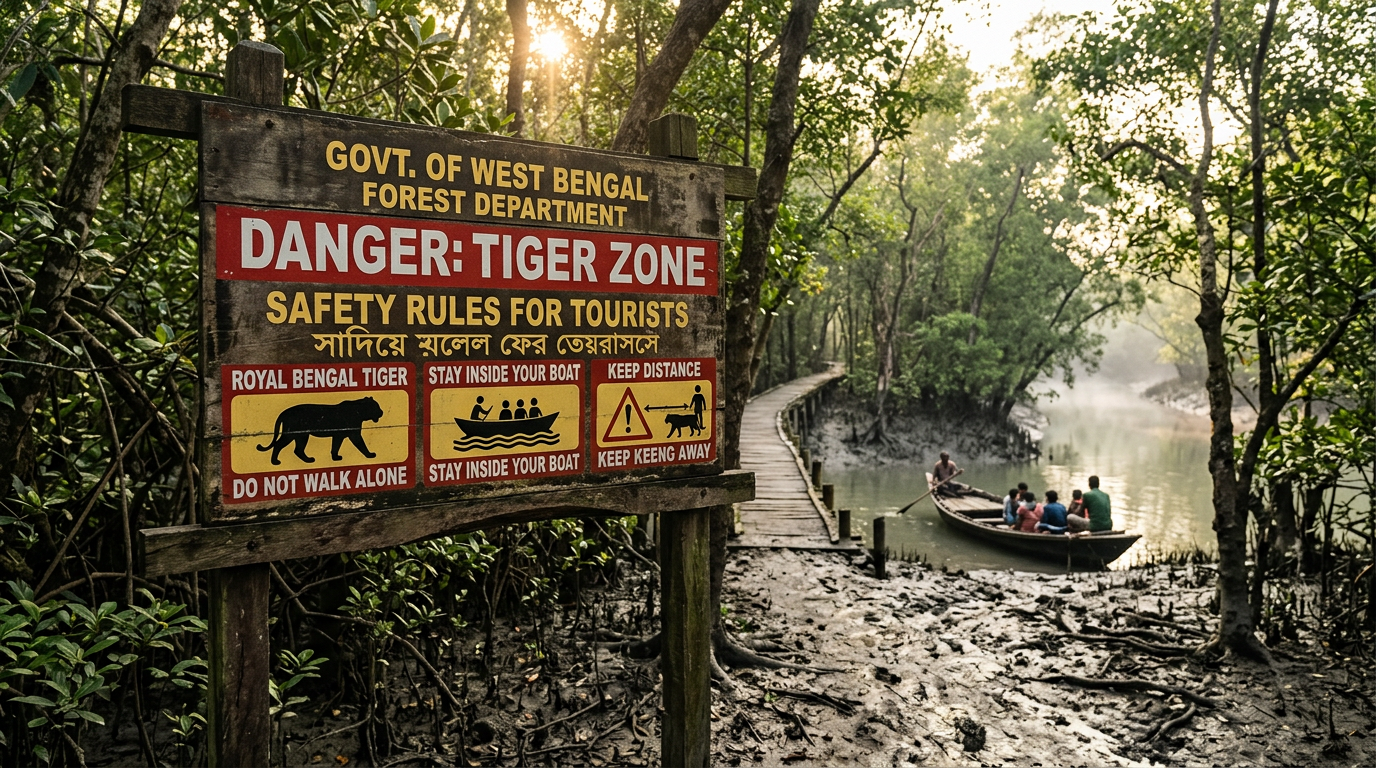
The Sundarbans is one of the most thrilling wilderness destinations in India — but it is also home to the Royal Bengal Tiger, saltwater crocodiles, and unpredictable tidal rivers. Whether you are a first-time visitor or a returning nature lover, knowing a few Sundarban safety tips before you step onto that boat can be the difference between a memorable adventure and a dangerous situation.
This guide covers the essential rules, precautions, and emergency contacts every tourist must carry into the mangroves. Read it carefully, save it on your phone, and share it with your travel group.
1. Always Travel With a Licensed Tour Operator
The Sundarban Tiger Reserve is a restricted zone, and independent entry without a valid permit is illegal. A licensed operator ensures your permit, entry fees, and forest passes are handled correctly. They also provide trained guides who know the safe waterways and wildlife movement patterns.
Avoid booking through unregistered agents. Check that your operator holds a valid West Bengal Tourism or Forest Department licence. Reputable operators like Sundarban Ecofriends carry all mandatory safety gear on board, including life jackets, first-aid kits, and satellite communication devices.
2. Tiger Zone Rules — Never Leave the Boat
This is the single most important Sundarban safety tip: never step off the boat into unauthorized areas. Tigers in the Sundarbans are known to be territorial and occasionally aggressive toward humans. The forest department has marked specific watchtowers and boardwalks where disembarking is permitted — stick to those spots only.
- Stay inside the boat at all times unless directed otherwise by the forest guide.
- Do not lean over the railings or dangle limbs in the water — saltwater crocodiles are present.
- Keep noise levels low; loud sounds can provoke wildlife or cause birds to abandon nests.
- Never use flash photography near animals.
3. Boat Safety and Weather Awareness
Boats are your primary mode of transport in the Sundarbans. Before departure, confirm that your vessel has enough life jackets for every passenger, a working fire extinguisher, and a VHF radio or mobile network booster. During monsoon months (June–September), river conditions can change in minutes. Pay close attention to weather advisories issued by the district administration.
If a cyclone or heavy-rain warning is active, postpone your trip — no photograph is worth risking your life. For pre-trip planning, check our Sundarban packing list to ensure you carry waterproof bags, rain gear, and dry-bag pouches for electronics.
4. Insect Protection and Health Precautions
Mosquitoes in the mangrove belt carry malaria and dengue. Apply DEET-based repellent every four hours and wear full-sleeve clothing after 4 PM. Carry oral rehydration salts, basic antibiotics (consult your doctor beforehand), and anti-allergic tablets. Drink only sealed bottled or filtered water — the local river water is saline and unsafe for consumption.
If you take prescription medication, pack extra doses. The nearest well-equipped hospital is in Canning or Kolkata, hours away from the core forest. A compact, waterproof first-aid kit should always be within arm’s reach on the boat.
5. Emergency Contacts and Communication Tips
Mobile signals are patchy once you cross Gosaba. Save these numbers before you leave for the forest:
- Sundarban Tiger Reserve Control Room: 03218-255 893
- South 24 Parganas District Emergency: 1077
- Coast Guard (Maritime Rescue): 1554
- Nearest Police Station (Gosaba): 03218-262 230
Carry a fully charged power bank and keep your phone in a waterproof pouch. Inform a family member of your itinerary and expected return date.
Bonus Tip: Respect the Ecosystem
The Sundarbans is a UNESCO World Heritage Site. Do not litter, pluck mangrove leaves, or feed wild animals. Carry all waste back with you. Responsible tourism ensures this incredible ecosystem survives for future generations — and it keeps you on the right side of forest law.
Frequently Asked Questions
Yes, visiting the Sundarbans is safe when you travel with a licensed tour operator, follow forest department rules, and stay inside your boat in tiger zones. Thousands of tourists visit safely every season.
Stay calm, remain inside the boat, and do not make sudden movements or loud noises. Alert your guide immediately. Boats should slowly move away from the tiger’s location without turning off the engine.
No mandatory vaccination is required, but doctors recommend being up to date on Hepatitis A, Typhoid, and Tetanus. Anti-malarial prophylaxis is advisable — consult your physician at least two weeks before the trip.
Coverage is limited. BSNL works in some areas near Gosaba and Sajnekhali, but signals drop in the deep forest. Carry a power bank, download offline maps, and inform someone outside the forest about your itinerary.
October to March is the safest and most comfortable window. The monsoon season (June–September) brings rough river conditions and cyclone risk. Winter months offer calm waters, pleasant weather, and the best wildlife sightings.
Plan Your Safe Sundarban Adventure Today
Ready to experience the magic of the mangroves with complete peace of mind? Browse our curated Sundarban tour packages — every trip includes licensed guides, safety gear, permits, and 24/7 on-ground support.