

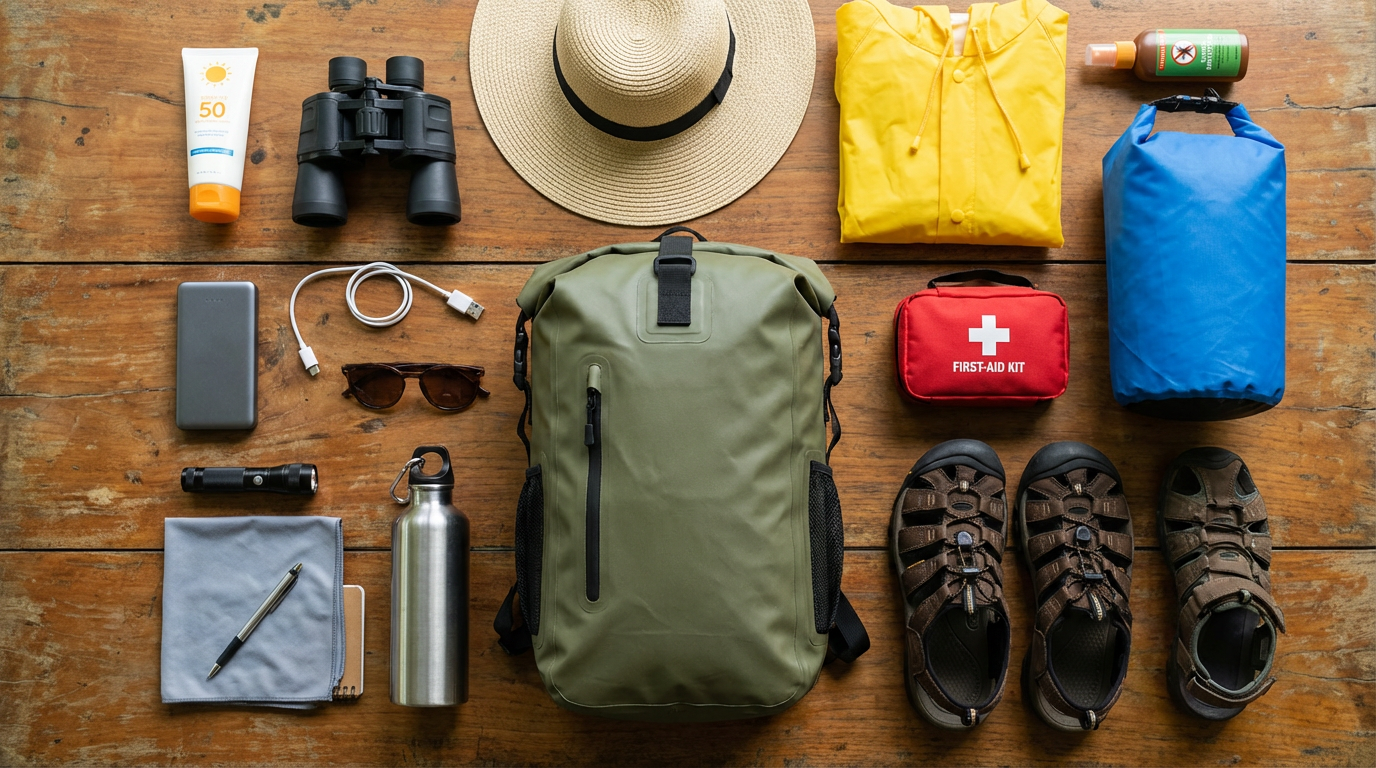
Planning a trip to the Sundarbans? The mangrove wilderness demands more than just excitement — it demands preparation. A well-thought-out Sundarban packing list can make the difference between a memorable adventure and an uncomfortable ordeal. From river cruises through tidal creeks to walking trails near tiger territory, every activity calls for specific gear.
Whether you’re joining a guided Sundarban tour package or heading out independently, this checklist of 25 essentials ensures you’re covered for weather, wildlife, safety, and comfort. Print it, screenshot it, or bookmark it — just don’t leave home without ticking every box.
Clothing & Footwear (Items 1–7)
The Sundarban climate swings between scorching humidity and sudden rain. Layering with the right fabrics keeps you comfortable on the boat and on shore.
- Lightweight, full-sleeve cotton shirts (×2) — protection from sun and mosquitoes.
- Quick-dry cargo pants or trek pants (×2) — avoid jeans; they stay damp for hours.
- Waterproof raincoat or poncho — monsoon showers hit without warning, even in October.
- Wide-brim hat or cap — essential for open-deck boat rides under direct sun.
- Sturdy, closed-toe sandals or trekking shoes — muddy trails demand grip and ankle support.
- Flip-flops for the boat deck — let your feet breathe between excursions.
- Light fleece or jacket — early morning boat rides from December to February can be surprisingly cold.
Sun & Insect Protection (Items 8–12)
Mosquitoes in the Sundarbans are relentless, especially at dusk. Combined with strong tropical sun, you need a dedicated defence kit. Check our Sundarban safety tips for tourists for more on staying protected.
- SPF 50+ sunscreen (water-resistant) — reapply every two hours on the boat.
- Insect repellent with DEET or picaridin — non-negotiable after sunset.
- Polarised sunglasses — cuts glare on the water and helps spot wildlife.
- Mosquito-repellent patches or bands — handy backup for children and sensitive skin.
- After-bite cream or calamine lotion — soothes inevitable bites quickly.
Health & Medicines (Items 13–17)
Medical facilities inside the reserve are virtually nonexistent. Carry a compact kit that covers the most common issues travellers face in remote delta regions.
- Personal prescription medicines — bring extra doses; delays are common.
- Anti-diarrhoeal and ORS sachets — water and food changes can upset stomachs.
- Antihistamines — useful for allergic reactions to insect bites or unfamiliar food.
- Basic first-aid kit — antiseptic, band-aids, pain relievers, and adhesive tape.
- Motion-sickness tablets — tidal rivers can get choppy, especially during the return journey.
Gear & Electronics (Items 18–22)
Electricity is scarce inside the forest, and network coverage drops to zero past Gosaba. Plan your gadgets around battery life and waterproofing.
- Binoculars (8×42 or 10×42) — most tiger and bird sightings happen at a distance.
- Power bank (20,000 mAh+) — your single most important electronic accessory.
- Waterproof dry bag or zip-lock pouches — protect phone and camera from spray and rain.
- Compact flashlight or headlamp — nights on the island are pitch-dark.
- Camera with zoom lens — smartphone zoom won’t do justice to a kingfisher at 50 metres.
Documents & Miscellaneous (Items 23–25)
Don’t overlook the paperwork — permit checks happen at multiple forest entry gates. Timing your trip matters too; read about the best time to visit Sundarban before you book.
- Government-issued photo ID (original + photocopy) — required for forest permits and hotel check-in.
- Printed booking confirmations & permits — phone screens fail when batteries die.
- Cash (₹3,000–₹5,000 in small notes) — UPI and cards don’t work inside the reserve.
Quick-Reference Printable Checklist
| Category | Items | ✓ |
|---|---|---|
| Clothing | Cotton shirts, trek pants, raincoat, hat, shoes, flip-flops, jacket | ☐ |
| Sun & Insect | Sunscreen, repellent, sunglasses, patches, after-bite cream | ☐ |
| Health | Prescriptions, ORS, antihistamines, first-aid, motion-sickness tabs | ☐ |
| Gear | Binoculars, power bank, dry bag, flashlight, camera | ☐ |
| Documents | Photo ID, bookings, cash | ☐ |
Frequently Asked Questions
What clothes should I wear in Sundarban?
Wear lightweight, full-sleeve cotton clothing in neutral or earthy colours. Avoid bright colours that may disturb wildlife. Carry quick-dry trek pants instead of jeans, and always pack a raincoat regardless of the season.
Is insect repellent really necessary for a Sundarban trip?
Absolutely. The mangrove delta is home to aggressive mosquitoes, especially after dusk. A DEET-based repellent is the most effective option. Supplement it with repellent patches and long-sleeve clothing for full protection.
Can I use UPI or credit cards inside Sundarban?
No. Internet and mobile network coverage drop to zero once you pass Gosaba. Carry ₹3,000–₹5,000 in small denomination notes for tips, local purchases, and emergencies.
Do I need binoculars for a Sundarban safari?
Binoculars are highly recommended. Most wildlife — including Royal Bengal Tigers, spotted deer, and over 300 bird species — are seen from a distance across wide river channels. An 8×42 or 10×42 pair offers the best balance of magnification and light.
How much luggage can I carry on a Sundarban houseboat?
Most operators recommend a single medium backpack (40–50 litres) per person. Boats have limited cabin space, and you’ll need to carry your bag on smaller country boats during island excursions. Pack light and smart.
Ready to Pack? Book Your Sundarban Adventure
Now that your Sundarban packing list is sorted, it’s time to lock in your trip. Our curated packages cover transport, permits, meals, and an expert naturalist guide — so you can focus on the experience, not the logistics.