

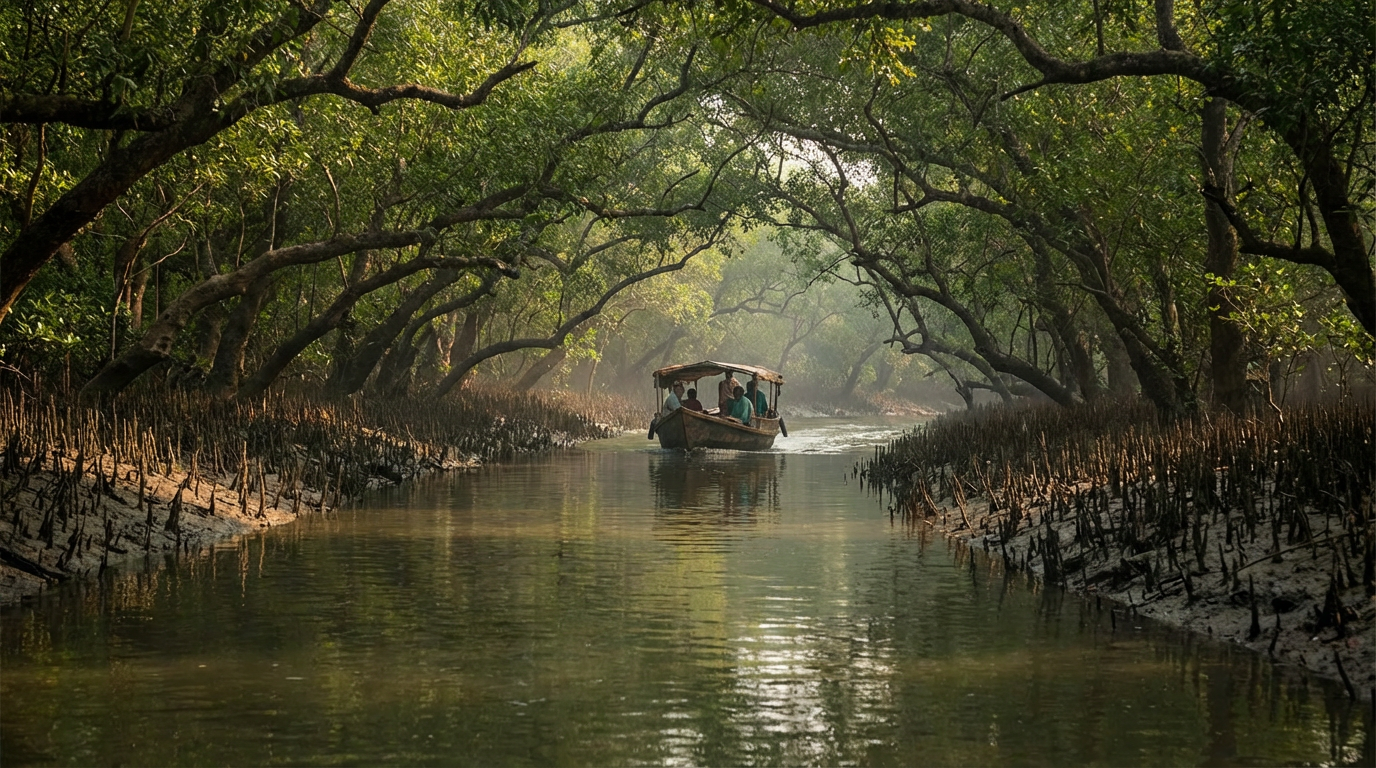
A Sundarban jungle safari is unlike any wildlife adventure you have experienced before. There are no dusty jeep trails or open grasslands here — the Sundarbans is a 10,200 sq km labyrinth of tidal creeks, mudflats, and dense mangrove forest accessible only by water. Every safari is a boat ride into unpredictability, where the forest decides what it reveals and when. From the rustle of spotted deer through pneumatophore roots to the unmistakable pugmark of a Royal Bengal Tiger pressed into riverbank mud, the Sundarban jungle safari keeps you alert from departure to return.
If you are planning your first trip to this UNESCO World Heritage Site, here is a detailed breakdown of what to expect — the routes, the wildlife, the overnight stays, and the moments that make this experience unforgettable.
How a Sundarban Jungle Safari Actually Works
Every Sundarban jungle safari begins with a journey from Kolkata or Canning to Godkhali Jetty, where you board a motorised launch — your floating base for the entire trip. The launch carries sleeping quarters, a kitchen, and a dining deck. Once inside the reserve, smaller motorboats ferry groups of 6–10 passengers into narrow creeks for the actual safari sessions.
The Forest Department controls all access. Every boat must carry a registered forest guide, valid permits, and life jackets. Safari sessions run between 8:00 AM and 4:30 PM, with no night navigation permitted in core zones. Your operator plans routes based on tide tables, weather conditions, and real-time advisories from the forest office — a system that keeps both wildlife and visitors safe. For a complete overview of how these safaris are structured, read our Sundarban wildlife safari complete guide.
Creek Exploration — The Heart of the Safari
The narrow tidal creeks are where the real magic of a Sundarban jungle safari unfolds. Your boatman cuts the engine and lets the current carry the vessel silently past walls of mangrove. Branches hang low enough to touch. The water is brackish and opaque — and beneath it, estuarine crocodiles patrol unseen.
During low tide, mudflats emerge on both banks, and this is where sightings peak. Tigers, spotted deer, wild boar, and water monitors use these exposed banks to drink, hunt, and rest. Kingfishers flash past in streaks of blue. White-bellied sea eagles circle overhead. Every bend in the creek brings something new, and your guide reads the environment constantly — broken branches, alarm calls from chital deer, claw marks on tree trunks — to position the boat for the best possible encounter. Our Sundarban boat safari guide covers the specific routes and boat types in detail.
Wildlife You Will Encounter
The Sundarbans supports roughly 100 Royal Bengal Tigers, but a jungle safari here delivers far more than tiger-watching. On a typical 2-day trip, expect confirmed sightings of:
- Spotted deer (chital): Herds of 20–50 grazing along riverbanks are the most common sighting.
- Estuarine crocodiles: Basking on mudflats during low tide, often 3–4 metres long.
- Water monitors: Large lizards (up to 2 metres) seen swimming between banks or climbing mangrove roots.
- Birdlife: Over 300 species including kingfishers, brahminy kites, white-bellied sea eagles, and winter migrants like northern pintails.
- Royal Bengal Tiger: Sightings are rare but real — December to February on the Sudhanyakhali and Netidhopani routes offers the highest probability.
Overnight Stays in the Mangrove Wilderness
Spending a night anchored inside the Sundarbans is an experience in itself. After the last safari session, the launch anchors at a designated mooring point. Dinner is cooked on board — freshly prepared Bengali meals with rice, dal, river fish, and seasonal vegetables. After dark, the forest comes alive with sounds: the distant call of a fishing owl, the splash of a crocodile entering water, and the occasional bark of a deer signalling a predator’s presence.
Multi-night trips (2N/3D or 3N/4D) are recommended for anyone serious about wildlife encounters. More nights mean more safari sessions, more tidal cycles, and significantly better chances of spotting elusive species. Browse our Sundarban tour packages to compare overnight itineraries and pricing.
Essential Tips for Your Jungle Safari
- Stay silent on the boat: Sound travels fast over water — noise kills sightings.
- Carry binoculars (8×42 or higher): Most wildlife sightings happen at 150–400 metres.
- Wear muted colours: Olive, khaki, and grey blend with the mangrove environment.
- Apply insect repellent generously: Mosquitoes are aggressive, especially near dusk.
- Trust your guide: Local boatmen have decades of experience reading animal behaviour and tidal patterns.
Frequently Asked Questions
What is a Sundarban jungle safari like?
A Sundarban jungle safari is a boat-based wildlife experience through the world’s largest mangrove forest. You travel by motorised launch and smaller boats through narrow tidal creeks, stopping at watchtowers and observation points. The forest is accessible only by water, making every safari session uniquely immersive.
How many days do I need for a Sundarban jungle safari?
A minimum of 2 days and 1 night is needed to enter the core wildlife zones. However, a 3-day/2-night package is recommended for better wildlife coverage, multiple tidal cycles, and visits to at least 3–4 major watchtowers and creek routes.
Is a Sundarban jungle safari safe for families?
Yes. Licensed operators follow strict Forest Department safety protocols including mandatory life jackets, registered guides, and inspected boats. Children above 5 years are welcome on most tours. The launch provides comfortable sleeping and dining facilities suitable for families.
What is the best time for a Sundarban jungle safari?
October to March is the best window. Winter months (December–February) offer the highest tiger sighting probability, stable weather, and the arrival of migratory bird species. Avoid June to September when heavy monsoon rains disrupt safari schedules.
How much does a Sundarban jungle safari cost?
A 2-day/1-night jungle safari package typically costs ₹3,500–₹8,000 per person including transport from Kolkata, boat, permits, guide, meals, and accommodation on the launch. Premium packages with private cabins and dedicated naturalists range from ₹10,000–₹18,000 per person.