

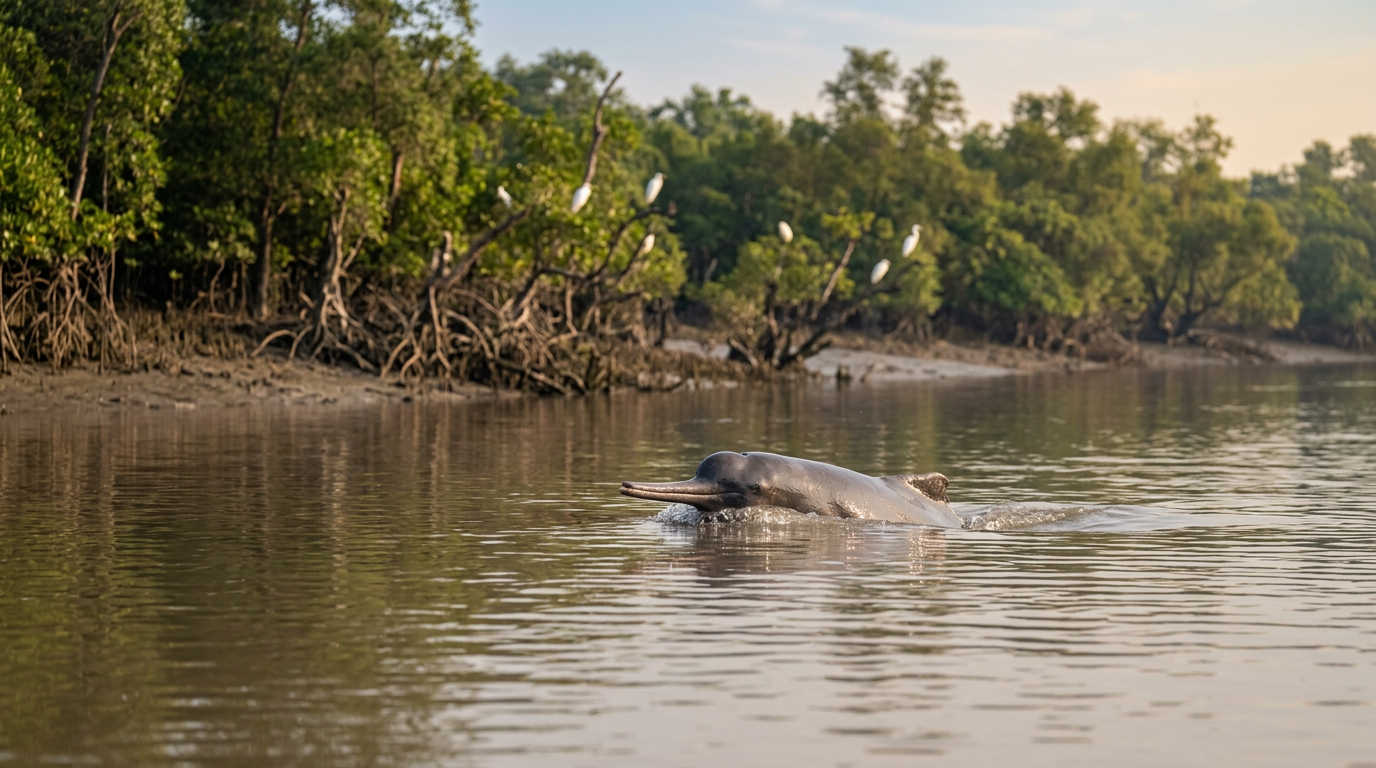
The Sundarban delta — where the Ganges, Brahmaputra, and Meghna rivers dissolve into the Bay of Bengal — shelters two remarkable dolphin species that few travellers expect to encounter. The Gangetic river dolphin (Platanista gangetica) and the Irrawaddy dolphin (Orcaella brevirostris) navigate these tidal channels daily, yet most visitors arrive knowing only about the Royal Bengal Tiger. If you are planning a Sundarban tour package, understanding where and when to spot a Sundarban dolphin will elevate your trip from ordinary to extraordinary.
Gangetic River Dolphin — India’s National Aquatic Animal
The Gangetic dolphin, locally known as Shushuk, is one of the world’s oldest cetacean species, having evolved over 30 million years ago. Classified as Endangered on the IUCN Red List, fewer than 3,500 individuals survive across the entire Ganges–Brahmaputra basin. In Sundarban, they inhabit the freshwater-dominant northern channels where salinity stays below 5 ppt.
These dolphins are functionally blind. Evolution in silty river water rendered their eyes lensless, so they rely entirely on echolocation to hunt fish, shrimp, and crustaceans. You will recognise a Gangetic dolphin by its long, narrow snout and the sideways swimming posture it adopts while scanning the riverbed. Sightings peak between October and March, when reduced water flow concentrates prey in narrower channels. Early-morning boat safaris — particularly through the Raimangal and Kalindi river systems — offer the highest encounter rates.
Irrawaddy Dolphin — The Smiling Resident of Brackish Waters
While the Gangetic dolphin claims the fresher upstream reaches, the Irrawaddy dolphin thrives in the brackish middle zone of the Sundarban delta. This rounded, melon-headed cetacean looks remarkably different — it has no beak, a flexible neck, and a permanent gentle “smile” that makes it a photographer’s favourite during any Sundarban wildlife safari.
Irrawaddy dolphins in Sundarban are part of a critically small population. The species is listed as Vulnerable globally, but the South Asian riverine populations face even steeper decline due to gillnet entanglement, vessel traffic, and freshwater diversion. In Sundarban, groups of three to six individuals are regularly sighted near Sajnekhali, Sudhanyakhali, and the wider confluences around Jhilla and Pirkhali. They surface quietly — often just a grey arc and a soft puff of breath — so a trained naturalist guide dramatically improves your chances of spotting them.
Best Months and Zones for Dolphin Sighting
Dolphin activity in Sundarban follows the tidal and salinity rhythm of the delta. Here is a season-by-season overview:
- October – December (Post-Monsoon): Peak season. Receding floodwaters push fish into main channels, and dolphins follow. Both species are active and surface frequently.
- January – March (Winter): Excellent visibility and calm waters. Gangetic dolphins concentrate in northern tributaries; Irrawaddy dolphins remain in mid-zone confluences.
- April – June (Pre-Monsoon): Rising salinity pushes Gangetic dolphins further upstream. Irrawaddy sightings stay consistent near Sajnekhali.
- July – September (Monsoon): Heavy rain and strong currents reduce sightings significantly. Most safari operators suspend deep-forest routes.
For the best experience, book a multi-day itinerary that covers both the northern freshwater channels and the central brackish zone. Our Sundarban tour packages are specifically designed to maximise wildlife encounters, including dolphin hotspots that single-day trips cannot reach.
Conservation Challenges and What You Can Do
Both dolphin species face mounting threats in Sundarban. Illegal gillnet fishing causes accidental drowning — dolphins must surface to breathe, and entanglement is often fatal. Increased motorised vessel traffic creates noise pollution that disrupts echolocation, while upstream damming reduces freshwater inflow, pushing salinity lines deeper into the delta and shrinking Gangetic dolphin habitat.
As a responsible traveller, you can contribute meaningfully. Choose eco-certified tour operators who use low-noise engines, maintain safe distances from surfacing dolphins, and employ local guides trained in cetacean identification. Reporting sightings to the Sundarban Tiger Reserve authorities helps researchers monitor population trends. Even sharing your Sundarban wildlife experience on social media raises public awareness about these under-recognised species.
Frequently Asked Questions
Plan Your Sundarban Dolphin Safari Today
Watching a Gangetic dolphin arch through golden morning light or an Irrawaddy dolphin surface silently beside your boat — these are moments that define a Sundarban journey. Our expert-guided safaris navigate the exact channels where dolphin activity peaks, giving you the best opportunity for an unforgettable sighting.