

What Makes the Sundarban Mangrove Forest So Extraordinary?
Stretching across approximately 10,000 square kilometres at the delta of the Ganges, Brahmaputra, and Meghna rivers, the Sundarban mangrove forest is the single largest tidal halophytic mangrove ecosystem on Earth. Shared between India and Bangladesh, this UNESCO World Heritage Site earned its protected status in 1987 — a recognition of its irreplaceable ecological significance.
Unlike typical forests rooted in stable soil, the Sundarban mangrove forest thrives where land and sea blur into one. Twice daily, tidal waters surge through a labyrinth of creeks and channels, submerging the forest floor and reshaping the landscape. It is this constant interplay of salt water and fresh water that gives the Sundarbans its defining character — a forest that literally breathes with the tides.
The Unique Ecosystem of the Sundarban Mangroves
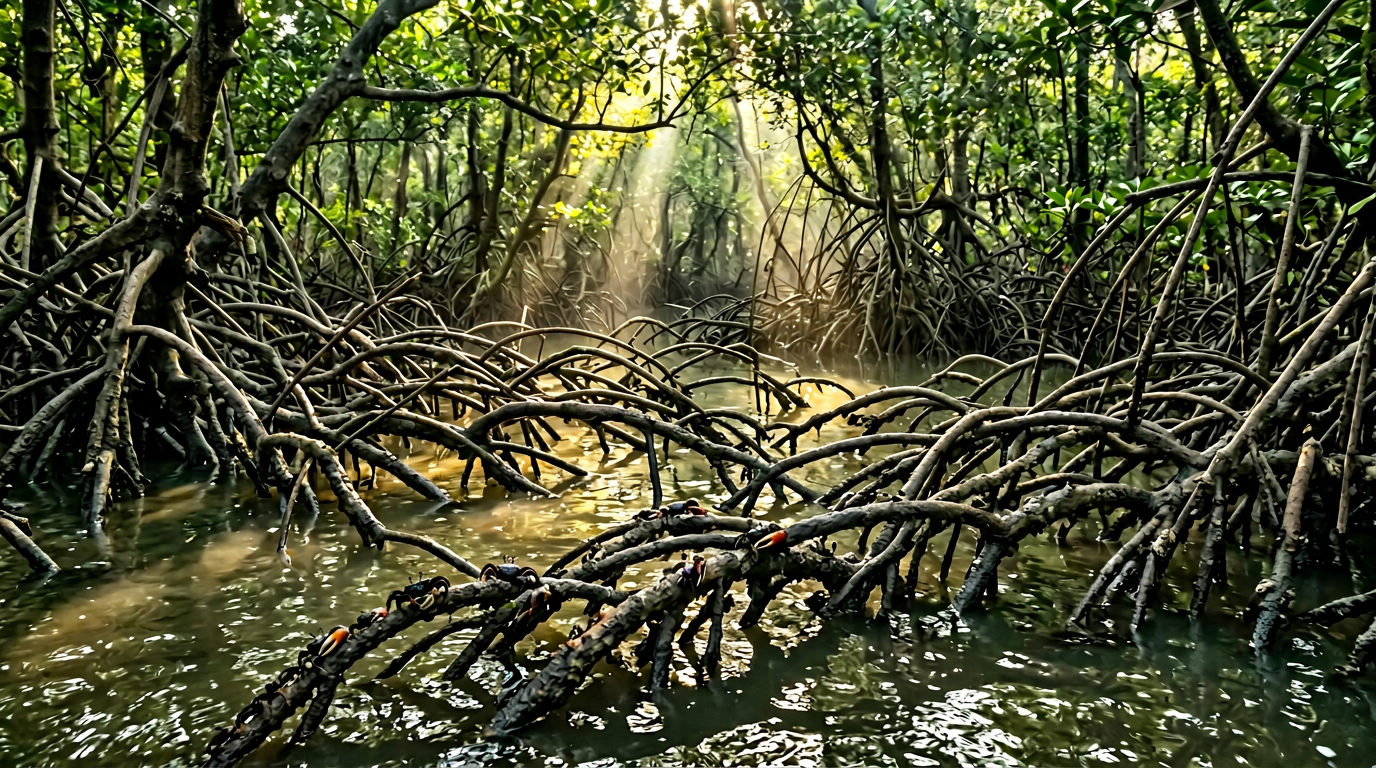
The Sundarban mangrove forest supports over 60 mangrove species, with the Sundari tree (Heritiera fomes) being the most iconic — it is, in fact, the tree that gave the forest its name. These mangroves have evolved remarkable adaptations: pneumatophores (breathing roots) that poke above the waterline, salt-filtering root systems, and viviparous seeds that germinate while still attached to the parent tree.
This tidal woodland serves as a critical carbon sink, sequestering up to five times more carbon per hectare than terrestrial forests. The dense root networks act as natural breakwaters, protecting millions of coastal residents from cyclones and storm surges — a service valued at billions of dollars annually. During Cyclone Amphan in 2020, areas shielded by intact mangrove stands suffered significantly less damage than exposed coastlines.
The aquatic zones between the roots teem with life: mudskippers, horseshoe crabs, Ganges river dolphins, and hundreds of fish species that depend on mangrove nurseries during their juvenile stages. If you are planning to witness this biodiversity firsthand, our Sundarban wildlife safari packages offer guided boat excursions through the richest zones.
Wildlife That Calls the Mangrove Forest Home
The Sundarban mangrove forest is the last stronghold of the Royal Bengal Tiger population that has uniquely adapted to a semi-aquatic life. An estimated 400 tigers swim between islands, hunt in knee-deep water, and navigate tidal channels with an ease unmatched by any other tiger population on the planet.
Beyond tigers, the forest shelters over 260 bird species — from the white-bellied sea eagle soaring above the canopy to the elusive masked finfoot skulking through waterways. Estuarine crocodiles, Indian pythons, water monitors, and olive ridley turtles add to a faunal roster that rivals any protected area in South Asia.
Night descends differently here. Bioluminescent phytoplankton occasionally light up the creek waters, and the calls of fishing owls replace the daytime chorus of kingfishers. For wildlife enthusiasts, there is simply no experience quite like a dawn boat ride through silent mangrove corridors.
Conservation Challenges and UNESCO Heritage Status
Despite its UNESCO designation, the Sundarban mangrove forest faces mounting pressures. Rising sea levels driven by climate change are gradually inundating low-lying islands — several inhabited islands have already been lost to the Bay of Bengal. Salinity intrusion is altering species composition, pushing freshwater-dependent Sundari trees toward decline.
Illegal logging, shrimp farming expansion, and upstream dam projects that reduce freshwater flow compound these threats. India’s Sundarban Tiger Reserve and Bangladesh’s Sundarban Reserve Forest together protect roughly 40% of the total mangrove area, but enforcement across such vast, waterlogged terrain remains an ongoing challenge.
Responsible tourism plays a meaningful role in conservation economics. When you book a Sundarban tour package through certified eco-tourism operators, a portion of the revenue directly funds anti-poaching patrols, mangrove replanting programs, and community livelihood projects in buffer-zone villages.
Frequently Asked Questions About the Sundarban Mangrove Forest
How large is the Sundarban mangrove forest?
The Sundarban mangrove forest spans approximately 10,000 square kilometres across India and Bangladesh, making it the world’s largest contiguous tidal mangrove ecosystem.
Why is the Sundarban mangrove forest a UNESCO World Heritage Site?
UNESCO designated the Sundarbans as a World Heritage Site in 1987 for its outstanding universal value — including its unique tidal ecosystem, exceptional biodiversity, and its role as the primary habitat of the Royal Bengal Tiger.
What types of mangrove trees grow in the Sundarbans?
Over 60 mangrove species thrive here, including Sundari (Heritiera fomes), Gewa (Excoecaria agallocha), Goran (Ceriops decandra), and Keora (Sonneratia apetala). The Sundari tree is the most dominant and gives the forest its name.
Is it safe to visit the Sundarban mangrove forest?
Yes, visiting is safe when you travel with licensed tour operators who follow Forest Department guidelines. All tourist boats carry trained guides, and designated watchtowers and eco-tourism zones are designed for safe wildlife observation.
What is the best time to visit the Sundarbans?
The ideal season is October to March, when the weather is cool, humidity is lower, and wildlife sightings — especially birds and Royal Bengal Tigers — are most frequent along the water channels.
Experience the Sundarbans With Expert-Led Eco Tours
The Sundarban mangrove forest is not merely a destination — it is an encounter with one of the planet’s most dynamic and fragile ecosystems. Whether you seek the thrill of spotting a Bengal tiger from a silent boat or the serenity of watching sunlight pierce through a cathedral of mangrove roots, the Sundarbans delivers an experience that no wildlife documentary can replicate.