

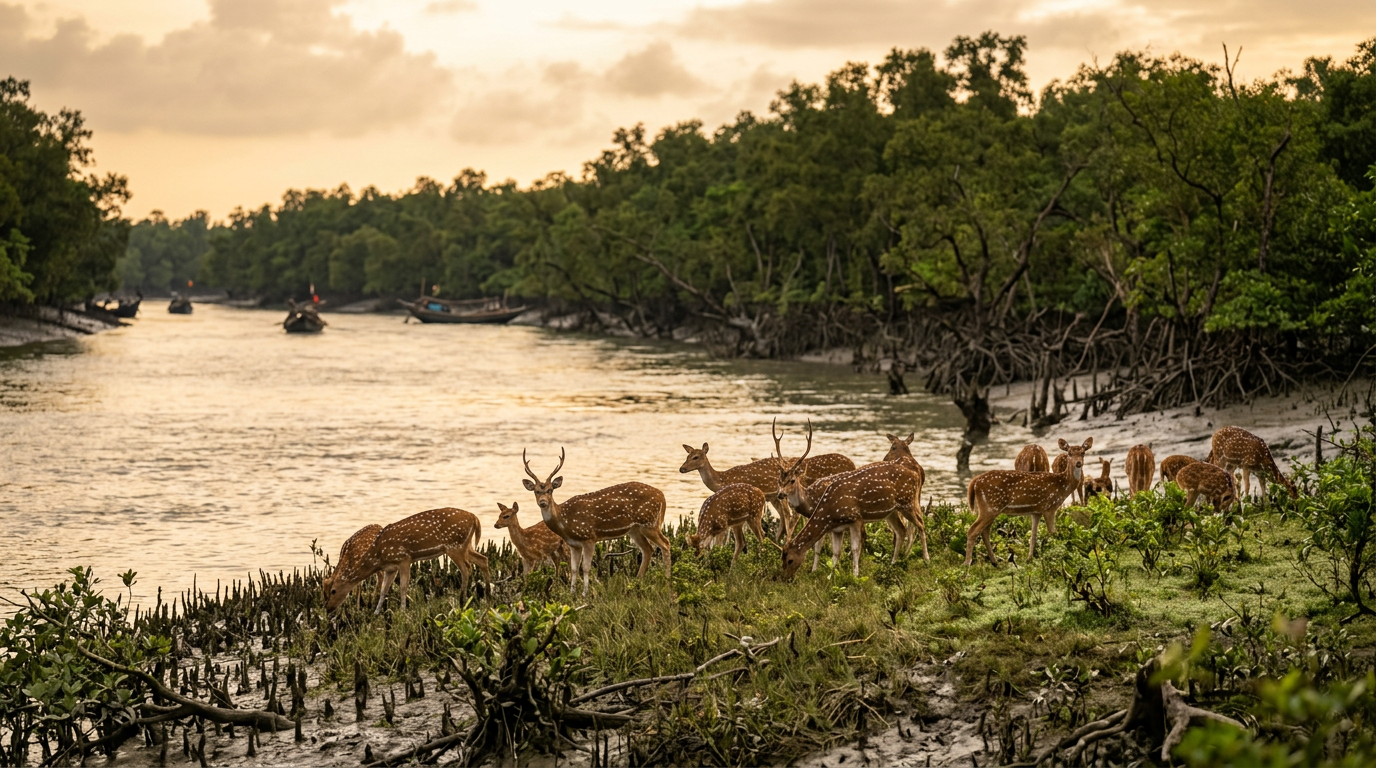
Sundarban animals range from the iconic Royal Bengal Tiger to tiny fiddler crabs, creating one of the most bio-diverse ecosystems on Earth. Spread across 10,200 square kilometres of tidal mangrove forest, the Sundarbans shelters over 400 vertebrate species perfectly adapted to brackish water, shifting mudflats, and dense canopy cover. This complete wildlife checklist helps you know exactly what to look for during your next boat safari.
Mammals — Top Sundarban Animals to Spot
The Royal Bengal Tiger is the undisputed flagship species. The Indian Sundarbans support roughly 100 tigers — unique among their species for swimming between islands, hunting in tidal waterways, and occasionally preying on fish and crabs. Sightings are rare but pug-marks, scratch marks on Heritiera trees, and alarm calls from spotted deer confirm their constant presence along safari routes.
Spotted deer (Axis axis) are the most commonly seen large mammals. Herds of 20 to 50 graze on riverbanks, and their sharp alarm bark is often the first signal of a tiger nearby. Indian wild boar forage alongside them, rooting for tubers and crabs. Rhesus macaques occupy the canopy in noisy troops, feeding on mangrove fruit and shellfish.
Ganges river dolphins (Platanista gangetica) surface in the wider channels between Sajnekhali and Netidhopani, identifiable by their elongated snout. Irrawaddy dolphins (Orcaella brevirostris) prefer deeper stretches closer to the Bay of Bengal. Both species are classified as Endangered by the IUCN, making every sighting special.
Reptiles — Crocodiles, Monitor Lizards, and Snakes
The saltwater crocodile dominates the tidal creeks. Adults measure 4 to 5 metres and are most visible during low tide when they bask on exposed mudflats. Water monitors — reaching up to 2.5 metres — patrol riverbanks scavenging fish, crabs, and bird eggs. They are often spotted draped over mangrove roots, warming in the morning sun.
Over 50 snake species live here — king cobras, monocled cobras, banded kraits, and Indian pythons on the forest floor, while green vine snakes and mangrove pit vipers occupy the lower canopy. Olive ridley and hawksbill sea turtles nest along the southern beaches between December and March.
Birds — 300+ Species and Counting
The Sundarbans is a birdwatcher’s paradise, with over 300 confirmed species. Resident raptors include the white-bellied sea eagle, Pallas’s fish eagle, and the brahminy kite — all visible circling above the canopy on most safari mornings. Kingfishers are spectacularly represented: stork-billed, white-throated, common, brown-winged, and the elusive ruddy kingfisher all hunt along the creeks.
Wading birds dominate the mudflats — grey herons, lesser adjutant storks, Asian openbills, and multiple egret species form feeding congregations at low tide. Between November and February, migratory visitors arrive from Central Asia: Eurasian curlews, bar-tailed godwits, spotted redshanks, and northern pintail ducks. For a detailed birding itinerary, see our Sundarban bird watching guide.
Aquatic Life — Fish, Crabs, and Mudskippers
Over 200 fish species thrive in the estuarine network, including the prized hilsa (Tenualosa ilisha), giant mud crabs (Scylla serrata), and the mudskipper — a fish that walks on mangrove roots and breathes through its skin. Horseshoe crabs, living fossils dating back 450 million years, appear on sandy stretches near river mouths, while fiddler crabs carpet the mudflats at low tide.
Best Tips for Wildlife Sightings
Travel between October and March. Cooler weather drives animals to open banks, and migratory birds are present. Early morning and late afternoon safaris yield the highest sighting rates.
Choose low-tide slots. Exposed mudflats reveal crocodiles, monitor lizards, and wading birds that vanish when the tide rises.
Carry proper optics. Binoculars (8×42 or 10×42) and a telephoto lens of at least 200 mm are essential — most Sundarban animals are viewed across water channels, not at arm’s length.
Book a guided itinerary. Sundarban Eco Friends pairs every group with a licensed naturalist guide who knows animal movement patterns, nesting schedules, and the best watchtower vantage points. Explore our Sundarban tour packages for expertly crafted wildlife itineraries.
Frequently Asked Questions
Plan Your Sundarban Wildlife Safari Today
Let Sundarban Eco Friends handle every detail — from Kolkata pickup and forest permits to expert-guided boat safaris through the richest wildlife corridors. Choose a package that fits your schedule and tick off as many species as you can.