

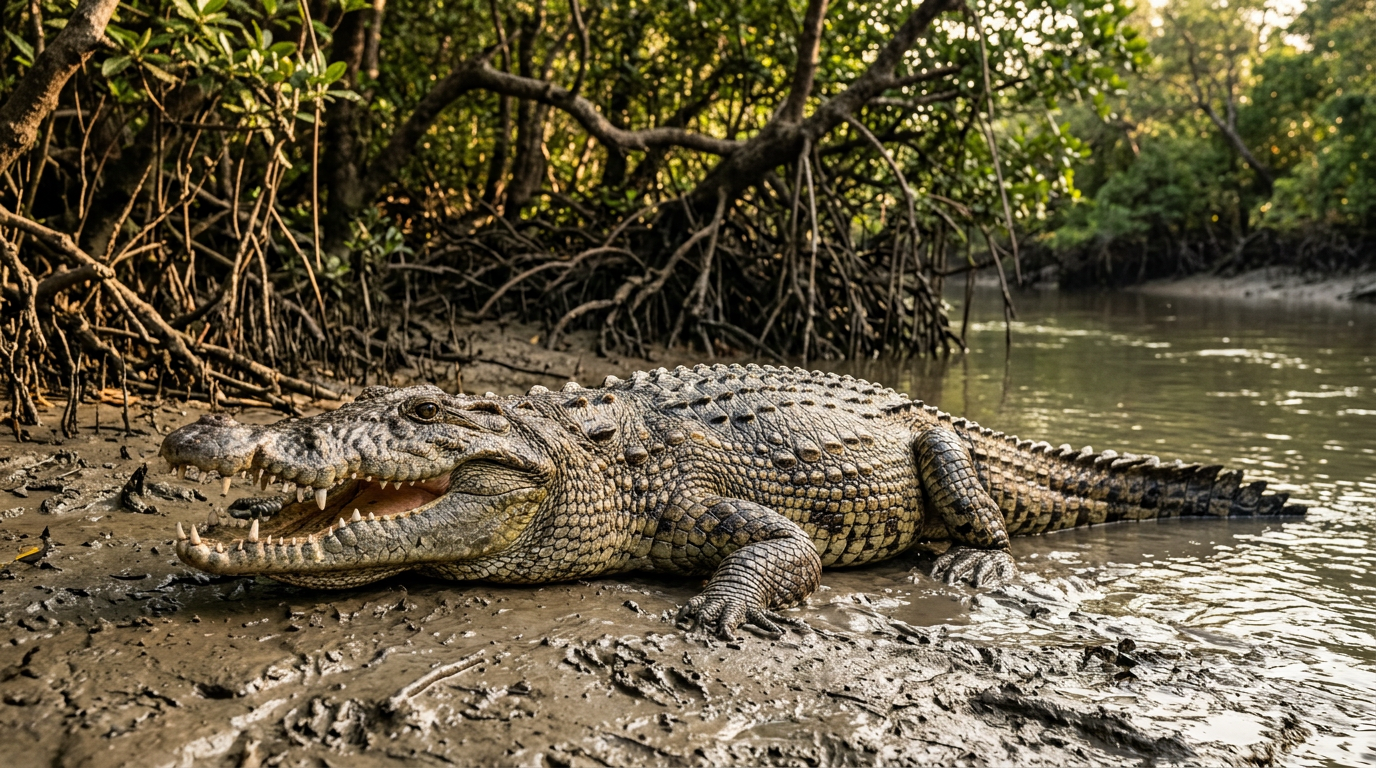
The Sundarban crocodile is one of the most formidable residents of the world’s largest mangrove forest. Saltwater crocodiles (Crocodylus porosus) have thrived here for thousands of years, perfectly adapted to brackish tidal channels and mudflats. Understanding crocodile behaviour, habitat zones, and safety measures turns a boat safari into a well-informed adventure.
Saltwater Crocodile in Sundarban — Species Profile and Population
The saltwater crocodile is the largest living reptile on Earth. Adult males in the Sundarbans typically measure 4 to 5 metres, though individuals exceeding 5.5 metres have been documented. Females average around 3 metres. Their jaws generate the strongest bite force of any living animal — exceeding 3,500 pounds per square inch.
Population surveys by the West Bengal Forest Department estimate between 1,500 and 2,000 saltwater crocodiles on the Indian side. Numbers have recovered steadily since conservation began in the 1970s under the Crocodile Breeding and Management Programme. A smaller population of mugger crocodiles (Crocodylus palustris) exists in freshwater pockets near the northern buffer zone, but the saltwater species dominates the tidal channels tourists navigate during a Sundarban wildlife safari.
Habitat Zones — Where Sundarban Crocodiles Live
Saltwater crocodiles occupy a range of micro-habitats shaped by tidal cycles. During low tide, they bask on exposed mudbanks to regulate body temperature — this is when safari boats get the clearest sightings. At high tide, they submerge almost entirely, with only their eyes and nostrils breaking the water surface as they patrol for prey.
Key crocodile-dense zones include the tidal creeks around Netidhopani, the mudflats near Sudhanyakhali watchtower, the channels between Dobanki and Sajnekhali, and the wider river stretches around Jhilla and Pirkhali. These areas combine sheltered nesting banks with abundant fish, crabs, and wading birds that form the crocodile’s diet.
Nesting season runs from April to July, when females build mound nests on elevated creek banks above the high-tide line, laying 40 to 60 eggs per clutch. Nesting females become especially territorial during this period. Tourists visiting between October and March encounter basking adults most frequently.
Safety Precautions for Tourists
Following a few practical precautions ensures every crocodile encounter remains safe and rewarding.
Never leave the boat. All tourist routes in the reserve are water-based. Disembarking on unauthorised banks is both illegal and dangerous — crocodiles are ambush predators that can launch from the waterline with explosive speed.
Keep hands and feet inside. Avoid dangling limbs over the gunwale, especially in narrow creeks where crocodiles rest just below the surface.
Follow your guide’s instructions. Licensed naturalist guides know crocodile hotspots, nesting territories, and safe viewing distances. For detailed preparation advice, review our Sundarban tour safety tips guide.
Avoid attracting attention. Do not throw food, splash water, or use flash photography near basking crocodiles — it startles them into the water, ending your viewing opportunity and stressing the animal.
Choose a reputable operator. Sundarban Eco Friends ensures every vessel meets Forest Department standards with safety railings, life jackets, and crew trained in crocodile behaviour zones. Explore our Sundarban tour packages for guided itineraries.
Best Ways to Spot Crocodiles on Safari
Time your safari right. Early morning between 7:00 and 9:00 AM offers the best basking window. Late afternoons from 3:30 to 5:00 PM provide a second peak as crocodiles soak up the last heat of the day.
Scan the mudflats at low tide. Low tide exposes wide mud margins along creek edges. Sweep binoculars across these banks — crocodiles blend exceptionally well with brown mud, and movement is often the first giveaway.
Watch for “eye-and-snout” profiles. In deeper channels, look for two small bumps at the water surface — the eyes and nostrils of a submerged crocodile. Guides call these “periscope signatures” and judge animal size from the gap between them.
Bring the right gear. Compact binoculars (8×42 or 10×42), a telephoto lens of at least 200 mm, and polarised sunglasses to cut water glare are essential for spotting these well-camouflaged reptiles.
Frequently Asked Questions
Plan Your Sundarban Crocodile Safari Today
Let Sundarban Eco Friends handle every detail — from Kolkata pickup and forest permits to expert-guided boat safaris and all meals. Choose a package that fits your schedule and witness these predators in the wild.