

Deep inside the Sundarban Tiger Reserve, where tidal creeks wind through dense mangrove forest, stands the Sudhanyakhali Watch Tower — widely regarded as the single best vantage point for spotting a Royal Bengal Tiger in the wild. Unlike any other watchtower in the Sundarbans, Sudhanyakhali overlooks a freshwater pond that draws tigers, deer, and wild boar to its banks, giving visitors an unmatched front-row seat to raw wildlife drama. In this guide, Sundarban Eco Friends covers location, timings, what to expect, and how to include Sudhanyakhali in your safari itinerary.
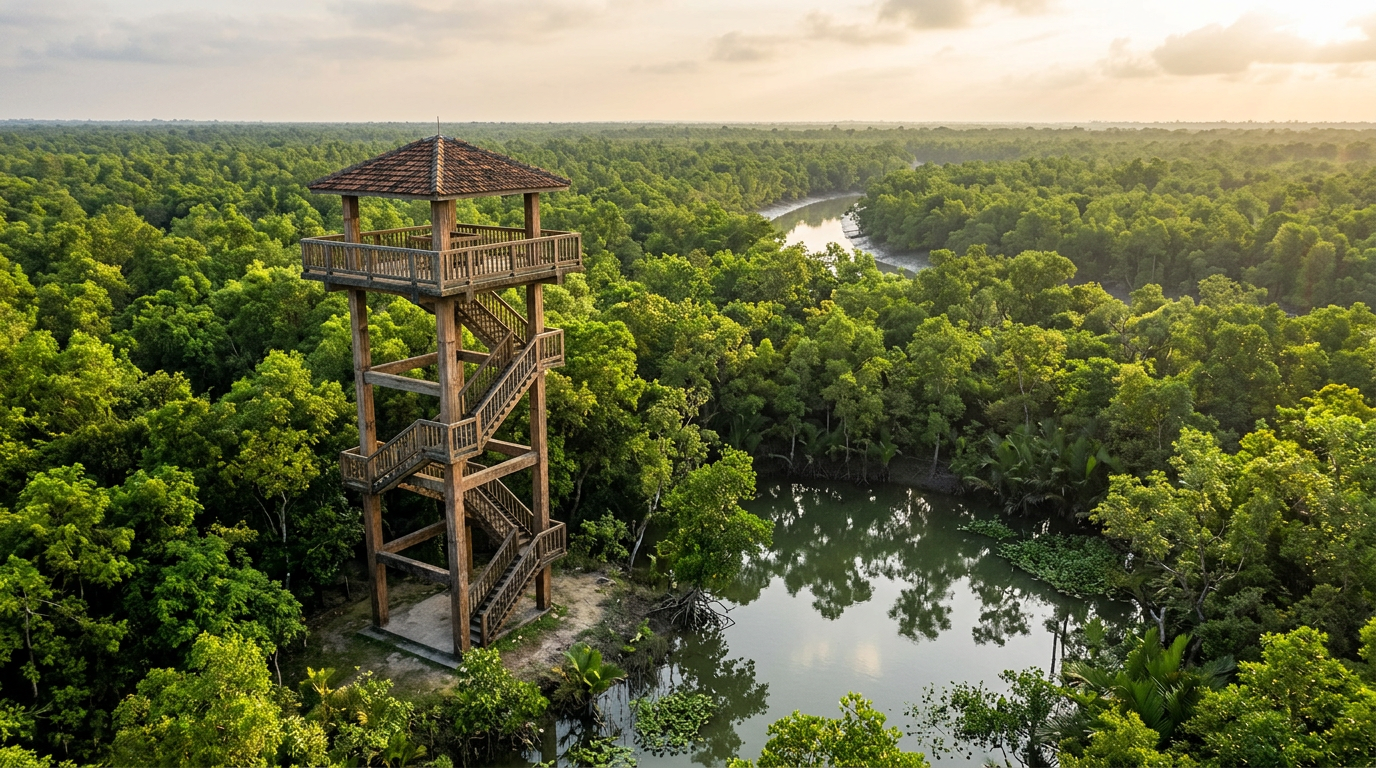
Where Is the Sudhanyakhali Watch Tower
The Sudhanyakhali Watch Tower is located inside the core area of the Sundarban Tiger Reserve, approximately 12 kilometres from the Sajnekhali Wildlife Sanctuary entry point. You can only reach it by boat — there are no roads in this part of the delta. Safari boats departing from Sajnekhali navigate a network of narrow creeks flanked by Sundari, Gewa, and Keora mangrove trees before arriving at the Sudhanyakhali jetty. The journey typically takes 45 minutes to one hour depending on tidal conditions.
From the jetty, a short boardwalk leads through the forest to the watchtower. The elevated structure stands roughly 20 feet above the forest floor, offering a 270-degree view over a large freshwater pond and the surrounding tree line. During the drier months between November and February, this pond becomes one of the few reliable freshwater sources in the area, drawing tigers and their prey directly into view.
Why Sudhanyakhali Has the Highest Tiger Sighting Chances
Sundarban tigers are notoriously elusive — the forest is dense, the terrain is tidal, and the cats are expert swimmers that move across islands unpredictably. Yet Sudhanyakhali consistently records more tiger sightings than any other watchtower in the reserve. The reason is the freshwater pond. As the dry season progresses, salinity rises across the delta. Tigers, deer, and wild boar converge on the few remaining freshwater bodies, and the Sudhanyakhali pond is the largest and most accessible.
Forest Department records confirm that most tiger sightings inside the reserve occur within a one-kilometre radius of this pond. Visitors frequently spot fresh pugmarks on the muddy banks, scratch marks on trees, and deer herds maintaining a nervous vigil — all indicators that a tiger is nearby. Even when the tiger does not appear, the concentration of wildlife — spotted deer, wild boar, water monitors, and white-bellied sea eagles — makes the visit rewarding. For tracking techniques, read our Sundarban tiger safari guide.
Visiting Timings and Best Season
The Sudhanyakhali Watch Tower is open to visitors daily during forest operating hours, typically from 8:00 AM to 4:00 PM. You need a valid Sundarban Tiger Reserve entry permit, which your tour operator arranges in advance through the Forest Department. Visitor time at the tower is usually limited to 30–45 minutes to minimise disturbance to wildlife.
The best months to visit are November through February. Lower water levels and freshwater scarcity drive wildlife closer to the pond. Early-morning slots yield the highest sighting probability. Avoid monsoon months entirely; the reserve closes from June to August due to flooding and dangerous tidal surges.
How to Include Sudhanyakhali in Your Sundarban Itinerary
Sudhanyakhali is covered in most 2-night and 3-night Sundarban safari packages. A well-planned itinerary includes Sajnekhali on day one for permits, followed by Sudhanyakhali and Dobanki on day two for wildlife spotting. Three-night packages add deeper zones like Netidhopani, but Sudhanyakhali remains the highlight for tiger-focused visitors.
When booking, confirm that Sudhanyakhali is explicitly included in the route. Some budget operators skip this zone to save fuel and permit costs. With Sundarban Eco Friends, every safari package includes a dedicated Sudhanyakhali visit, expert guides, timed arrivals during peak wildlife-activity windows, and comfortable boat accommodation with all meals. Browse our curated Sundarban tour packages to find the right itinerary.
FAQs
Where is Sudhanyakhali Watch Tower located?
Sudhanyakhali Watch Tower is located inside the core area of the Sundarban Tiger Reserve, about 12 km from the Sajnekhali entry point. It is accessible only by boat through narrow mangrove creeks.
Why is Sudhanyakhali the best spot for tiger sighting in Sundarban?
The watchtower overlooks a large freshwater pond that attracts tigers, deer, and wild boar — especially during the dry season when freshwater becomes scarce across the delta. More confirmed tiger sightings occur near this pond than at any other location in the reserve.
What is the best time to visit Sudhanyakhali Watch Tower?
November to February is the best period. Lower water levels and freshwater scarcity draw wildlife to the pond, and early-morning visits offer the highest chances of spotting a tiger.
How long can you stay at Sudhanyakhali Watch Tower?
Visitors are typically allowed 30 to 45 minutes at the watchtower. Time is limited by Forest Department regulations to minimise disturbance to wildlife in this sensitive core zone.
Is Sudhanyakhali Watch Tower included in all Sundarban tour packages?
Not always. Some budget operators skip Sudhanyakhali to save on fuel and permit costs. Sundarban Eco Friends includes a dedicated Sudhanyakhali visit in every safari package with expert naturalist guides and optimised timing.
Book Your Sundarban Safari With Sudhanyakhali Included
Don’t leave your tiger sighting to chance. Sundarban Eco Friends designs every itinerary to maximise your time at high-probability zones like Sudhanyakhali. From Kolkata pickup to forest permits, guided safaris, and comfortable stays — everything is handled. Reach out today and lock in your spot.