

The Sundarban tiger safari is the only wildlife experience in India where you search for the Royal Bengal Tiger from a boat, gliding through a labyrinth of tidal creeks and mangrove channels. Unlike dry-land national parks such as Jim Corbett or Ranthambore, Sundarban demands a completely different approach — patience, the right boat route, expert guides, and an understanding of how tigers move through this watery wilderness. Whether you are a first-time visitor or a returning wildlife enthusiast, planning your expedition carefully can dramatically increase your chances of a sighting. In this guide, Sundarban Eco Friends shares everything you need to know to plan the perfect Sundarban tiger safari from Kolkata.
What Makes the Sundarban Tiger Safari Unique
The Sundarbans is the world’s largest tidal mangrove forest and the only mangrove habitat of the Royal Bengal Tiger. Unlike tigers in grassland or deciduous forests, Sundarban tigers are expert swimmers who hunt across islands separated by rivers. This makes a boat safari the only practical way to explore their territory.
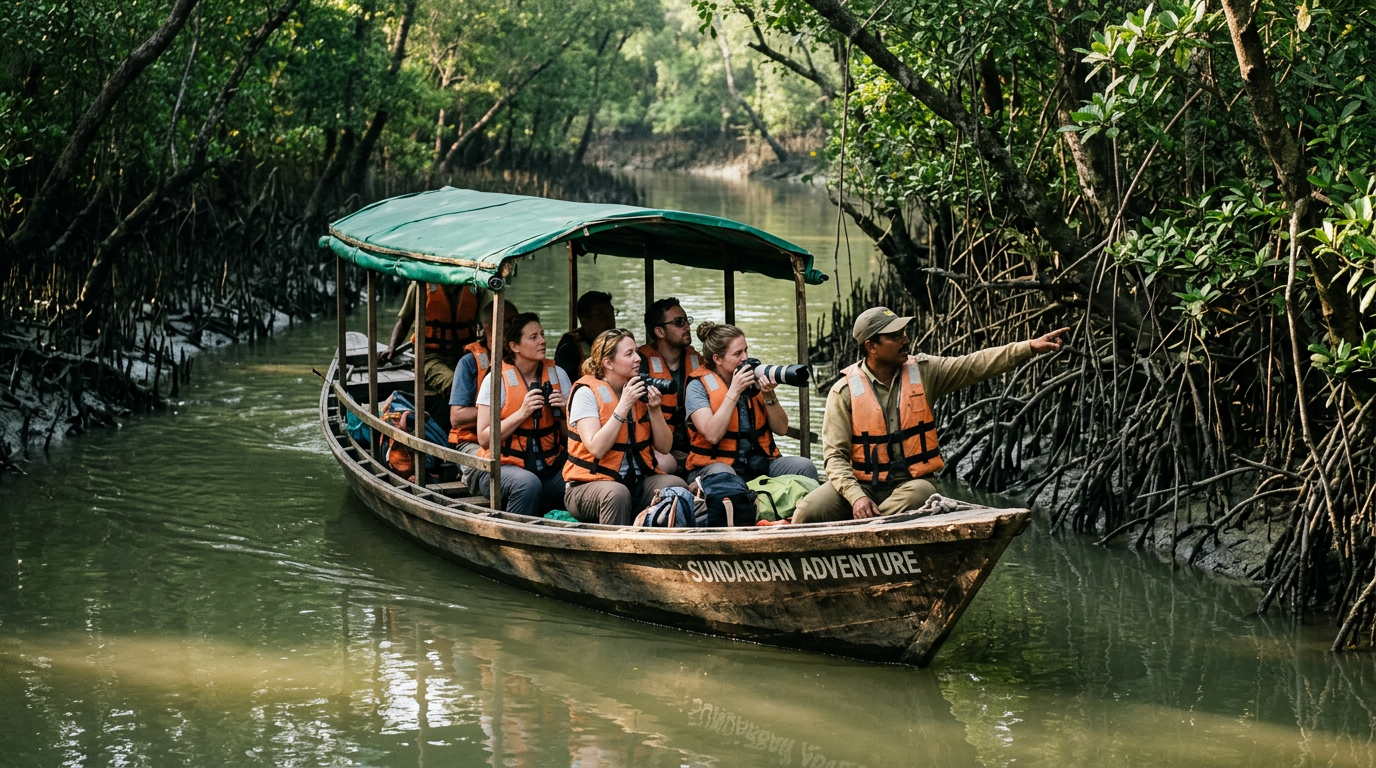
Your safari boat navigates narrow creeks flanked by dense Sundari, Gewa, and Keora trees. The forest floor is submerged during high tide, so tigers are often spotted on muddy riverbanks, at freshwater ponds, or crossing channels between islands. Deer, wild boar, water monitors, kingfishers, and saltwater crocodiles share this landscape, keeping every moment on the water alive with possibility.
What sets a Sundarban tiger safari apart from other Indian safaris is the element of surprise. There are no jeep tracks or waterholes where animals gather predictably. The tiger decides when and where it appears — and that raw unpredictability is exactly what makes a sighting here unforgettable. Learn more about the apex predator you are tracking in our detailed Royal Bengal Tiger Sundarban facts guide.
Best Zones and Boat Routes for Tiger Spotting
Not every zone inside the Sundarban Tiger Reserve offers equal chances of spotting a tiger. The forest is divided into core and buffer zones, with boat routes regulated by the Forest Department. The most productive zones for wildlife sightings include:
- Sajnekhali — The main entry checkpoint with a watchtower, museum, and turtle breeding centre. Excellent for crocodiles and birds.
- Sudhanyakhali — One of the highest-probability zones for tiger sightings, featuring a freshwater pond and an elevated watchtower with direct views of the bank.
- Dobanki — A canopy walk zone with outstanding visibility over the creek. Tigers are frequently spotted on the opposite bank during low tide.
- Netidhopani — Deep inside the reserve, this zone offers a ruined 400-year-old temple and strong tiger-presence indicators like fresh pugmarks and scratch marks on trees.
Most organised Sundarban tiger safari packages cover at least three of these zones across a 2-night or 3-night itinerary. Longer trips venture deeper into less-trafficked creeks where wildlife activity is noticeably higher. When choosing a tour, ensure the package includes visits to Sudhanyakhali and Dobanki — the two zones with the best recent sighting records. Explore our curated Sundarban tour packages for optimised safari routes.
When to Go — Timing Your Sundarban Tiger Safari
Timing plays a crucial role in your safari outcome. The Sundarban Tiger Reserve is open to tourists from September to March, with the peak season running from November to February. During winter, lower water levels expose more riverbank mud, making it easier to spot tigers resting, drinking, or crossing channels. Visibility through the forest also improves as some deciduous species shed their leaves.
Avoid the monsoon months of June to August entirely — the reserve is closed, rivers swell dangerously, and boat navigation becomes hazardous. The shoulder months of September–October and March offer fewer crowds and lower prices, though humidity is higher and afternoon heat can be intense. For the best combination of weather, visibility, and sighting probability, plan your Sundarban tiger safari between November and January. Our best time to visit Sundarban guide has month-by-month breakdowns to help you decide.
What to Expect on a Safari Boat
Your safari vessel is typically a motorised launch with a rooftop observation deck, covered seating, and onboard dining for multi-day trips. Smaller, quieter boats are used for entering narrow creeks where larger launches cannot go — these creek boats bring you closest to the forest edge and offer the most thrilling wildlife encounters.
A trained naturalist guide accompanies every safari and uses pugmark readings, alarm calls from deer and monkeys, and local intelligence to navigate toward high-probability spots. Silence on the boat is essential — engines are cut in sensitive zones, and the boat drifts with the tide. Pack binoculars, a telephoto lens (200 mm minimum), sunscreen, insect repellent, and a light rain jacket. Wear muted earth-toned clothing as bright colours can startle wildlife. Multi-day safari packages by Sundarban Eco Friends include comfortable accommodation on the boat or at riverside eco-lodges, all meals, permits, and expert guides, so you can focus entirely on the experience.
FAQs
What is a Sundarban tiger safari?
A Sundarban tiger safari is a boat-based wildlife expedition through the Sundarban Tiger Reserve, where you navigate tidal creeks and mangrove channels in search of the Royal Bengal Tiger and other wildlife including crocodiles, deer, and over 300 bird species.
What are the chances of seeing a tiger in Sundarban?
Tiger sightings are not guaranteed as the forest is dense and vast. However, visiting during peak season (November–January) and choosing routes through Sudhanyakhali and Dobanki zones significantly improves your chances.
How many days do I need for a Sundarban tiger safari?
A 2-night, 3-day itinerary is the most popular choice, covering major safari zones. A 3-night trip allows deeper exploration into less-visited creeks with higher wildlife activity.
Is a Sundarban tiger safari safe?
Yes. All safari boats carry trained naturalist guides, life jackets, and follow Forest Department regulations strictly. Tourists observe wildlife from the safety of the boat and are never allowed to disembark in tiger zones.
How do I book a Sundarban tiger safari?
You can book directly through Sundarban Eco Friends. Our packages include Kolkata pickup, boat safari, forest permits, meals, and accommodation. Contact us via WhatsApp or browse our tour packages page.
Plan Your Sundarban Tiger Safari Today
The Sundarbans rewards those who plan well. Let Sundarban Eco Friends handle every detail — from Kolkata pickup and forest permits to expert-guided boat safaris, comfortable stays, and all meals. Choose a package that matches your schedule and step into the last true wilderness of the Bengal delta.