

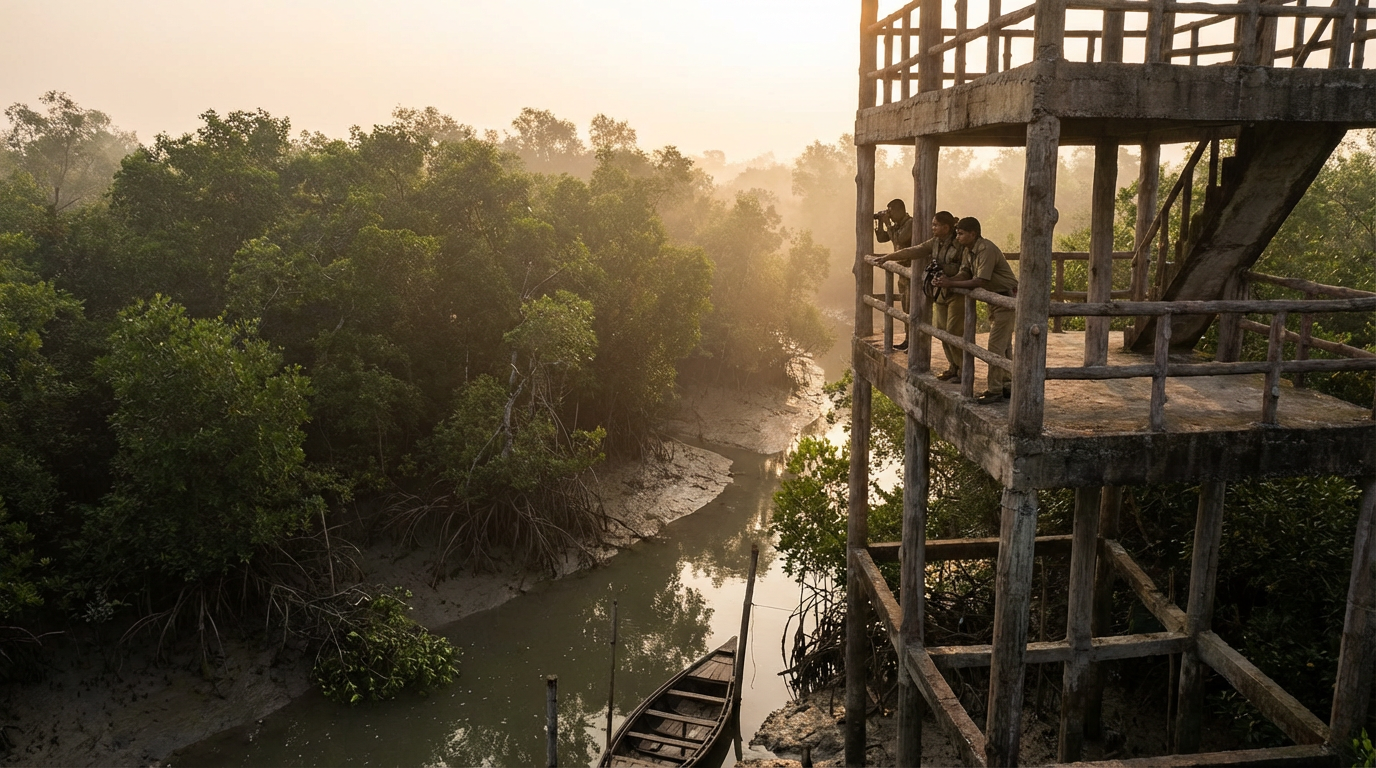
A Sundarban tiger sighting is the defining moment of any visit to the world’s largest mangrove delta. The Sundarban Tiger Reserve shelters roughly 100 Royal Bengal Tigers, yet spotting one demands patience, timing and knowledge of the right zones. This guide shares zone-wise strategies, the best months and expert tips to maximise your chances during a 2026 safari.
Top Zones for a Sundarban Tiger Sighting
The Sundarban Tiger Reserve is divided into core and buffer zones. Not every zone offers equal sighting probability. Focus on these four areas that consistently report tiger activity:
- Sudhanyakhali Watchtower — Positioned beside a freshwater pond, this watchtower records some of the highest sighting frequencies in the entire reserve. Tigers visit the pond to drink, especially during February to April.
- Sajnekhali Watch Camp — The main base camp features a watchtower, crocodile enclosure and deer park. It lies at the confluence of two tidal rivers, making tiger crossings a regular possibility.
- Dobanki Canopy Walk — The elevated boardwalk runs through dense mangroves and offers a quiet vantage point. Tiger pugmarks are regularly spotted along the mudflats below the walkway.
- Netidhopani Ruins — Deep inside the reserve, this zone sees fewer tourists and higher wildlife density. The ruins watchtower overlooks a narrow creek where tigers occasionally cross at low tide.
When choosing a Sundarban tiger safari, confirm that the itinerary covers at least Sudhanyakhali and one interior zone. Multi-day trips raise your sighting odds significantly.
Best Months for Tiger Sightings in Sundarban
Tiger visibility in the Sundarbans is shaped by water levels, temperature and prey movement. Here is a month-wise breakdown:
- October–December — The monsoon recedes and forest trails dry out. Tigers begin moving closer to waterholes. Pleasant weather and moderate tourist numbers make this an ideal window for a Sundarban tiger sighting.
- January–March — Peak dry season. Freshwater sources shrink, forcing tigers toward ponds near watchtowers. February and March record the highest sighting rates across the reserve.
- April–June — Extreme heat keeps most visitors away, but tigers still visit water sources regularly. Fewer boats mean less noise disturbance, which can work in your favour.
- July–September — Heavy monsoon rain floods the forest floor. Boat routes are restricted, and wildlife disperses into the deep interior. Tiger sightings drop sharply during these months.
To understand why Sundarban tigers behave differently from their inland cousins, read our detailed article on Royal Bengal Tiger facts in the Sundarbans.
Expert Tips to Increase Your Sighting Chances
Even in the best zones and months, a tiger sighting is never guaranteed. These field-tested strategies tilt the odds in your favour:
- Stay silent on the boat — Tigers are extremely sensitive to human noise. Ask your group to keep conversations low and switch off music once you enter the core zone.
- Hire a local naturalist — Experienced guides read pugmarks, claw marks on trees and alarm calls from deer and monkeys. Their interpretation adds a layer that raw patience cannot match.
- Carry quality binoculars — Most sightings happen at 100–300 metres across a creek. A 10×42 binocular makes the difference between a blur and a clear, memorable view.
- Choose early morning slots — Boat safaris departing by 06:00 coincide with peak tiger activity along the riverbanks before the midday heat sets in.
- Book a multi-day tour — A single-day trip limits you to the buffer zone. Two-night or three-night Sundarban tour packages penetrate deeper into the reserve and cover more watchtowers.
Dress in muted, earthy colours and avoid perfumes or strong-scented sunscreen. Tigers rely on smell as much as sight, and anything unfamiliar can push them away from the water’s edge before your boat rounds the bend.
What to Do When You Spot a Tiger
Stay on the boat and remain calm. Do not lean over the railing or make sudden movements. Keep your camera ready but never use flash — it startles the animal and violates reserve rules. Let the boat driver maintain a safe distance while your guide directs the best viewing angle. A calm, respectful encounter lasts longer and yields far better photographs.
Frequently Asked Questions
How common is a Sundarban tiger sighting on a 2-day tour?
Roughly 15–20 % of 2-day tours report a direct sighting. Your chances improve to about 35 % on a 3-day trip that covers Sudhanyakhali and Netidhopani zones during peak season (January–March).
Which watchtower has the highest tiger sighting rate?
Sudhanyakhali Watchtower consistently records the most sightings because it overlooks a freshwater pond that tigers visit to drink, especially in the dry months of February to April.
Is it safe to see tigers in the Sundarbans?
Yes. All safaris are conducted on motorised boats with trained guides and forest guards. Visitors never leave the boat inside the core zone, so the risk is extremely low when you follow the rules.
What time of day are tigers most active in Sundarban?
Early morning (05:30–08:00) and late afternoon (15:30–17:00) are peak activity windows. Tigers move to creeks to drink, cool off or hunt prey during these cooler hours.
Can I guarantee a tiger sighting if I book a longer tour?
No tour operator can guarantee a sighting since these are wild animals. However, a 3-day package that covers multiple watchtowers and travels deeper into the reserve significantly increases your probability.