

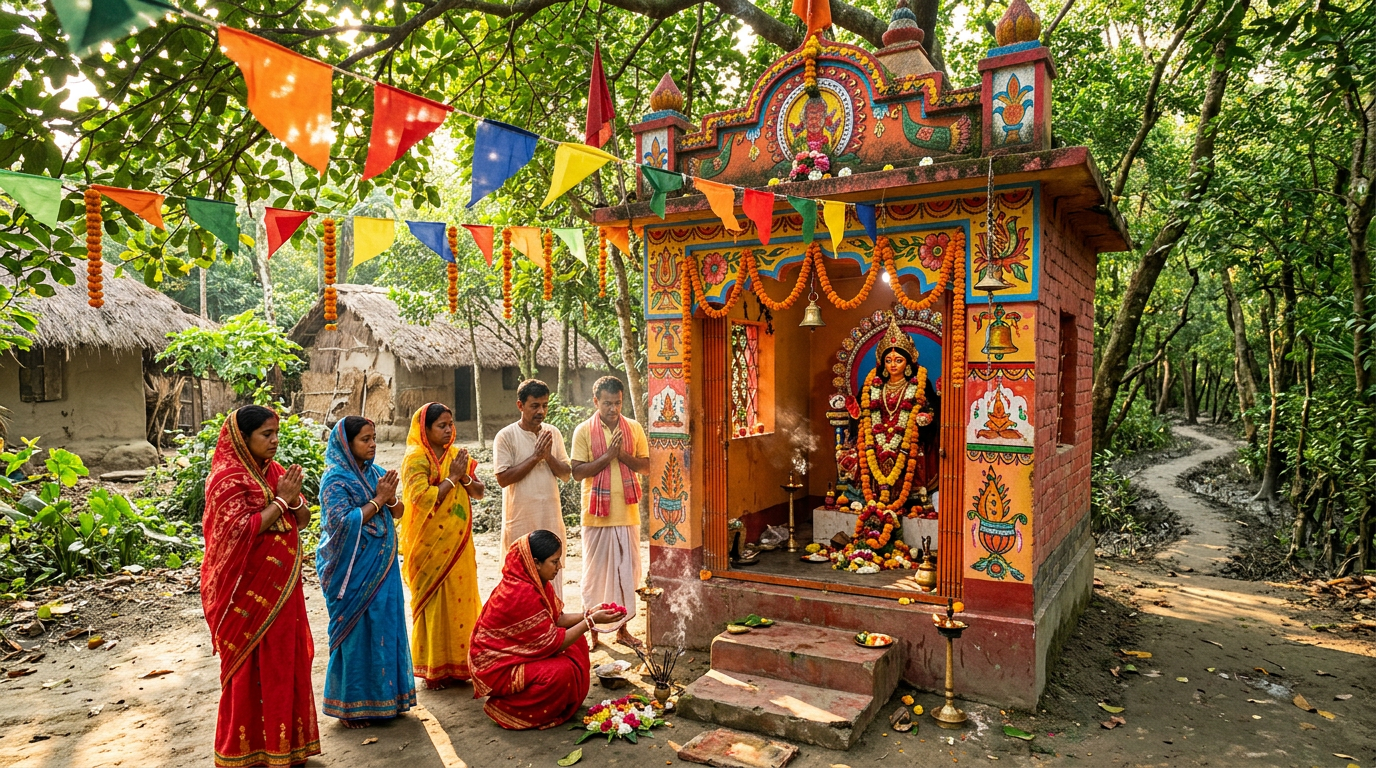
Deep inside the tidal villages of the Sundarbans, one deity commands more reverence than any other — Bonbibi, the guardian goddess of the forest. Fishermen, woodcutters, and honey collectors knelt before her painted clay idol for centuries, seeking protection from tigers and unpredictable tides. The Bonbibi Temple is not a single monument but a living network of brightly painted shrines scattered across the delta’s inhabited islands.
The Legend of Bonbibi — Forest Goddess of the Sundarbans
The legend of Bonbibi is told through the Bonbibi Johuranama, an oral epic passed down over generations. Bonbibi and her twin brother Shah Jongoli arrived in the Sundarbans to protect the forest’s poorest inhabitants from Dakkhin Rai, the tiger-demon who demands human sacrifice in exchange for forest resources. When a greedy merchant offers a young boy called Dukhey to the demon, Bonbibi intervenes and rescues the child. The moral is clear — take only what you need from the forest, and the goddess will protect you. Today, every honey collector invokes Bonbibi before stepping into the mangroves.
Where Bonbibi Temples Are Located in Sundarban
Bonbibi shrines dot nearly every inhabited island in the Sundarbans delta. The most visited temples are found at:
- Sajnekhali: A well-maintained shrine inside the Sundarban Tiger Reserve complex, visible to every tourist who collects a forest permit here.
- Gosaba Island: Multiple village-level temples along the main road; the island is a cultural hub for Bonbibi worship. See our Gosaba Island guide.
- Pakhiralay: A prominent temple near the tourist jetty, often decorated with fresh flowers and incense during puja season.
- Bali Island and Satjelia: Remote settlements where Bonbibi worship remains woven into daily life, unaltered by tourism.
Most shrines are small, open-fronted structures painted in vivid reds, yellows, and blues. The idol of Bonbibi — standing with a trident and flanked by Shah Jongoli — is made of painted clay and dressed in fabric during festivals. If you are booking a Sundarban tour package, ask your operator to include a shrine stop.
Rituals, Festivals, and the Bonbibi Puja
The most significant festival takes place during the winter months (November–January), when villages stage elaborate pala performances — dramatic retellings of the Bonbibi Johuranama lasting through the night. Actors in tiger masks and goddess robes perform under kerosene lamps while the entire village watches. Beyond the annual puja, daily rituals continue year-round: fishermen light incense at the shrine before dawn, requesting safe passage. Bonbibi is worshipped by both Hindus and Muslims — a rare syncretic faith where religious boundaries dissolve before shared danger.
Why Bonbibi Temple Matters for Sundarban Tourism
Wildlife safaris and mangrove cruises define the typical itinerary, but a Bonbibi Temple visit adds a cultural dimension that transforms a nature trip into something richer. At these shrines you witness a belief system shaped by ecology — a goddess born from the need to coexist with apex predators. The temple offers context for the Sundarban wildlife you encounter: the tigers you glimpse from a boat inspired an entire mythology. That link between predator and prayer is unique to this delta.
How to Visit a Bonbibi Temple on Your Sundarban Tour
No special permit is needed beyond the standard Sundarban Tiger Reserve entry pass. The Sajnekhali shrine is included in most organised tours, but village temples on Gosaba or Pakhiralay require a short detour. Practical tips:
- Dress respectfully: Cover shoulders and knees; remove footwear before entering the shrine area.
- Ask before photographing: Local priests and devotees are generally welcoming, but always seek permission before pointing a camera at the idol or rituals.
- Carry a small offering: Marigold flowers or incense sticks (₹10–₹20 at village shops) are appreciated and make the experience more immersive.
- Visit during early morning: Daily puja happens at dawn; arriving between 6–7 AM lets you witness the ritual authentically.
- Combine with island walks: Pair a temple visit with a village walk to see aquaculture, rice paddies, and boat-building — delta life invisible from the tourist boat.
Frequently Asked Questions
Who is Bonbibi in the Sundarbans?
Bonbibi is the guardian goddess of the Sundarban forest, worshipped by both Hindus and Muslims. According to the Bonbibi Johuranama legend, she protects fishermen, honey collectors, and woodcutters from the dangers of the mangrove wilderness — especially tiger attacks.
Where is the most famous Bonbibi Temple in Sundarban?
There is no single ‘most famous’ temple. Bonbibi shrines are spread across dozens of Sundarban islands. The most tourist-accessible ones are at Sajnekhali (inside the Tiger Reserve complex), Gosaba Island, and Pakhiralay near the tourist jetty.
Can tourists visit a Bonbibi Temple during a Sundarban tour?
Yes. The Sajnekhali shrine is included in most standard tour itineraries. For village-level temples on Gosaba or Pakhiralay, ask your tour operator to add a short stop — no extra permit is required.
When is Bonbibi Puja celebrated in the Sundarbans?
Bonbibi Puja is celebrated mainly during the winter months between November and January. Villages organise night-long pala performances — dramatic retellings of the Bonbibi legend with actors in tiger and goddess costumes.
Is Bonbibi worshipped by both Hindus and Muslims?
Yes. Bonbibi is one of the rare syncretic deities in India, revered equally by Hindu and Muslim communities in the Sundarbans. The shared dangers of the mangrove forest have created a unified faith tradition that transcends religious boundaries.