

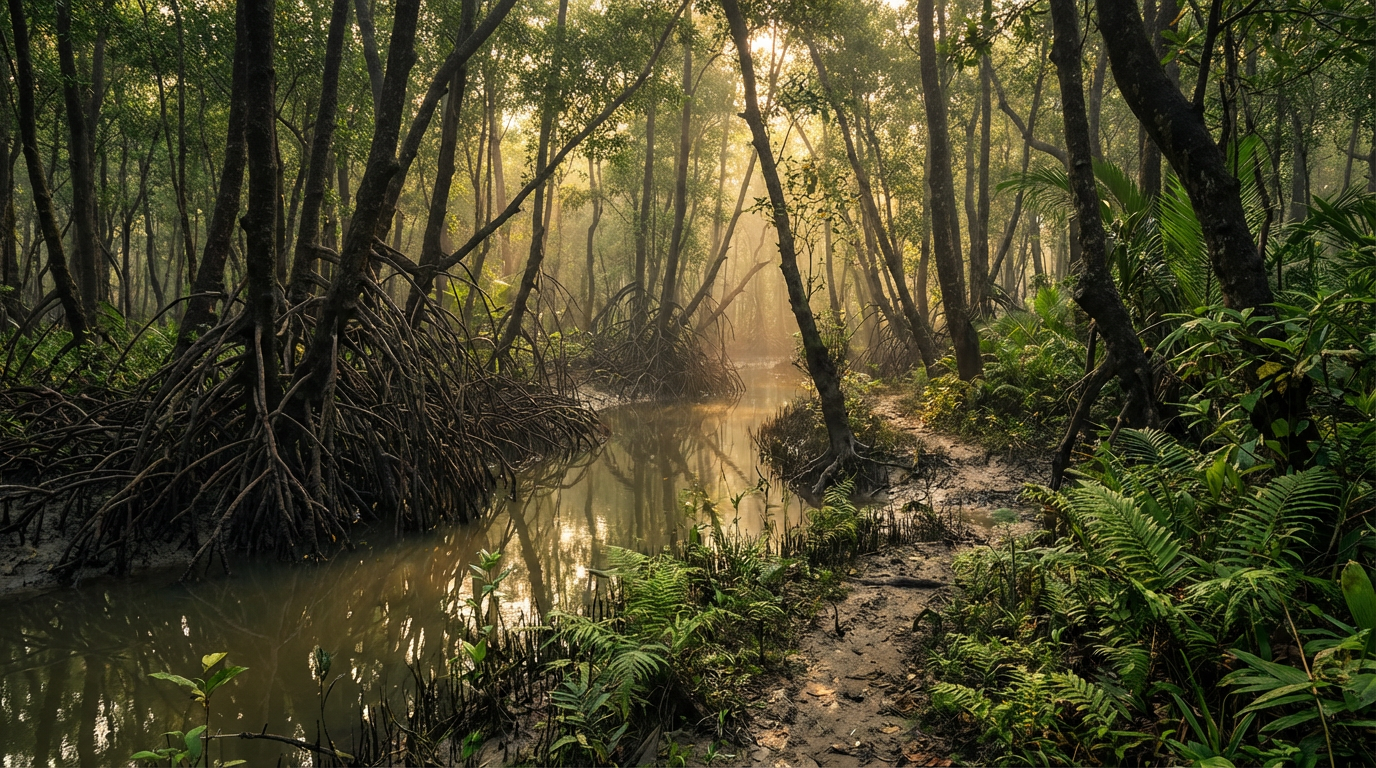
A Sundarban wildlife safari puts you inside the world’s largest mangrove delta — 10,200 square kilometres of tidal creeks, mudflats, and dense forest shared by Royal Bengal Tigers, saltwater crocodiles, Gangetic dolphins, and over 300 species of birds. Unlike any other Indian wildlife destination, the Sundarbans has no jeep trails. Every safari here happens on water, weaving through narrow channels where the forest closes in from both sides and every bend can reveal a predator basking on the bank. This guide covers everything you need to plan the complete jungle experience for 2026.
What Makes a Sundarban Wildlife Safari Unique
Most Indian wildlife reserves offer dusty jeep rides across open grassland. The Sundarbans flips that script entirely. Your vehicle is a motorboat, your road is a tidal creek, and the forest floor is underwater twice a day. This amphibious landscape creates a safari unlike anything in Ranthambore or Jim Corbett — here the tiger swims between islands, the crocodile shares the riverbank with spotted deer, and Irrawaddy dolphins surface beside your boat without warning. The mangrove canopy muffles sound, so every approach is quiet and every sighting feels intensely close.
The ecosystem supports an extraordinary density of species in a compact area. A single morning safari can produce sightings of brahminy kites circling above, water monitors dragging themselves across mudflats, kingfishers diving from prop roots, and — if tide and luck align — a tiger drinking at the creek edge. For a detailed breakdown of tiger tracking zones and techniques, see our Sundarban tiger safari guide.
Key Safari Routes and Wildlife Zones
The Sundarban Tiger Reserve is divided into core and buffer zones, with safari routes approved by the Forest Department. Each zone offers different species concentrations:
- Sajnekhali – Sudhanyakhali: The primary tiger-sighting corridor. Open mudflats at low tide attract deer herds, drawing predators to the water’s edge. The Sajnekhali Interpretation Centre provides an orientation before you enter deeper zones.
- Dobanki – Netidhopani: Known for canopy walks and historical ruins. Crocodile density is high along the creeks here, and the forest cover supports prolific birdlife including white-bellied sea eagles and lesser adjutants.
- Pirkhali – Jhingakhali (deep core): Accessible only on 3-day packages, these remote zones see the fewest tourist boats and the highest pugmark density. Early morning departures yield the best results.
Route selection depends on tidal schedules, weather, and real-time forest advisories. Your boat safari operator will coordinate with the Forest Department daily to pick the most productive circuit.
Types of Safari Boats
Two categories of vessels work together during a Sundarban wildlife safari. A motorised launch (40–60 ft) serves as your floating base camp with sleeping quarters, a kitchen, and an open upper deck for sunrise views. The real safari happens aboard a smaller motorboat (6–10 seats) that can navigate the narrowest creeks where large vessels cannot enter. Experienced boatmen cut the engine near wildlife hotspots and let the current carry the boat forward — a technique that dramatically increases sighting probability.
Premium packages offer AC cabins, private decks, and dedicated naturalists who brief you before each session. Budget packages use shared launches with clean but basic facilities. Both tiers provide the same Forest Department routes and guides.
Best Season and Safari Timings
The optimal window for a Sundarban wildlife safari is October through March. December and January deliver the highest tiger sighting probability as receding water forces prey — and predators — toward remaining freshwater pools. Migratory birds from Siberia and Central Asia arrive by November, adding kingfishers, plovers, and harriers to the resident species count. Safari sessions run from 8:00 AM to 4:30 PM, with the most productive hours being the first two after departure and the last hour before return when animals feed actively.
Monsoon months (June–September) close most safari routes due to unpredictable tidal surges. April and May are hot but can produce rewarding sightings as animals congregate around dwindling water sources. Browse our Sundarban tour packages to lock in your preferred dates.
Essential Safari Tips for Maximum Sightings
- Stay silent on the boat: Sound travels fast over water — a quiet group sees twice the wildlife.
- Carry 8×42 binoculars: Most sightings happen at 200–400 metres; binoculars turn shapes into confirmed species.
- Dress in muted earth tones: Olive, khaki, and grey blend with the mangrove palette and avoid startling animals.
- Watch the mudflats at low tide: Tigers, monitors, and crocodiles rest on exposed banks — scan every opening.
- Trust your guide: Local boatmen read pugmarks, alarm calls, and broken branches instinctively.
Frequently Asked Questions
How much does a Sundarban wildlife safari cost?
An all-inclusive Sundarban wildlife safari costs ₹3,500–₹8,000 per person for a 2-day/1-night package covering boat, meals, permits, and a forest guide. Premium houseboat packages with AC cabins range from ₹10,000 to ₹15,000 per person. Forest entry permits are ₹40 for Indian nationals and ₹200 for foreign visitors.
What animals can I see on a Sundarban wildlife safari?
The Sundarbans is home to roughly 100 Royal Bengal Tigers, saltwater crocodiles, Gangetic and Irrawaddy dolphins, spotted deer, wild boar, rhesus macaques, water monitors, and over 300 bird species including white-bellied sea eagles, kingfishers, and migratory waders. Exact sightings vary by season and route.
Is a Sundarban wildlife safari safe for families?
Yes. Licensed operators use boats inspected by the Inland Waterways Authority, life jackets are mandatory, and a trained forest guide accompanies every boat. Children above 5 are welcome on most packages. Staying seated during creek navigation and following guide instructions ensures a completely safe experience.
How many days do I need for a complete Sundarban safari?
A 2-night/3-day package covers the major wildlife zones including Sajnekhali, Sudhanyakhali, Dobanki, and Netidhopani. A 1-night/2-day trip works for a quick introduction, while a 3-night itinerary lets you access the deep core zones of Pirkhali and Jhingakhali where tiger density is highest.
When is the best time to visit Sundarbans for a wildlife safari?
October to March offers the best conditions. December and January provide the highest tiger sighting probability and comfortable weather. November to February is peak birding season with migratory species present. Avoid the monsoon months of June to September when most safari routes are closed due to tidal surges.