

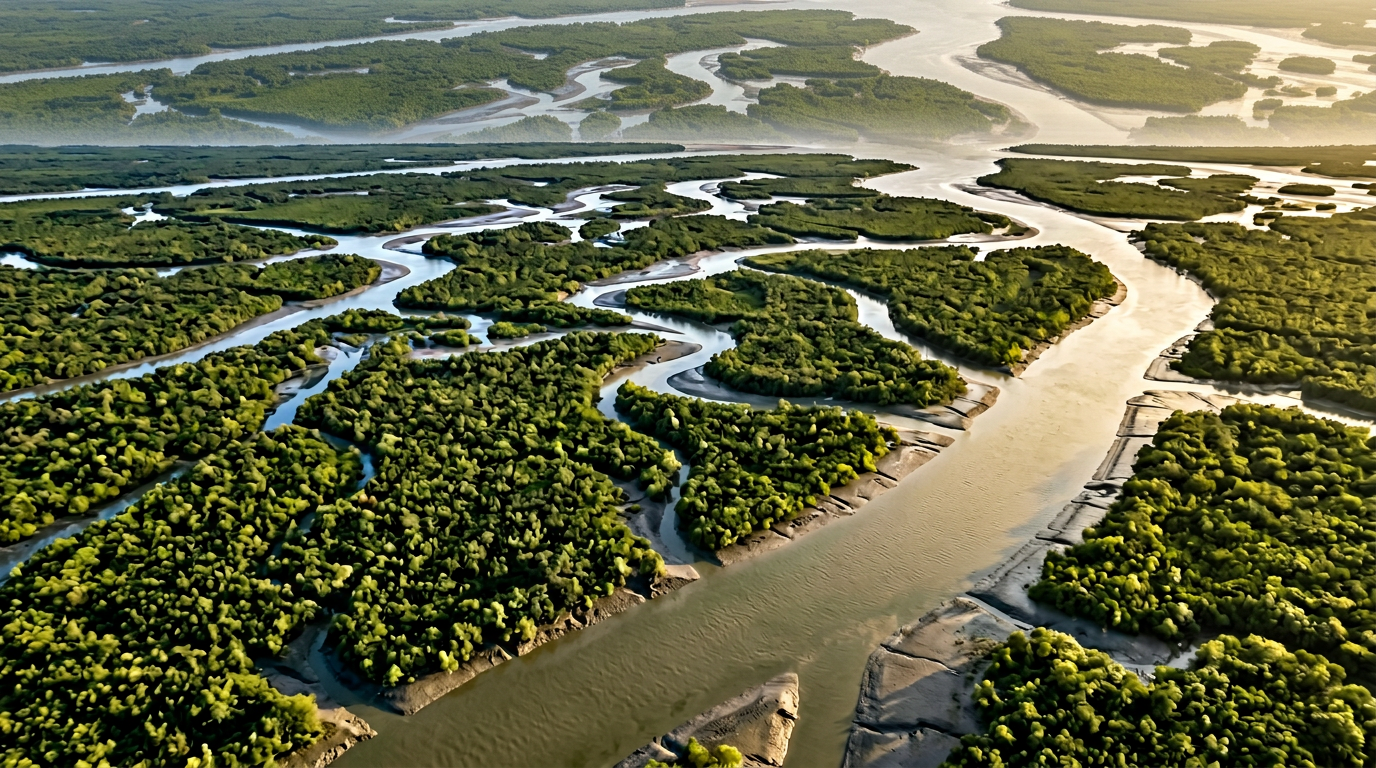
The Sundarbans is not just another forest — it is the largest tidal mangrove ecosystem on the planet, a UNESCO World Heritage Site, and the last stronghold of the Royal Bengal Tiger. Yet most visitors barely scratch the surface of what makes this delta extraordinary. Here are 20 amazing Sundarban facts that will change the way you look at this incredible landscape.
Geography & Scale — Sundarban Facts That Surprise
1. Largest Mangrove Forest on Earth. Spanning roughly 10,000 square kilometres across India and Bangladesh, the Sundarbans is the single largest contiguous mangrove forest in the world. The Indian portion alone covers about 4,260 sq km.
2. Shared Between Two Nations. Around 60 % of the Sundarbans lies in Bangladesh and 40 % in India, making it one of the few transboundary UNESCO sites managed by separate governments.
3. Over 100 Islands. The delta is made up of 102 islands, of which 54 are inhabited and the remaining 48 are covered by dense mangrove forest. New mudflats form — and vanish — with every monsoon cycle.
4. Tidally Active Twice a Day. The Sundarbans experiences semi-diurnal tides, meaning water levels rise and fall twice every 24 hours. Some creeks swell by over four metres during spring tides, completely reshaping the forest floor.
5. Three Major Rivers Feed It. The Ganges, Brahmaputra, and Meghna rivers converge here, depositing billions of tonnes of sediment annually and creating one of the most fertile deltas on Earth.
Wildlife & Biodiversity — The Living Sundarbans
6. Home to Around 96 Royal Bengal Tigers. According to the latest All-India Tiger Estimation, the Sundarban Tiger Reserve holds approximately 96 tigers — the only Royal Bengal tiger population in the world adapted to a mangrove habitat.
7. Tigers That Swim. Sundarban tigers routinely swim across wide tidal channels — sometimes covering distances of over 3 km — to hunt, patrol territory, or escape rising waters. No other tiger population displays this behaviour so consistently.
8. 260+ Bird Species. From white-bellied sea eagles and Brahminy kites to masked finfoots and mangrove pittas, the Sundarbans is a birding paradise that attracts ornithologists from around the globe.
9. Saltwater Crocodiles Still Thrive Here. The estuarine or saltwater crocodile — the largest living reptile — inhabits Sundarban rivers. Adults can exceed five metres in length and are occasionally spotted basking on mudflats near watchtowers.
10. Gangetic Dolphins in the Creeks. Both the Ganges river dolphin and the Irrawaddy dolphin are found in Sundarban waterways, making it one of the rare ecosystems where two endangered cetacean species coexist.
Mangroves, Climate & Conservation
11. 35+ True Mangrove Species. The Sundarbans hosts at least 35 species of true mangroves — including the iconic Sundari tree (Heritiera fomes) from which the forest gets its name.
12. UNESCO World Heritage Since 1987. The Indian Sundarbans received UNESCO World Heritage status in 1987, recognising its outstanding universal value for biodiversity conservation and ecological processes.
13. A Natural Cyclone Shield. Dense mangrove belts absorb up to 70 % of a cyclone’s wind energy and dramatically reduce storm-surge heights, protecting four million coastal residents in West Bengal and Bangladesh.
14. Massive Carbon Sink. Mangrove soils store three to five times more carbon per hectare than terrestrial forests, making the Sundarbans one of the most important carbon sinks in South Asia.
15. Rising Sea Levels Are a Threat. Scientists estimate that a one-metre sea-level rise could submerge up to 75 % of the Sundarbans, making climate change the single greatest long-term threat to this ecosystem.
Culture, History & Unique Trivia
16. Honey Collectors Risk Their Lives. Every spring, local mouli (honey gatherers) wade deep into tiger territory to collect wild honey from giant rock-bee hives — an ancient tradition that claims lives each year.
17. Goddess Bonbibi Protects the Forest. Locals worship Bonbibi, a folk deity believed to safeguard humans from tiger attacks. Her shrines dot nearly every inhabited island and every boat carries her image.
18. Reverse-Flow Rivers. During high tide, rivers in the Sundarbans actually reverse their flow direction, pushing saline water several kilometres inland — a phenomenon you can witness on any Sundarban boat tour.
19. Night-Glowing Shorelines. Bioluminescent phytoplankton occasionally light up creek surfaces at night, creating an eerie blue-green glow along the mangrove banks — a rare spectacle few tourists know about.
20. The Only Mangrove Tiger Reserve in the World. While tigers exist in various habitats across Asia, the Sundarban Tiger Reserve is the only protected area on Earth specifically designated for tiger conservation inside a mangrove ecosystem.
Frequently Asked Questions About Sundarban Facts
Ready to Explore the Sundarbans?
Now that you know these incredible Sundarban facts, it is time to experience the delta for yourself. Our eco-friendly tours take you deep into the mangrove wilderness with expert naturalist guides, comfortable houseboats, and all permits arranged.