

Planning a trip to the Sundarbans? This complete Sundarban National Park information guide covers everything — from park area and forest zones to entry rules, wildlife highlights and practical visitor tips. Whether you are a first-time traveller or a returning nature enthusiast, use this page as your single reference before stepping into the world’s largest mangrove wilderness.
What Is Sundarban National Park?
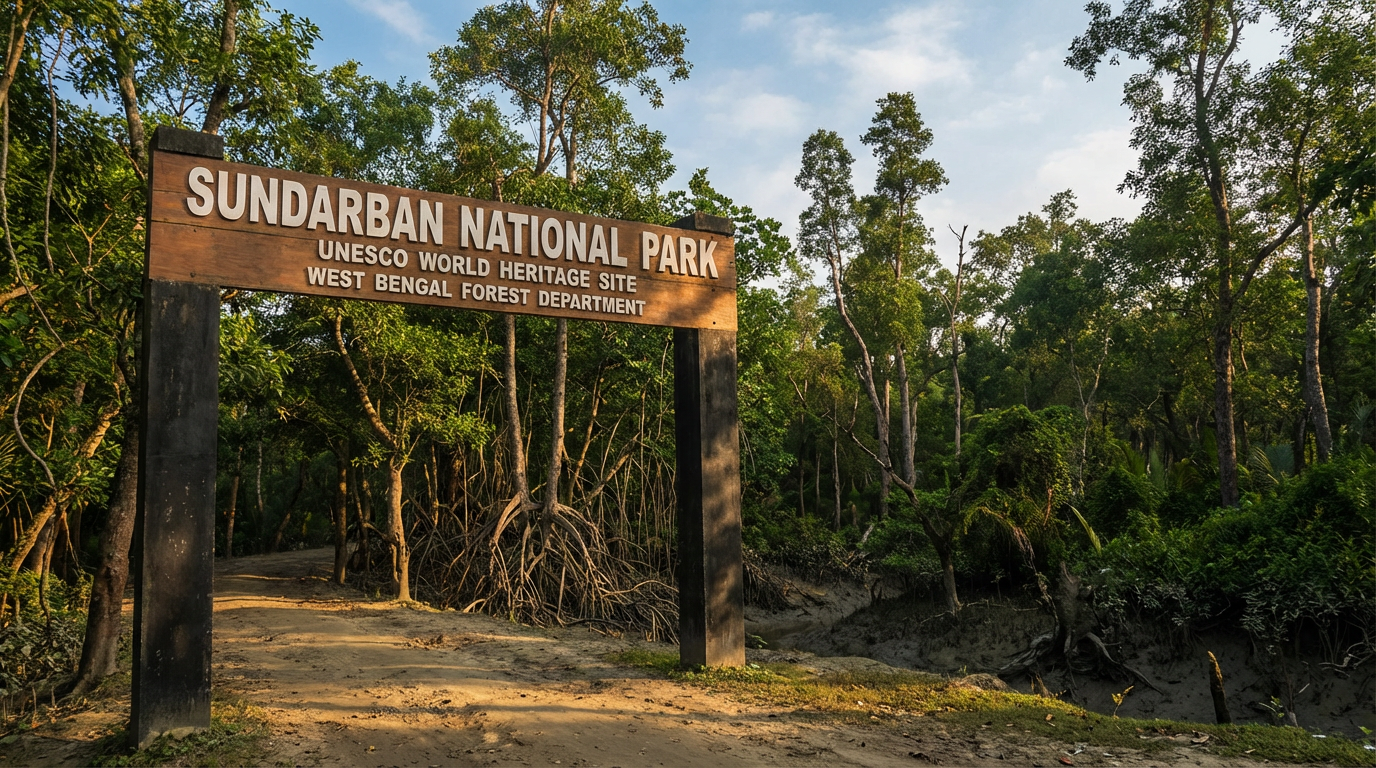
Sundarban National Park is a UNESCO World Heritage Site located in the South 24 Parganas district of West Bengal, India. Declared a national park in 1984, it forms the core area of the Sundarban Biosphere Reserve — the largest tidal halophytic mangrove forest on the planet. The park spans approximately 1,330 square kilometres of interconnected waterways, mudflats and densely forested islands at the delta of the Ganges, Brahmaputra and Meghna rivers.
The name “Sundarban” is widely believed to derive from the Sundari tree (Heritiera fomes), the dominant mangrove species found across the delta. The park sits at the interface of land and sea, where freshwater rivers meet the Bay of Bengal. This unique estuarine ecosystem supports an extraordinary range of flora and fauna, making it one of the most bio-diverse regions in India. The forest is managed by the West Bengal Forest Department under Project Tiger and is monitored through regular wildlife censuses.
Zones, Entry Rules and Permits
Sundarban National Park is divided into a core zone (no-go area reserved for wildlife) and a buffer zone where regulated tourism is permitted. Visitors can explore designated tourism zones such as Sajnekhali, Sudhanyakhali, Dobanki, Netidhopani and Burirdabri. Each zone has watchtowers and boardwalks designed for safe wildlife observation without disturbing the habitat.
Every visitor must obtain a forest entry permit before entering the park. Permits are issued at the Sajnekhali Wildlife Sanctuary office and are checked at each watchtower. Indian nationals pay ₹60 per day while foreign nationals pay ₹200 per day (fees subject to revision). Additional charges apply for camera, video and boat usage. A licensed guide is compulsory for every tourist boat entering the reserve. For a step-by-step breakdown of the permit process, read our Sundarban entry permit guide.
Wildlife and Top Attractions
The park is world-renowned as the home of the Royal Bengal Tiger, the only tiger subspecies adapted to mangrove habitats. The latest census estimates around 96 tigers within the Indian Sundarbans. Beyond tigers, the forest shelters Gangetic dolphins, estuarine crocodiles, Indian pythons, water monitors, fishing cats and over 260 bird species including kingfishers, white-bellied sea eagles and lesser adjutant storks. For the complete species list, check our Sundarban animals and wildlife checklist.
Key attractions inside the park include the Sajnekhali Watchtower (ideal for birdwatching and crocodile sightings), the Dobanki Canopy Walk (an elevated boardwalk through dense mangroves), the Sudhanyakhali Watchtower (known for tiger sightings near freshwater ponds) and the Netidhopani ruins — a 400-year-old Shiva temple deep inside the forest. Boat safaris through narrow creeks remain the primary and most thrilling way to experience the Sundarbans.
Visitor Guidelines and Best Time to Visit
The ideal period to visit Sundarban National Park is between October and March, when the weather is pleasant, water levels are lower and wildlife sightings peak near freshwater sources. The park remains closed during the monsoon season (typically June to September) due to heavy rainfall and cyclone risk.
Visitors should carry sunscreen, insect repellent, binoculars and a rain-proof bag for electronics. Noise, littering, plastic use and feeding animals are strictly prohibited. All tourist boats must follow designated routes at regulated speeds. Photography is allowed at watchtowers but drone flying requires special permission from the Forest Department. Travel is exclusively by motorised boats; there are no roads inside the park. Most tourists start their journey from Godkhali Jetty, reachable by road from Kolkata (approximately 100 km). For ready-made itineraries that handle logistics, permits and accommodation, explore our Sundarban tour packages.
Frequently Asked Questions
What is the total area of Sundarban National Park?
Sundarban National Park covers approximately 1,330 square kilometres of mangrove forest, tidal waterways and mudflats in the Ganges delta of West Bengal, India.
Do I need a permit to visit Sundarban National Park?
Yes. Every visitor must obtain a forest entry permit from the Sajnekhali Wildlife Sanctuary office before entering any tourism zone of the park.
When is the best time to visit Sundarban National Park?
The best time is October to March when the weather is cool, water levels are manageable and chances of spotting wildlife — including the Royal Bengal Tiger — are highest.
How do I reach Sundarban National Park from Kolkata?
Travel by road from Kolkata to Godkhali Jetty (about 100 km, 3–4 hours), then take a motorised boat into the park. There are no roads inside the Sundarbans.
Is it safe to visit Sundarban National Park?
Yes, it is safe when you follow Forest Department rules, travel with a licensed guide and stay on designated routes. Solo entry into the core zone is not permitted.