

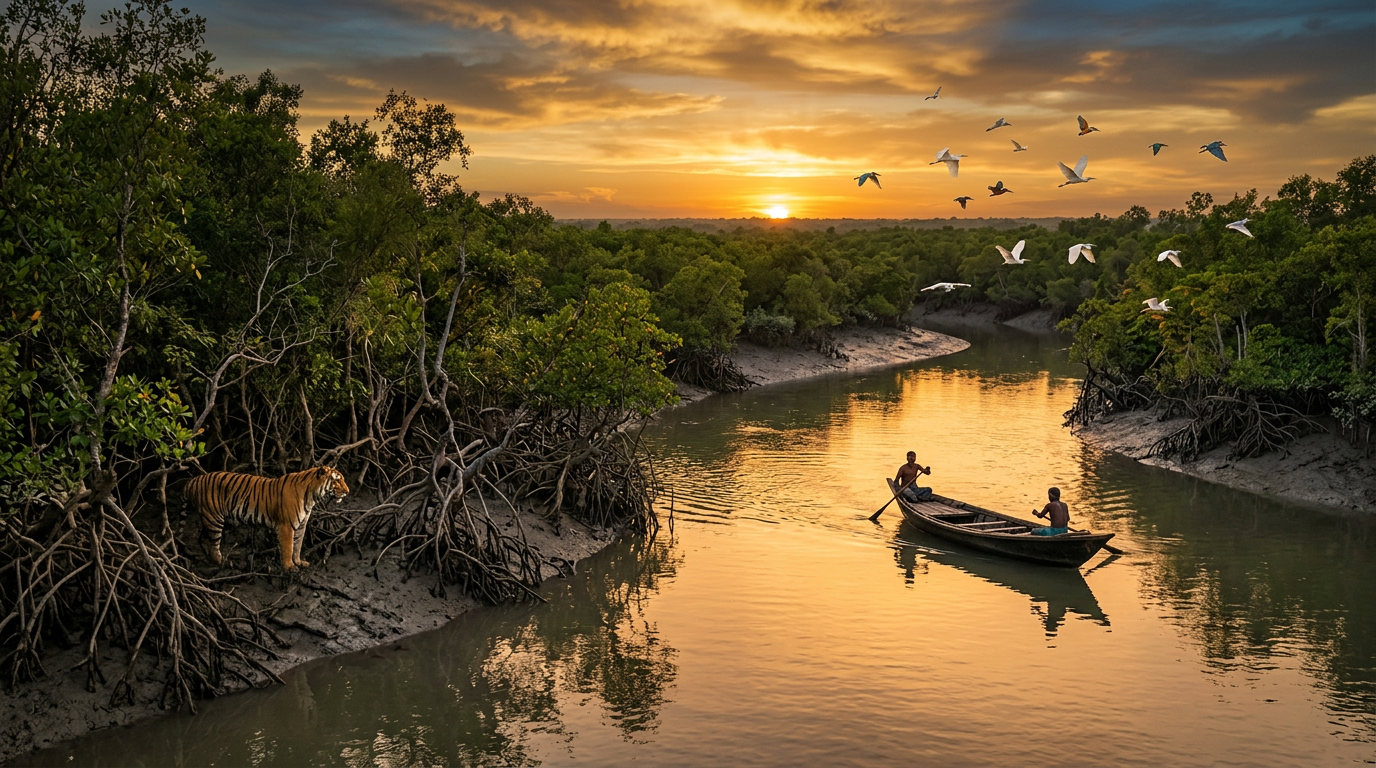
Planning a trip to the Sundarbans in 2026? This Sundarban travel guide compiles everything — from transport options and permit rules to budgets, safety advice, and the best tour packages — into one concise resource. Bookmark it, share it, and use it as your single reference before you set foot on the delta.
How to Reach the Sundarbans
Most travellers begin from Kolkata. The gateway towns — Godkhali, Sonakhali, and Namkhana — are 80–110 km south of the city and reachable by road in roughly 3–4 hours. From any of these jetties you board a motorised launch into the reserve. Hire cars, shared autos, and public buses are all available from Kolkata’s Babu Ghat or Science City area. If you fly in, Netaji Subhas Chandra Bose International Airport connects to Godkhali via cab within four hours.
For a step-by-step breakdown with maps and transport costs, read our detailed How to Reach Sundarban guide.
Best Time to Visit
The ideal window is October to March when humidity drops, skies clear, and migratory birds flock to the mangroves. Wildlife sightings — particularly the Royal Bengal tiger — peak between November and February when animals gather around shrinking freshwater sources. The monsoon months (June–September) bring heavy rain, cyclone risks, and restricted boat services, so they’re best avoided unless you’re an experienced adventurer.
Our month-by-month analysis is available in the Best Time to Visit Sundarban article.
Permits, Entry Fees & Accommodation
Every visitor needs a forest entry permit issued by the Sundarban Tiger Reserve office. Tour operators typically handle this, but independent travellers can apply at the Sajnekhali forest check-post. Current fees for Indian nationals are around ₹100 per day; foreign nationals pay approximately ₹400. Camera and video charges apply separately.
Accommodation ranges from government-run forest lodges at Sajnekhali and Dobanki to private eco-resorts in Gosaba, Pakhiralay, and Dayapur. Budget stays start near ₹800 per night, while premium houseboats with air-conditioned cabins can exceed ₹5,000. Booking well in advance — especially for the December–January peak — is strongly recommended.
Cost Breakdown & Tour Packages
A standard 2-night / 3-day group tour from Kolkata costs between ₹4,500 and ₹7,500 per person including transport, meals, accommodation, boat rides, and permits. Private or luxury packages — with dedicated launches, professional naturalist guides, and houseboat stays — range from ₹10,000 to ₹18,000.
We’ve compared the top operators, itineraries, and pricing in our Sundarban Tour Packages post — read it before you book.
Packing Essentials & Safety Tips
Pack light but smart: waterproof bags, insect repellent, sunscreen, binoculars, a first-aid kit, and comfortable quick-dry clothing are non-negotiable. Carry sufficient cash — ATMs are scarce beyond Gosaba — and download offline maps since mobile coverage is limited inside the reserve.
Safety in the Sundarbans means respecting wildlife corridors. Never leave the boat without your guide, stay silent during wildlife-watch zones, and follow all forest department advisories regarding tide and weather. For a complete checklist, see our Sundarban Packing List Essentials and Sundarban Safety Tips for Tourists guides.
Wildlife & What to Expect on the Water
The Sundarbans shelter over 400 Royal Bengal tigers, saltwater crocodiles, Gangetic dolphins, Indian pythons, and 300+ bird species including the brown-winged kingfisher and masked finfoot. Boat safaris glide through narrow creeks where mudflats reveal tiger pugmarks and monitor lizards sun themselves on fallen trunks. Watchtowers at Sajnekhali, Sudhanyakhali, Dobanki, and Netidhopani provide elevated vantage points. Keep expectations realistic: tiger sightings are rare but pugmark encounters and the raw atmosphere of the world’s largest mangrove forest make every trip unforgettable.
Frequently Asked Questions
Is the Sundarban trip safe for families with children?
Yes. Organised boat tours follow strict safety protocols — life jackets, licensed guides, and approved routes. Children above five years generally enjoy the experience. Avoid monsoon season and choose reputable operators for added peace of mind.
How many days are enough for a Sundarban tour?
A 2-night / 3-day package covers the main highlights including Sajnekhali, Sudhanyakhali, and Dobanki watchtowers. If you want a slower pace with photography and village walks, opt for a 3-night / 4-day itinerary.
Do I need a permit to visit the Sundarbans?
Yes. A forest entry permit is mandatory. Most tour operators include it in the package cost. Independent visitors can obtain permits at the Sajnekhali forest check-post upon arrival.
What is the best month to spot a Royal Bengal tiger?
December and January offer the highest probability because lower water levels force tigers to visit known freshwater pools. However, sightings are never guaranteed — pugmarks and signs are far more common.
Can I visit the Sundarbans without a tour operator?
Technically yes, but it is not recommended. Independent travel requires arranging your own boat, guide, permits, and accommodation in remote areas with limited infrastructure. A licensed operator simplifies logistics and improves safety.
Ready to Explore the Sundarbans?
Whether you’re chasing tiger trails, photographing sunrise over the delta, or simply soaking in the mangrove silence — the Sundarbans deliver an experience unlike any other in India. Use this guide as your starting point and dive into our detailed posts linked above for deeper planning.