

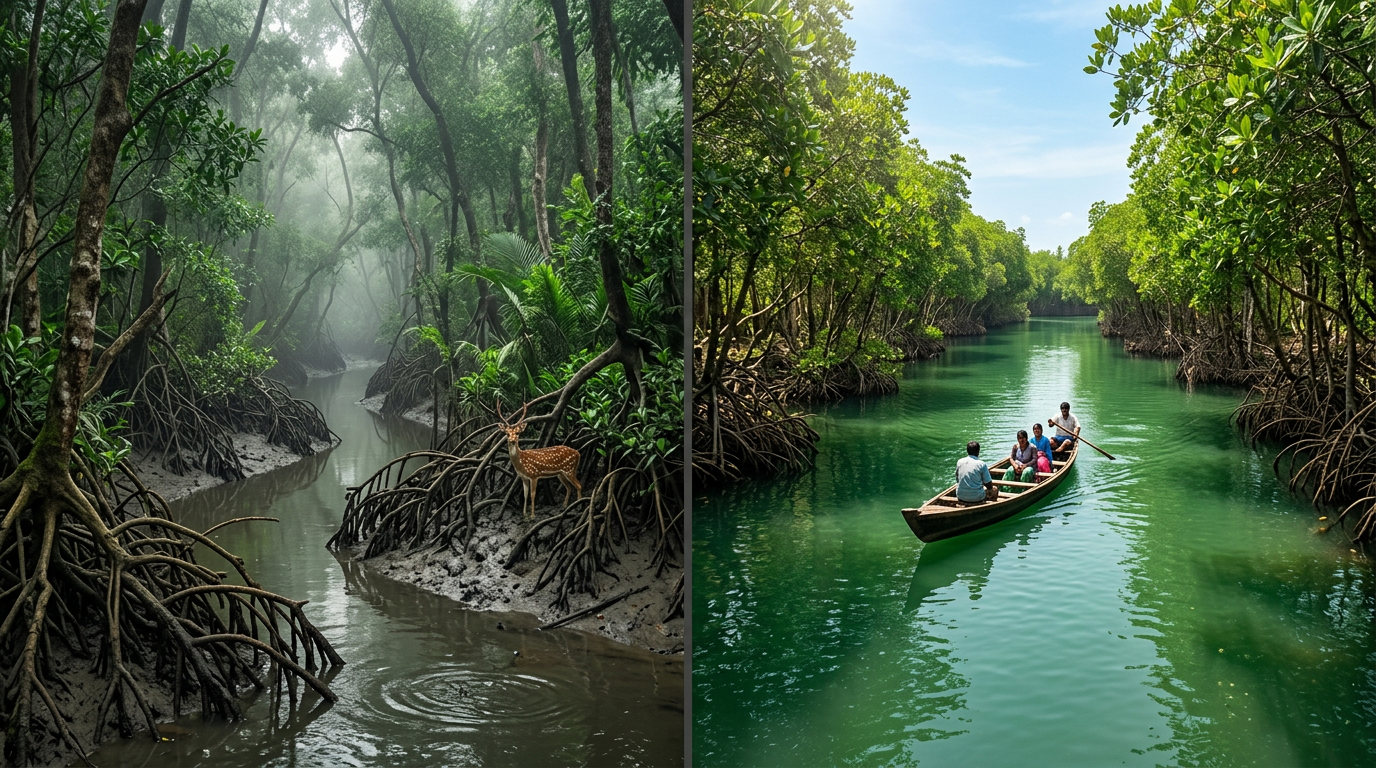
India’s two most talked-about mangrove destinations — the Sundarbans in West Bengal and Pichavaram in Tamil Nadu — attract very different kinds of travellers. If you have been searching Sundarban vs Pichavaram to decide which one to visit next, this comparison covers area, wildlife, accessibility, cost, and overall experience so you can pick the destination that suits your trip.
Sundarban vs Pichavaram — Quick Comparison Table
| Parameter | Sundarban (West Bengal) | Pichavaram (Tamil Nadu) |
|---|---|---|
| Total Mangrove Area | ~4,200 km² (Indian side) | ~11 km² |
| UNESCO Status | World Heritage Site (1987) | Not UNESCO-listed |
| Key Wildlife | Royal Bengal Tiger, saltwater crocodile, Gangetic dolphin, 300+ bird species | Herons, egrets, spoonbills, mudskippers; no large predators |
| Main Activity | Multi-day boat safari through tidal creeks | 2–3 hour rowing-boat or motorboat ride |
| Best Season | October – March | November – February |
| Nearest Major City | Kolkata (~100 km) | Pondicherry (~70 km) / Chennai (~230 km) |
| Typical Trip Duration | 2 nights / 3 days | Half-day to full day |
| Average Cost | ₹4,000 – ₹12,000 per person (all-inclusive package) | ₹200 – ₹800 (boat ticket only) |
The numbers reveal a dramatic scale difference. The Sundarbans are roughly 380 times larger than Pichavaram and shelter apex predators that Pichavaram simply does not host. For an in-depth look at the Sundarban ecosystem, read our Sundarban mangrove forest guide.
Wildlife and Nature Experience
The Sundarbans are a tiger reserve and a biodiversity hotspot. Boat safaris navigate narrow tidal creeks where saltwater crocodiles bask on mudflats, dolphins surface between waves, and over 300 bird species patrol the canopy. The Royal Bengal Tiger is the headline draw — pugmarks and scratch marks are common even when the cat stays hidden.
Pichavaram is a calm backwater experience. You glide through narrow canals in a rowing boat while herons and egrets take flight overhead. It is photogenic and meditative — ideal for families with small children who want a short nature break. Large predators are absent, and the experience leans toward scenic relaxation rather than adventure.
Accessibility and Travel Logistics
Reaching the Sundarbans: Kolkata is the gateway. Operators offer door-to-door service — hotel pick-up, road transfer to Godkhali jetty (roughly three hours), then a motorised boat into the delta. Check our Sundarban tour from Kolkata guide for schedules and tips.
Reaching Pichavaram: The mangrove is about 70 km south of Pondicherry and 230 km from Chennai. Drive down, park at the boat counter, and be on the water within minutes — no permits, no advance booking needed. It fits neatly into a Pondicherry weekend as a half-day stop.
Cost and Value for Money
An all-inclusive two-night Sundarban package — transport, boat safaris, meals, accommodation, permits, and a naturalist guide — runs ₹4,000 to ₹12,000 per person. The investment buys a multi-day wilderness immersion that no other Indian destination replicates.
Pichavaram boat rides cost ₹200 for a rowing boat and up to ₹800 for a motorboat. A full day rarely exceeds ₹2,000 per person. It is a budget-friendly micro-adventure, though the scope reflects the price. Explore Sundarban rates on the Sundarban tour packages page to compare value tiers.
Which Mangrove Should You Visit?
Choose Sundarban if you want a full wildlife adventure — tiger territory, crocodile-lined creeks, and overnight stays in one of the world’s most biodiverse deltas. It is best for nature enthusiasts, photographers, and anyone willing to dedicate two to three days.
Choose Pichavaram for a relaxed half-day outing during a South India trip — perfect for families with young kids or travellers who want a quick mangrove taste without multi-day logistics.
Many seasoned travellers visit both — Pichavaram as a gentle introduction and the Sundarbans as the main event. Sundarban Ecofriends organises fully guided tours with Kolkata pick-up, all permits, meals, and experienced local guides so you can focus on the experience.
Frequently Asked Questions
Which is bigger — Sundarban or Pichavaram mangroves?
The Sundarbans are vastly larger. The Indian Sundarban alone covers approximately 4,200 km², while Pichavaram spans about 11 km². The Sundarbans are the largest tidal mangrove forest in the world.
Can I see tigers in Pichavaram?
No. Pichavaram is a small mangrove wetland with no large predators. The Royal Bengal Tiger is found only in the Sundarbans. Pichavaram’s wildlife is limited to waterbirds, mudskippers, and small aquatic species.
Is Pichavaram or Sundarban better for a family trip with kids?
Pichavaram is easier for families with very young children because it is a short boat ride with no overnight stay required. However, families with older kids who enjoy nature and adventure will find the Sundarbans far more rewarding.
How many days do I need for each destination?
Pichavaram can be covered in half a day. A proper Sundarban experience requires a minimum of two nights and three days to explore the core tiger reserve, watchtowers, and tidal creeks.
Can I visit both Sundarban and Pichavaram in one trip?
They are in different states — West Bengal and Tamil Nadu — so combining them in one short trip is impractical. Most travellers visit Pichavaram during a South India holiday and plan a separate Kolkata-based trip for the Sundarbans.