

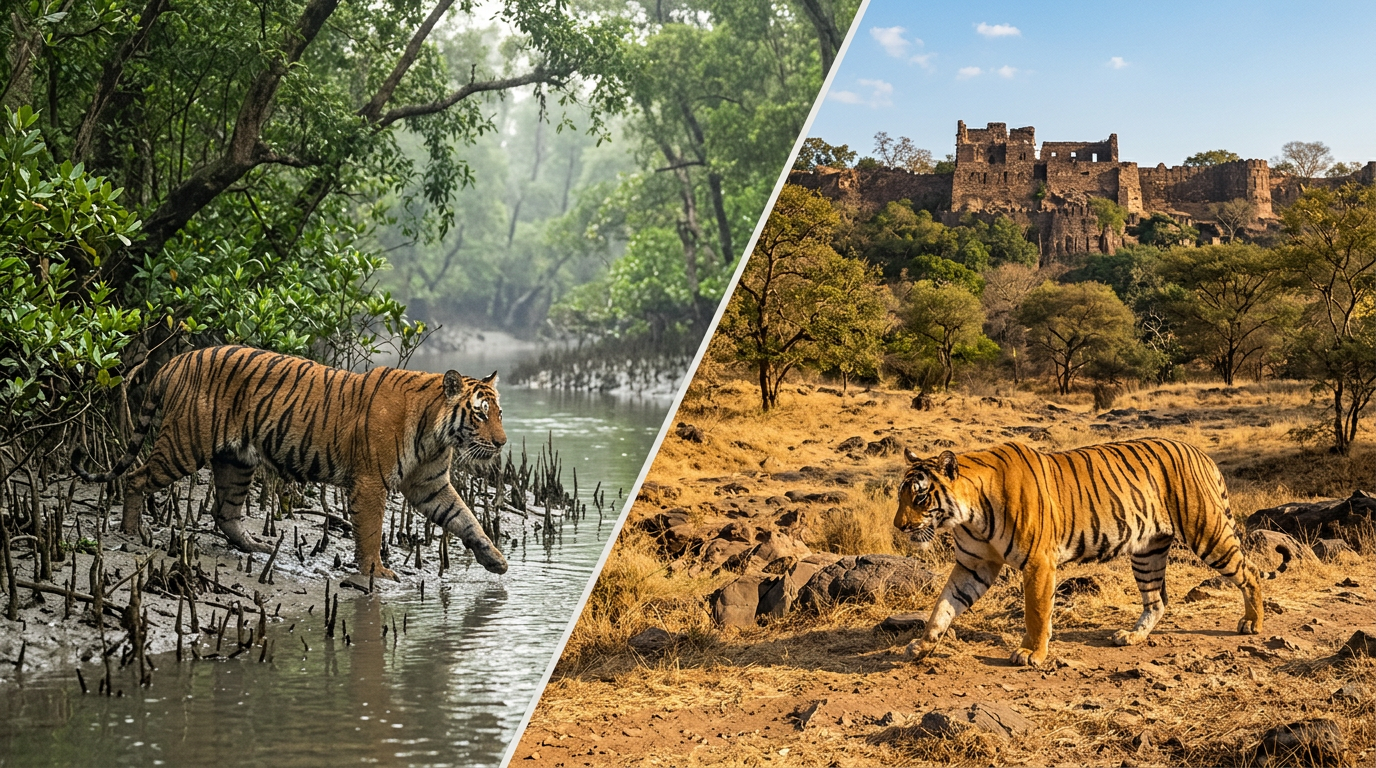
India offers two dramatically different ways to encounter the Royal Bengal Tiger. Sundarban, the world’s largest tidal mangrove forest in West Bengal, pits you on a boat gliding through brackish creeks. Ranthambore, a dry deciduous fortress in Rajasthan, seats you in an open-top jeep rolling past ancient ruins. Both are Project Tiger reserves — but the safari experience, terrain, cost, and sighting odds could not be more different.
This head-to-head guide breaks down Sundarban vs Ranthambore across every metric that matters so you can pick the tiger destination that fits your travel style, budget, and expectations.
Safari Type & Terrain
Ranthambore safaris run on fixed jeep and canter routes through dry, open scrubland dotted with dhok trees and lake edges. Visibility is high, and tigers often walk along trails in plain sight — sometimes metres from your vehicle.
Sundarban safaris are entirely water-based. Country boats and motorised launches navigate narrow tidal channels hemmed by Heritiera and Avicennia mangroves. The dense canopy means tigers are glimpsed on mudflats, creek banks, or swimming between islands. It is a raw, immersive wilderness experience unlike any other reserve in India. Learn more about how these Sundarban tiger sightings actually happen.
Sundarban vs Ranthambore — Quick Comparison Table
| Parameter | Sundarban | Ranthambore |
|---|---|---|
| Location | West Bengal (Ganges delta) | Rajasthan (Sawai Madhopur) |
| Safari Mode | Boat / launch | Jeep / canter |
| Terrain | Tidal mangrove, waterways | Dry deciduous, rocky hills |
| Tiger Population (2024) | ~120 (Indian Sundarban) | ~75–80 |
| Sighting Probability | Low–moderate (elusive mangrove habitat) | High (open terrain, habituated tigers) |
| Best Season | Oct – Mar | Oct – Jun (peak: Mar–May) |
| Avg. 2-Night Cost | ₹5,000 – ₹12,000 | ₹15,000 – ₹35,000 |
| Unique Wildlife | Saltwater crocodile, Gangetic dolphin, horseshoe crab | Leopard, sloth bear, sambar deer |
| UNESCO Status | Yes (World Heritage Site) | Part of Ranthambore Fort (UNESCO) |
| Vibe | Raw, remote, riverine adventure | Curated, accessible, photographic |
Tiger Population & Sighting Odds
Sundarban holds a higher tiger density per square kilometre than Ranthambore, but the mangrove canopy limits visual encounters. Ranthambore’s tigers are semi-habituated to vehicles and traverse open zones, giving photographers frame-filling shots. If guaranteed sighting is your priority, Ranthambore wins. If witnessing a tiger in a truly wild, unscripted setting appeals to you, the Sundarban tiger census 2026 numbers confirm a thriving population waiting to be discovered.
Cost, Accessibility & Overall Experience
Ranthambore is roughly 2–3× more expensive per trip. Safari permits, premium lodges, and peak-season demand inflate costs. Sundarban, by contrast, is one of India’s most affordable tiger reserves — budget houseboats and shared launches keep prices low, and the forest is a short drive from Kolkata.
Beyond tigers, Sundarban delivers an ecosystem-level experience: mangrove kayaking, birdwatching, village walks, and crab-island excursions. Ranthambore is laser-focused on the big-cat safari itself, with less variety in ancillary activities.
For first-time wildlife tourists who want a guaranteed tiger photo, Ranthambore is the safer bet. For seasoned travellers craving an untamed, biodiverse adventure at a fraction of the cost, Sundarban delivers an experience no jeep safari can replicate.
Frequently Asked Questions
Is Sundarban better than Ranthambore for tiger sighting?
Ranthambore offers higher guaranteed sighting odds because of open terrain and habituated tigers. However, Sundarban has a larger tiger population and provides a raw, boat-based encounter in the world’s largest mangrove forest — ideal for travellers who value wilderness over certainty.
Which is cheaper — Sundarban or Ranthambore safari?
Sundarban is significantly cheaper. A 2-night Sundarban tour costs ₹5,000–₹12,000, while a comparable Ranthambore trip runs ₹15,000–₹35,000 including permits, accommodation, and safaris.
Can you see tigers in Sundarban during monsoon?
The Sundarban Tiger Reserve is generally closed for tourism during peak monsoon (July–August). The best window is October to March when water levels recede and tigers are spotted on exposed mudflats.
How do I reach Sundarban from Kolkata?
Drive or take a shared vehicle from Kolkata to Godkhali (approx. 3–4 hours), then board a motorised boat into the reserve. Most tour operators provide pickup from Kolkata city or airport.
What wildlife can I see in Sundarban apart from tigers?
Sundarban is home to saltwater crocodiles, Gangetic dolphins, Indian pythons, horseshoe crabs, water monitors, and over 300 bird species including kingfishers, white-bellied sea eagles, and masked finfoots.
Ready to Explore the Sundarbans?
Skip the tourist crowds and jeep queues — experience tigers the way nature intended, on the water.